

When should you go full-time in your business?
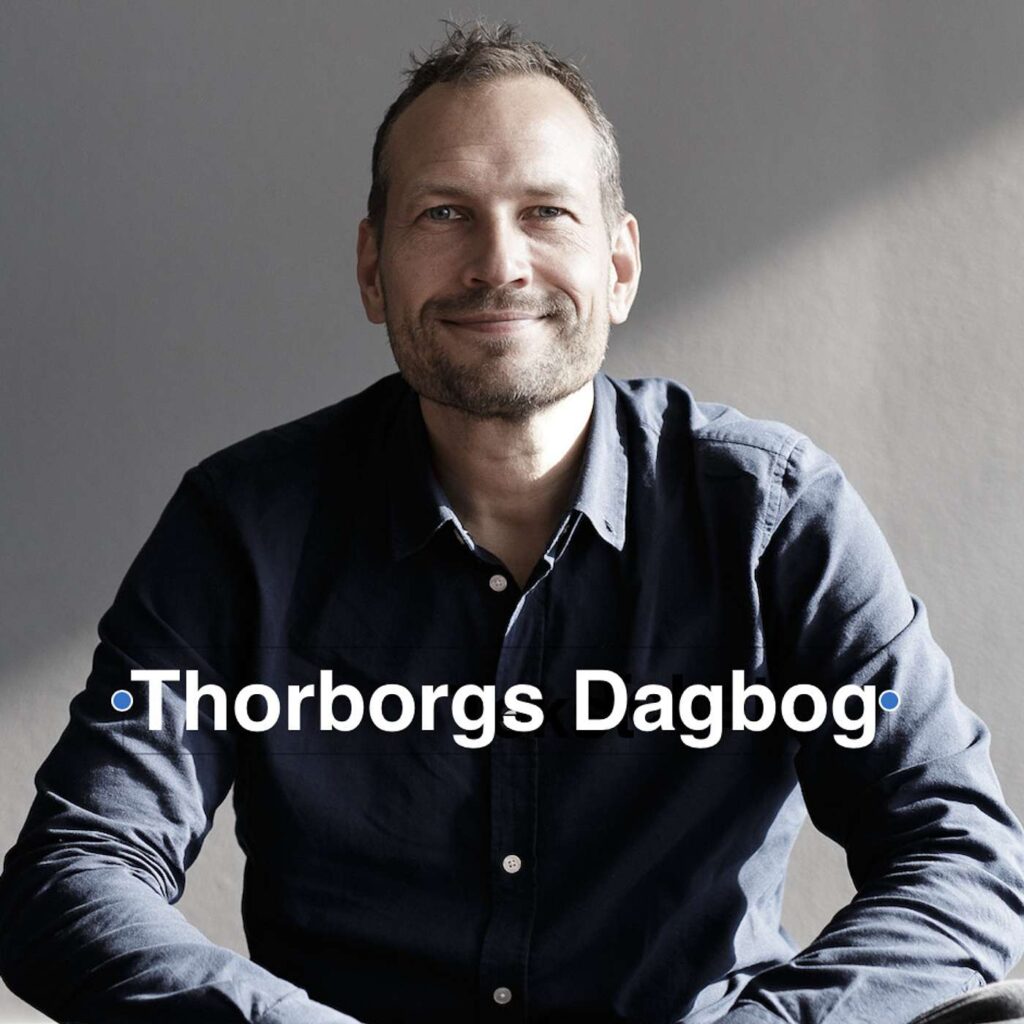
When do you go full-time in your business? A question from Flemming prompts me to discuss moving from a spare-time project to spending the working day on it. On starting, building a buffer and choosing your focus.
Thorborg’s Diary · Episode 5 · Recorded 16 March 2023
Watch the episode on video
Listen in your podcast app:
All episodes on Apple Podcasts · All episodes on Spotify · All episodes on Amazon Music · RSS Feed
A diary with a question from Flemming
I don’t think I’ve properly introduced myself in the other episodes. I’m not that professional. My name is Martin Thorborg, I’m CEO of Dinero and an entrepreneur.
The whole concept is simply talking into whatever computer or equipment is in front of me. Right now it’s my MacBook Pro, with sound quality to match.
A nice man, Flemming, suggested today’s subject: balancing a hobby business and going full-time with it.
I’d like to discuss that. But first, a little about what I’m doing. It’s a diary, after all.
Board work at PensoPay
I’ve joined PensoPay’s board in Vejle. It was started by really cool guys making payment solutions for webshops.
The company was acquired around six months ago, and I was asked to join the board. I’m very honoured.
We had a great meeting reviewing lots of things so I could understand the business better and help as much as possible.
And I can reveal a little thing: we’re working on a solution for paying Dinero invoices through PensoPay with Mastercard and Visa, among others. It’s coming. Don’t tell anyone.
A blue opening in a red ocean
I’ve also met a bloody exciting startup wanting me to invest some money and time.
If you’ve followed along, you know I don’t play golf or tennis or spend time watching football. That leaves time for other things alongside being Dinero’s full-time CEO. Investing in businesses is one.
I can’t say much yet. We’re still negotiating what I’ll contribute, what I’ll get and whether we’re a match.
But it was a great meeting, and I strongly believe in the service. In many ways it’s a red ocean, a highly competitive market. Yet the entrepreneur has found a blue opening in that red ocean.
If it works out, I’ll tell you more. We’re not far apart, but stakes, finances and other details need aligning.
Dinero’s free model is giving us headaches
Dinero is bloody busy too. We’re working on new bookkeeping requirements and the future of our free model.
As things stand here in March 2023, the free version can’t remain unchanged if it must meet coming requirements for companies, among others. Otherwise many free users would need Pro.
We want to preserve a free option. But to meet requirements, some paid features need moving into it. That includes electronic receipt storage and other bookkeeping features.
Then we face a dilemma. If we make the free version good enough, paying customers might say: "Why the fuck should I pay when the features I need are free?"
We risk a big revenue loss. Losing, say, 20 per cent could probably make Visma find a new CEO quickly. And I actually like my job.
Finding the right balance is harder than it seems. We’ve known the challenge for a long time and worked on it for months.
A fishing trip, talks and a new book
I’ve also had a wonderful Bornholm fishing trip with good old friends. We fished for sea trout and enjoyed lots of beers.
I caught a sea trout the size of a full-grown herring. It got to live on. Fortunately the others caught decent fish, so we didn’t starve.
Next week is busy with four talks: Kolding, Amager, Nyborg and a virtual talk for 640 customers at 16 Sydbank branches.
My new book, Skab din egen succes, comes out on 28 March. It’s aimed particularly at young people and contains advice I’d have liked to give my younger self.
I’m throwing a big release party at Museo with around 80 friends and business contacts. Later it merges with the rest of the nightclub, so it should be fun.
There are interviews with DR, TV 2 and others, radio and two general meetings too. It’ll be hectic, but I’m hugely excited.
The most important thing is you’ve already started
Back to Flemming’s question. He wants to move from a hobby business to a real business and asks when to take the chance.
What I really like is that he’s already started.
When someone asks what’s most important in becoming an entrepreneur, I say: getting started.
It sounds obvious. But a hell of a lot of people want to be entrepreneurs while fearing uncertainty. I understand that.
So they find reasons to postpone: when the child turns five. When they’ve saved up. When school ends. After New Year. A thousand variations.
It’s like standing ready for a bungee jump and shifting from one leg to the other because you’re afraid to leap.
Flemming, you’ve already started. Fantastic.
Start in your spare time while you have a foundation
My advice is to start alongside what you’re doing. Don’t immediately quit your job or drop out of school.
Become an entrepreneur in your spare time. Perhaps you discover it’s not for you. Then you can stop without losing your work or education path.
You might also discover it’s great. Then comes Flemming’s question: when should the business fill the whole day?
Full-time in your business: My rule of thumb on income and time
Let’s take an example. You need around 30,000 kroner a month before tax to make your life work.
First, saving something so you have a cushion is a good idea.
When your spare-time business starts bringing in roughly half or more of what you need, say 15,000–20,000 kroner monthly, I think you can start considering the leap.
That isn’t 30,000 kroner yet. But remember where you spend your best hours.
You get up and spend six or seven hours at school or eight at work. Much of your alert, active, good time goes there. Your business gets the hours afterwards.
If you can generate around half or 60–70 per cent of what you need in that time, my thinking is you can generate more with the whole day and your best energy available.
I’d expect many in that situation could double activity and revenue. Obviously that’s not a certain rule. But I find it a useful rule of thumb.
At some point, you need to take the leap
If you want the business to become your full-time work, there comes a point when you need a deep breath and a decision to choose it.
Starting and running a business takes focus. You can’t keep putting your energy everywhere and expect your main project to get your best.
"But Martin, you do lots of different things yourself."
Yes. But I also have around 30 years of entrepreneurial experience. It’s less daunting for me, and I can afford failure. I have money and experience to stand on.
So my best advice for someone building their first business is: get started and focus.
An extra project won’t fix a mediocre main project
Don’t think your project is doing reasonably well, so you can just add another alongside it.
Then you take focus from the first and it gets worse. The second won’t be good either because you’re splitting your efforts.
There are competitors focusing on only one thing. They can run circles around you on both projects if you spread yourself too thin.
So Flemming: I like your cautious approach. You have a foundation in work, school or something else and you’ve started building alongside it.
My advice is that once the business provides around half or more of your living needs and you have a cushion, consider taking the leap. Go into what you’re passionate about and give it everything.
Do send me diary ideas
You’re welcome to write to martin@thorborg.dk with topic suggestions.
I might not reply directly. I collect suggestions in a little podcast folder and look when I have time for another episode.
I choose something I find exciting, want to talk about and think listeners might find interesting.
I’m normally pretty strict about target audiences. But here, the diary is my little refuge where I can talk about whatever I like.
You probably won’t hear much from me next week. It’s bloody busy, and I’m fucking excited. Remember, the book comes out on 28 March. I’ve narrated it too, so there’s an audiobook.
Have a fantastic evening.