

The business plan: How do you make one?
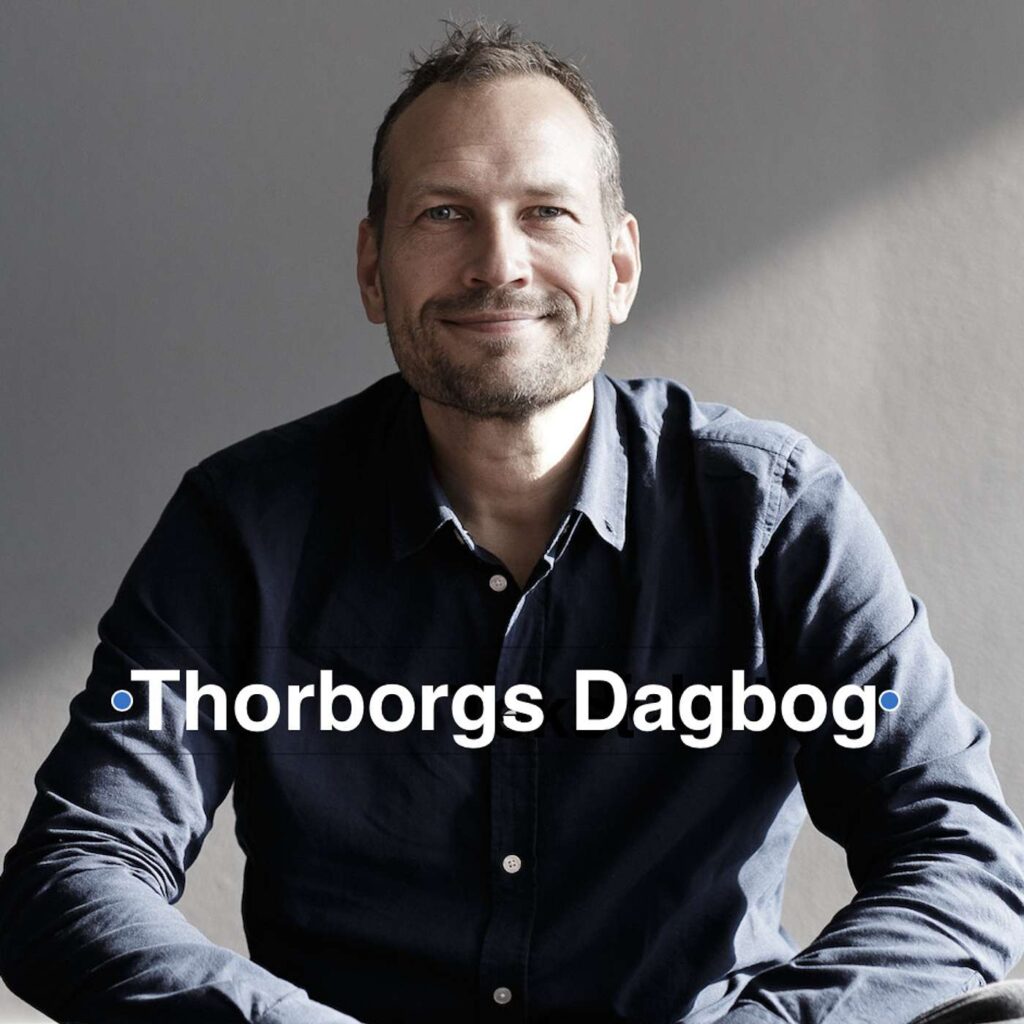
How would I write a business plan? One of you, Helene, has asked me to talk about it. To me, it’s primarily a checklist and a way to test your idea properly before spending several years of your life on it.
Thorborg’s Diary · Episode 3 · Recorded 16 March 2023
Hello and welcome to Thorborg’s Diary. One of you, Helene, has asked me to talk a bit about the business plan. I asked for suggestions myself, so today she wins.
I’d like to bring it down to earth. To me, a business plan is primarily a checklist and a way to test your idea properly before spending several years of your life on it.
Writing a business plan: A packing list for the business
Remember when you were going to Bornholm in fifth grade and got a list with a torch, pocket money, duvet cover and toothbrush? The idea was to remember everything.
That’s how I see a business plan too. You need to remember the important things and make them fit together. Along the way, you might discover that your idea is a shit idea. That’s a good result too, if it means you avoid spending loads of time and money on it.
I don’t know whether anyone has ever looked at the packing list for a school trip and thought: "A toothbrush? Then I don’t want to go to Bornholm after all." But it’s fine for the business plan to make you change your mind.
Start by wondering
I can’t really stop myself walking around thinking: What’s not smart here? What could be done better? That curiosity is incredibly important if you want to be an entrepreneur.
Even before my wife and I bought hotels on Bornholm, I could be lying by a swimming pool on holiday, looking at a hundred people around the pool. If you sent a waiter out with a menu and asked if they wanted something to drink, couldn’t you quadruple or quintuple drink sales?
I often think about a business like that without necessarily wanting to go into the industry.
Amalo is another example. I’d had an extension built on my house, and the gas boiler couldn’t really cope with it. Gas had also become expensive, and I wanted to move away from it. So I got three quotes for a heat pump.
For roughly the same work, the quotes ranged from 112,000 to 307,000 kroner. That made me think: This market isn’t efficient.
Many installers do a bit of everything. A toilet one day, some pipes the next, then a heat pump. That’s not a criticism of their training. I have no problem getting a generalist to install a toilet. But for a heat pump costing a hundred or two hundred thousand kroner that needs to last for many years, I’d like it installed by someone who does almost nothing else.
The third and cheapest quote came from some young guys with a really great website. I could enter my address and get an approximate quote. I was fascinated by it and really hit it off with Christian and Rasmus.
Together with my partner David, who I built Dinero with, I also had some ideas for improving the website. They were asking too many questions. If you ask a customer something they don’t know, they might think: "Shit, I’m too stupid for this." Then they call an installer instead.
I ended up investing in Amalo. The point is the way of thinking: I saw something inefficient and a gap in the market.
At the time of recording, we’ve also just launched solar panels and are installing the first systems. With the green transition and energy prices, I believe in the market. If you have a heat pump, or a gas boiler for that matter, having your own little energy system on the roof or in the garden is an interesting option.
Is there a brand that automatically springs to mind?
I also try closing my eyes and thinking of an industry. Which names come up?
If I think of soft drinks, Coca-Cola, Fanta and 7UP come to mind. If I think of fast food, there’s McDonald’s and Burger King.
But when I thought about getting a heat pump installed, no particular name meant anything to me. Well, Panasonic as a manufacturer. But who installs it?
If I can’t think of a dominant player, I get curious. Maybe we can become the brand people remember.
That doesn’t mean you should never take on a market with a strong player. But it’s one of the things I consider: Is there a gap where a well-known, decent brand could make a difference?
How big is the market, and what do you earn per customer?
The numbers have to work too. If you’re selling nuts at a profit of one krone each and standing by a road selling ten a day, that’s a bloody awful hourly wage.
On the other hand, if you sold Great Belt Bridges and made a billion on each, selling one every twenty years could be fine. I’m taking it to extremes, but you get the point.
You need to think about how many people could buy, how many you can realistically reach and what each customer is worth.
I remember an early conversation with Rico and Martin, who I later built Ageras with. They’d created a service for finding babysitters, among other things. Payment was through premium-rate text messages, on which they earned around two kroner per text.
I asked how many babysitters they thought there were in Denmark. Let’s say ten thousand. Two kroner times ten thousand is twenty thousand kroner. A Friday and a Saturday would, in that calculation, give forty thousand kroner a week if they captured the entire market.
But first, you won’t get the entire market. Second, parents don’t change babysitter every week. Once you’ve found someone you’re happy with, you normally keep that person until the children get too old or something else happens.
So it didn’t take long to poke holes in that business model. I’m caricaturing the story a bit to make the point clear. They’ve done fantastically since then and, as far as I know at the time of recording, have raised over a billion kroner. So I hope they can take the story.
Ask yourself: What’s the total market? How much of it can I get? How much value is there in each customer? And does the customer buy again?
"Just" can get terribly expensive
I’ve spoken to many entrepreneurs who’ve built a product and say: "Then customers just have to buy it."
"Just" might be the most expensive word in the world.
For example, someone had thought about how drivers with loud music don’t always hear an ambulance. Could you make something in the car radio that warned them? It might save lives, and perhaps it could become mandatory.
But how do you get it out to car owners? How do you contact them? How do you convince them? How is the solution installed? Even if something can be done wirelessly, the sales work is still there.
If you have to buy ads to put the product in front of people, and only a small proportion buy, getting a single customer can become very expensive. A good idea doesn’t automatically sell itself.
That’s what’s called customer acquisition cost, or CAC: What does it cost to acquire a customer?
You need to look at that alongside the customer’s lifetime value, or LTV: What do you get out of the customer over the entire relationship?
Dinero: A customer can use it free for nine years
I use Dinero as an example in the recording. These figures are our approximate numbers from that period, not a current price list.
About half the people who start with us remain free users. The other half become paying customers.
I estimate that it costs us around two to three hundred kroner to bring a user onto the free version. My marketing department can probably correct the exact figure, but that’s the ballpark.
When roughly one in two becomes a paying customer, the cost of acquiring a paying customer ends up at around six hundred kroner, perhaps six to seven hundred depending on how we look at the period.
Many buy within the first few months. But we also have customers who use Dinero free for nine years and only then start paying.
So it’s also a question of cash flow. Can you afford to pay to acquire the customer and wait for the money to come back?
If the customer pays around three hundred kroner a month, it takes a while before the payments have covered the cost of acquiring them. On the other hand, our latest measurement at the time of recording shows lifetime revenue close to thirteen thousand kroner for a paying customer, who typically stays for five or six years.
Those are good numbers when you can acquire a customer for around six hundred kroner. But revenue isn’t the same as profit, of course. At that point we have 94 employees, an expensive office and servers we rent from Google and Microsoft, among others. All of that has to be paid for.
Why pay nine hundred kroner to sell a cup of coffee?
I remember from my time in the US that, around 2010, Starbucks could spend about 150 dollars to acquire a new customer. Back then, that was around eight to nine hundred kroner.
That sounds crazy if you only look at the first cup of coffee at thirty-five kroner.
But Starbucks also looks at what the customer might buy over the entire relationship. I don’t know their exact lifetime value, but I can tell you about myself.
When I lived in the US, I went to Starbucks every day. Let’s say I spent around fifty kroner a day. I lived there for four years, and if I add my much smaller spending in Denmark, I’ve probably spent around a hundred thousand kroner with them. On top of that is what my children have bought.
So if they spent nine hundred kroner to get me in the first time, selling me hot water with coffee beans in it has been a damn good business.
Others come once, think it’s too expensive and go to Dunkin’ Donuts or McDonald’s next time. That’s why it’s the average across customers that matters.
You need to know more than your product
After the idea and the market, you need to look at yourself. What can you do? What are you missing? Do you have a business partner?
I generally recommend a partner unless you’re very introverted. It’s hard to do everything yourself.
Almost whatever you do, it’s hard to get around social media. You need to understand at least one platform and learn what gets your content out to people.
Yesterday at Dinero we had a visit from one of the people behind Vivino, who talked to our marketing team about YouTube. Among other things, he explained the importance of how much of a video people watch and how many minutes they stay.
A ten-minute video that people watch eight minutes of can be worth more than a two-minute video they watch all the way through. His advice was videos between seven and seventeen minutes, ideally with a viewing percentage above fifty per cent, preferably up around sixty.
That was his advice at the time. The point is that YouTube wants good content that keeps people on the platform and can have ads placed in it. In return, your videos can be shown to more people in a relevant audience.
Facebook and LinkedIn work differently. This isn’t going to be a whole podcast about social media, but you need to understand that there’s something to learn.
You may also need to know e-commerce, find premises, understand some law and management and have a bit of a handle on bookkeeping. Of course, I think Dinero makes that easier. There are other accounting programs too, but I helped found Dinero, and you can probably hear that in my enthusiasm.
Fortunately, there are lots of free tools. Dropbox has a free option. WordPress and WooCommerce can get you started with a website and online shop. You can get a free email address and plenty of help in groups on Facebook and other social media. It’s a different world from the one I started in about thirty years ago.
What do you and your partner want out of the business?
Do you want to be the next Bill Gates? Then venture capital and going full speed might be the right route.
Do you want more time with your family and children? Then perhaps you need to build something completely different.
Talk to your business partner about it. If one of you wants to be Bill Gates and the other wants a cosy little lifestyle, you’re starting with broken legs.
Talk to your family about the time and work too. Starting a business is often a marathon, depending on what you want to do. It helps to have your support system in place.
Halve the revenue and double the costs
Then you need to make a budget. Can you afford it? Find a template for a budget and business plan, or ask in an entrepreneurs’ group. I don’t know which template is best. What matters is being guided through the things you need to remember.
For example, you can find Dinero’s help and template for a business plan.
I often make the business plan in my head. That may sound like showing off, but I’ve helped build forty or fifty companies, so those considerations have become quite natural. If you’re new, it’s a good idea to write them down and go through them.
Once you’ve made your most likely budget, try an exercise: Halve the revenue and multiply the costs by two. Does it still add up?
I remember my first budget. According to that, I should have been able to buy a Porsche outright around month four or six. When I reached that month, I was pretty far from a Porsche. I could barely buy a scooter.
There was a decimal point error in my calculations. I couldn’t even buy a hubcap for a Skoda Rapid.
As an entrepreneur, you’re almost always optimistic. You think you can sell more than you manage at first, and you’ve forgotten quite a few costs.
That’s why I mean this from the heart: Try halving the revenue and doubling the costs. If it doesn’t add up, you need to do the calculations again. It’s a tough exercise, but it can bring you closer to reality.
What need is the customer actually paying for help with?
Marketing needs to be in the budget. And you need to try putting yourself in the customer’s shoes.
Why do people buy glasses? To see better, of course. But also to look good, gain confidence or project a particular image.
Look at glasses ads. They’re often more about how good you’ll look than how well you’ll be able to see. The message can address a need the customer doesn’t necessarily articulate out loud.
At Dinero, customers need to do their accounts. But much of what we try to communicate is that it’s manageable and we’re there for them.
In the recording, I say that we have support from eight in the morning to eleven at night every day, 365 days a year. That’s how things were at that time. We have templates, help and safeguards in the program designed to make mistakes harder to make.
We sell an easier life and peace of mind. Confidence that you can handle the bookkeeping, and that you won’t be left alone with a problem or make a mistake that gets you into trouble with the authorities.
So think about your target audience, their disposable income and their needs. What do they want to achieve or avoid?
Look at the world around them too. Here in March 2023, banks are failing and there’s a lot of uncertainty. When people are uncertain, they can become less keen to spend money. At the same time, money is still being spent, and I won’t pretend I can figure out the whole market. It’s a strange period.
Choose the platforms where your people are
Is your target audience on LinkedIn or TikTok? That should influence where you put your energy.
I have a new book coming out in late March with advice for young people starting out in life. That’s why I use TikTok a lot.
I know it’s often the parents who buy the book. But I want to make young people curious so they don’t immediately exchange it when they get it for their confirmation. I’d like them to think: "It’s that guy from TikTok. I’ll have a look."
Maybe they’ll get something out of it. Maybe the parents will read it too, because I actually think they can use the advice as well. And Gyldendal gets to sell a book.
PR and free publicity are another important channel. I’d rather talk more about that another day.
When you buy ads, keep an eye on the numbers: What does an impression cost? How many people click? How many of them buy? How many buy again?
You can start with a small spreadsheet and your own system for tracking it. Get help from a good friend or someone at a reasonable price if you’re not a marketing genius yourself. It can be difficult.
You don’t have to grow just for the sake of growing
After a talk, I spoke to a guy who had around twenty employees. He wanted to grow but didn’t know how.
I asked: "What is it you want?" He drew a blank. He was actually just bloody happy with his business as it was.
So why grow just for the sake of growing?
Your goal could easily be a business with three million kroner in annual revenue and eight hundred thousand on the bottom line. Then you can set something aside for bad times, live in a nice terraced house and afford holidays.
That’s a perfectly good goal. Then you need to work out which market and what revenue can give you that life. Try being specific about what you actually want.
You can start alongside your job or studies
Finally, you need to think about funding. Can you afford to get started yourself?
In many cases you can get started with very little capital. My best advice is often: Don’t quit your job or drop out of your studies.
If you have a student grant and a student job, you already have a starting point. My children have part-time jobs and live at home. They have few costs and plenty of opportunity to save. Apart from toffees, computer equipment and beer, there isn’t much they need to spend money on.
If they want to start a business, they could do it alongside school and work. Whether they want to is up to them. But it’s a good time to try something.
That all-in approach isn’t really me. Jesper Buch is more about full speed ahead, and I have huge respect for that. At the same time, he says something I like: An entrepreneur who can pay their own salary is successful. Whether he came up with it himself, I don’t know, but it’s an appealing way of looking at it.
Driving a taxi paid my rent
When I started my shop with my friend back in 1991, I drove a taxi in Copenhagen on the side.
We had the shop open Monday to Saturday. When we closed on Saturday, I’d drive a taxi through the night, sleep for part of Sunday and be ready again on Monday.
I could make around two thousand kroner in a night plus a few tips. After tax and including tips, I might have around twelve to fourteen hundred kroner. That paid my rent and food back then.
My friend delivered morning newspapers. That way we didn’t have to take our salaries out of the shop. We could use the money to buy more stock.
We started with around fifty thousand kroner. I was lucky to have parents who could lend me the money, and I paid them back after three months.
Without that loan, I could have waited six months and saved the money by driving a taxi. I still think it would have worked out. But it was nice to get a little help at the start. I tell more about my early years as an entrepreneur in If You’re Gonna Be Dumb, You Gotta Be Tough.
I’m probably the cautious shopkeeper type. Buy something for one krone, sell it for three and use the two kroner to buy more goods. I’m fine with it taking a little longer.
An investor brings more than money
If you’re more impatient, or you’ve reached a point where you need capital, you can look at Capino, where investors and businesses meet.
I’m talking here about the platform I’m involved in at the time of recording, together with good friends. I look through it about once a week.
Three or four months ago, I came across Drivers and thought it looked interesting. My partner and I ended up investing a little over two million kroner in the company. They also received quite a few other enquiries through the platform, so that’s my example of how it can work.
But when you bring in investors, you also bring in people who have a say. That can be good and it can be bad. I talked about that in the previous episode, so I won’t go through it all again here.
Test the idea and be ready to change it
The business plan should first help you investigate whether the idea is good and whether you’ve forgotten anything important.
Read also about my experiences of starting and running a business in Iværksætter til jeg dør.
Next, it should challenge your assumptions. Is the market really how you think it is? Do you need to change focus?
That’s called pivoting: You move the business towards a different industry, target audience or direction.
I experience that often. I start with something I think is great and discover that the target audience doesn’t want it. But there’s another audience that does. Then I can change something and save the idea instead of throwing the work away.
Share the plan with friends, acquaintances and strangers too. Ask what they think.
I know you can worry about other people taking the idea. In my experience, that normally doesn’t happen. And if someone does try, you’ve already thought things through and have the passion.
In return, you get loads of input. There might be a competitor you didn’t know about, a platform you could advertise on or a customer need that changes how you should sell.
I’ve almost never shared my thoughts on a business without getting something back that made me adjust it. Sometimes that means changing focus. Other times it means dropping the idea altogether.
Starting a business is a big undertaking. I say in the recording that it often takes three to seven years to build a success. You’re putting a big part of your life into it. So use the business plan to remember things and test your thinking before you get started.
That’s what I had for you today. Take care.
Listen to the episode
Watch the episode on video
Listen in your podcast app:
All episodes on Apple Podcasts · All episodes on Spotify · All episodes on Amazon Music · RSS Feed