

From a hobby business to a livelihood
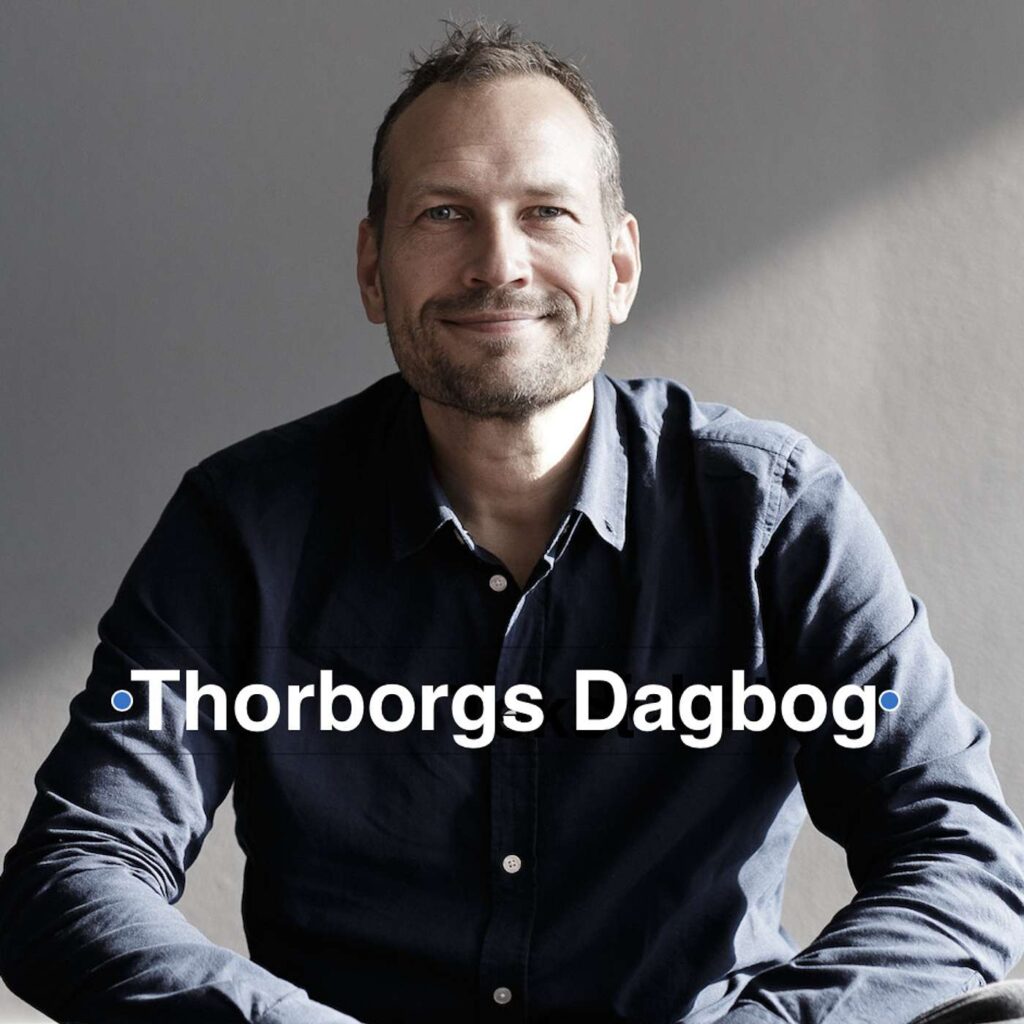
When are you ready to turn a hobby business into a livelihood? For me, it starts with understanding the market, knowing your personal expenses and testing how much you’re actually willing to sacrifice. I’m not much of a risk-taker, so I also want a route back if it doesn’t work out.
It’s 1 December 2023. There’s snow, Øresund looks beautiful, and I’m heading into Dinero. I have a bit of a cold, but after a few days of not feeling particularly well, my spirits are more or less high again.
Recently, I took part in a webinar at SHUP, where we discussed moving from a hobby business to something you can live on. SHUP is an online shop system I’ve invested in that makes it simple to get started without lots of technical knowledge.
We discussed the topic for around 30–40 minutes. If you want the longer version, the webinar I link to in the episode description is on YouTube. Here, I want to share some of the thoughts it sparked for me.
A hobby business can start in many places
Lots of people have a small business alongside their work or studies. Perhaps they sell something in an online shop. Perhaps they make pottery. Perhaps they simply earn a little pocket money from something they’re really good at.
My sister is a good example. She knows an incredible amount about gardening and grows more than 100 different tomato varieties. She sells seeds to others who also enjoy trying unusual tomatoes.
You can find her under Katrines Have. She’s good at making videos and sharing her knowledge. It’s not just the seeds she has to offer. It’s her knowledge too.
Like many others, she’s wondering whether she can turn something she’s very interested in into a livelihood. It’s an exciting dream. But there are questions you need to ask yourself before quitting your job.
Is the market big enough for you to live on it?
The first question is whether there’s a big enough market at all. Taking my sister’s example: Can you make a living selling tomato seeds in Denmark?
My immediate guess is that it’ll be difficult. She knows that too. There’s a limited number of gardens, and only some garden owners care enough about tomatoes to buy special seeds.
Most probably just go somewhere and buy a packet. They aren’t necessarily interested in the huge range of varieties. She’s targeting the particularly interested ones.
So even if a business works well as a hobby, the market may be too small to provide a full income. That’s not a criticism of the product. It’s just something you need to recognise.
From there, you can choose different paths. Either expand the market you sell to or expand what you sell.
You can go beyond Denmark’s borders
One option is to say: Perhaps Denmark isn’t big enough, but what about Europe or the rest of the world?
You could make the online shop multilingual, start marketing in other countries and work towards becoming the tomato seed queen of the world. That’s certainly an option.
But it also requires something different. You need to deal with more languages, shipping and logistics. How do you ship the products? How do you market them? How do you help customers writing in another language? If you want to read more about running an online shop, I’ve collected my experiences in E-pusher.
It’s no longer just about being good at tomatoes. It also becomes a bigger e-commerce project.
So a lot depends on who you are. Do you want to spend much of your time on that sort of thing? My sister isn’t necessarily interested in becoming an e-commerce nerd. So I think another path may be more obvious for her.
You can also turn your knowledge into more products
She can do much more than sell tomato seeds. She’s also good at finding mushrooms and knows a lot about other things in the garden and nature.
Perhaps she could run mushroom courses. Or teach people about fermentation. Sourdough bread could be another example, although quite a few people seem to have tried that during COVID.
The point isn’t that those three particular ideas are right. It’s to ask: What do I know that someone would pay to learn?
If she’s already good at communicating and has people following her on social media, she has a good starting point. Then she can use her knowledge in more ways and broaden the business into related areas.
That’s a different route from selling the same product in more countries. Both can be interesting. But you need to choose something that fits your abilities and the work you actually want to do.
How much needs to be left for you each month?
The next question is what you need personally. How much money needs to be left after tax so you can pay rent, food and your other expenses?
It’s easy to think in terms of revenue. But revenue doesn’t pay your personal rent. The money left after the business expenses are paid, which you can use personally, does.
So it’s also worth looking at whether you can make your life cheaper for a while. Can you live somewhere cheaper? Do you have expensive habits you can do without? Could you bring coffee in a flask instead of buying it out every day?
It may sound small, but the less you need to take out of the business, the easier it becomes to reach the point where it can support you.
Savings are good too. They give you a little time and breathing room if income doesn’t arrive exactly as you’d hoped.
Most of us don’t want to bet everything
Most people are probably a little like me. We want to be self-employed, but we don’t want to put everything at stake.
We don’t simply think: Fuck it all, I’ll quit my job, take out a big loan and hope it works. We have a family and a life we want to protect. We don’t want the children to change schools because we’ve lost the house.
At the same time, I think you need to compare your fear with the risk you’re actually taking. We live in Denmark, where there’s a safety net. That’s not the same as bankruptcy having no consequences. But I don’t think you should automatically imagine a failed attempt ending with you on the street either.
I also find myself thinking of people who need help for completely different reasons than a business that didn’t work out. I’ve read that more money is going into psychiatric care, and I think that’s good news. Whether it’s enough, I don’t know. I don’t have expertise in that.
Back to the business: My starting point is to try to make the transition in a way that gives you experience before removing your entire financial foundation.
Test your commitment while you still have an income
I’d begin by working seriously on the business alongside my job or studies. Not just pottering with it whenever there happens to be time.
When you’re off work, you get to work on your own business. You use evenings, weekends and perhaps some holiday days to make something happen. You test in practice how much you’re willing to prioritise it.
That means something else needs to take up less space. Netflix. Other leisure activities. Some of the comfort you’re used to.
I can put it a little provocatively: If you aren’t willing to give up a few hours in front of the television, how much do you really want this?
It doesn’t necessarily mean giving up exercise to save time at a gym either. For example, you can exercise on the floor at home and save the journey and subscription. The point is to examine how you use your money and hours.
I don’t mean working round the clock your entire life. But when you’re self-employed, there can be periods when you need to go all out. If you have an online shop in the run-up to Christmas, it can be really busy. Then perhaps there’s less to do at another time.
You need to do what it takes to make the business work. So I think seeing what you’re willing to sacrifice while you still have your regular income is a good test.
It’s also completely fine to keep a hobby business
If you discover you don’t want to spend all those evenings and weekends on it, that’s worth listening to.
Perhaps what you really want is your hobby, your job and plenty of time for everything else. There’s nothing wrong with that. Just be careful about clinging to the illusion that the hobby will turn into your livelihood all by itself.
You can certainly keep enjoying it alongside work or studies. A small business doesn’t need to become big to be a good part of life.
But if you say: Now I’ll make an extra effort for one, two or three years, and I really want to spend my time making this work, you have a different starting point. Then you can start seeing whether the effort produces money too.
From a hobby business to a livelihood: My own rule of thumb
At some point, you also need the courage to cut the cord to your regular income. Some people hang on for a very long time because they never think their hobby business earns quite enough.
They think: I’m only earning 30, 40, 50 or 60 per cent of what I need. So I can’t do without the job.
Here, I have a rule of thumb I’ve invented myself. I have no basis for calling it a rule. But it’s my podcast, so you’re getting it anyway.
If the business can give you around half of what you need for your personal expenses, I’d start considering going into it full-time.
The reasoning is that, until now, you’ve given your best hours to your job or studies. You get home in the afternoon and then need to build your own business in hours when you’ve already used lots of energy.
If you instead use your good, fresh hours on your own business, I believe you can often get far more out of it. My own guess is that there could be potential to double what comes out of the work.
That’s my assessment, not a guarantee. And I mean the bottom line, not just revenue. It doesn’t help your personal finances if you sell twice as much but spend all the extra money getting those sales.
You can’t run two full-time projects forever either
The alternative may be hanging on to your job so long that you burn out. It’s difficult to have a full-time job while also running an ambitious business on the side for years.
But the other extreme isn’t my style either. If the business only provides ten per cent of what you need and you have no savings, I wouldn’t want to remove all my other income.
Some people may be comfortable with that risk. I’m just not like that. Risk-taker isn’t the word that fits me best. I don’t bet more than I can afford to lose.
So I think you need to combine your assessment of income with an assessment of how long you can manage and what you’ll do if things don’t go to plan.
What’s your taxi licence?
When I was young, I got a taxi licence. My thinking was that, with that, I could always earn money. It was my insurance that there was a way to pay the rent.
That was when I drove a taxi in 1991. Now people talk about robotaxis, so perhaps it’s not quite the same lifelong insurance I imagined then. I don’t know when that development will really matter in Denmark.
But the idea is still good: What can you do that gives you a way to earn money if your business can’t support you?
For me, giving talks later became that option. If I felt insecure about something, I knew I could go out and give talks and live on that. It was my taxi licence in another form.
My sister is a trained early years educator. Perhaps she can take temporary work and earn money that way. That’s her option for having something to fall back on.
Perhaps you have something similar. A qualification, experience or skill that lets you get some hours somewhere else.
The transition can also be gradual
It doesn’t have to be either a permanent full-time job or no other income at all. One option could be quitting your job but taking some temporary shifts, so part of your expenses are still covered.
Then you get more time for the business while keeping a little security. Savings can provide another kind of buffer.
I’m certainly not generally recommending taking out a huge loan and simply quitting your job. In many cases, I think that’s irresponsible. But of course it’s your life, and you need a solution that fits your situation.
You can buy a business instead of starting from zero
There’s also an option many overlook: You can buy an existing business.
I understand why many dream of an online shop. It can offer flexibility. If the work and logistics are set up properly, parts of the business can be run from elsewhere. Perhaps a fulfilment warehouse handles packing and shipping.
But instead of building everything from scratch, I’d also look at Saxis, which I run with my wife. Businesses are sold there, and many are online shops.
I’ve seen opportunities with existing revenue, a customer database and a domain that’s been around for several years. Perhaps there are also good search rankings and decent customer reviews.
If, for example, I could buy an online shop like that for 150,000 kroner, I’d be interested in investigating it. I’ve seen businesses in the 100,000–200,000 kroner range that already have significant revenue. Those are examples from the market I’m looking at here in 2023, not a promise about what’s for sale later.
That can offer a different starting point from an empty online shop with no customers. But again: Revenue isn’t the same as profit, and you need to be able to run the business you buy.
A simple platform can also be right
Some businesses being sold use more advanced platforms. Learning them can take time.
If you mainly want to work with your products and customers, starting simply may be more obvious. That’s one of the things I find interesting about SHUP.
You can build a successful business on a very simple online shop platform. You still need products or services your target audience wants. And you need to generate attention through PR or marketing.
It’s about temperament, technical understanding and where you want to use your energy. The best solution isn’t necessarily the most advanced.
When you start treating your hobby as a business, you also need to see what it earns. An accounting program like Dinero can help you keep track of income and expenses, so you aren’t judging it only by the feeling of being busy.
I started with something on the side myself
So how did I start? I was studying for my HF qualification when I began selling shareware games. I secured some distribution rights and got a small business going.
When sales picked up, I brought a classmate on board, and we opened a physical shop on Falkoner Allé selling computer games.
My anchor was that I was studying for HF and receiving student support while also driving a taxi. My partner delivered morning newspapers. So we had something alongside it while we got the shop going.
Eventually, we got into trouble with the principal over our absence. And rightly so. We had around 50 per cent absence because we were in the shop every other day.
We didn’t finish HF. Instead, we ended up self-employed with a certain amount of success.
It is not a formula that suits everyone. But that is how I started myself: with a small business, an income on the side and a gradual move towards making a living from it. I tell more about my early years as an entrepreneur in If You’re Gonna Be Dumb, You Gotta Be Tough.
I hope those thoughts help if you have a dream of your own. Feel free to follow the podcast in your preferred app, so you get the next episodes when they arrive. Have a really good day.
Listen to the episode
Episode 32 of Thorborg’s Diary · 1 December 2023
Watch the episode on video
Listen in your podcast app:
All episodes on Apple Podcasts · All episodes on Spotify · All episodes on Amazon Music · RSS Feed