

Big bath day, Ferrari and a little about PR
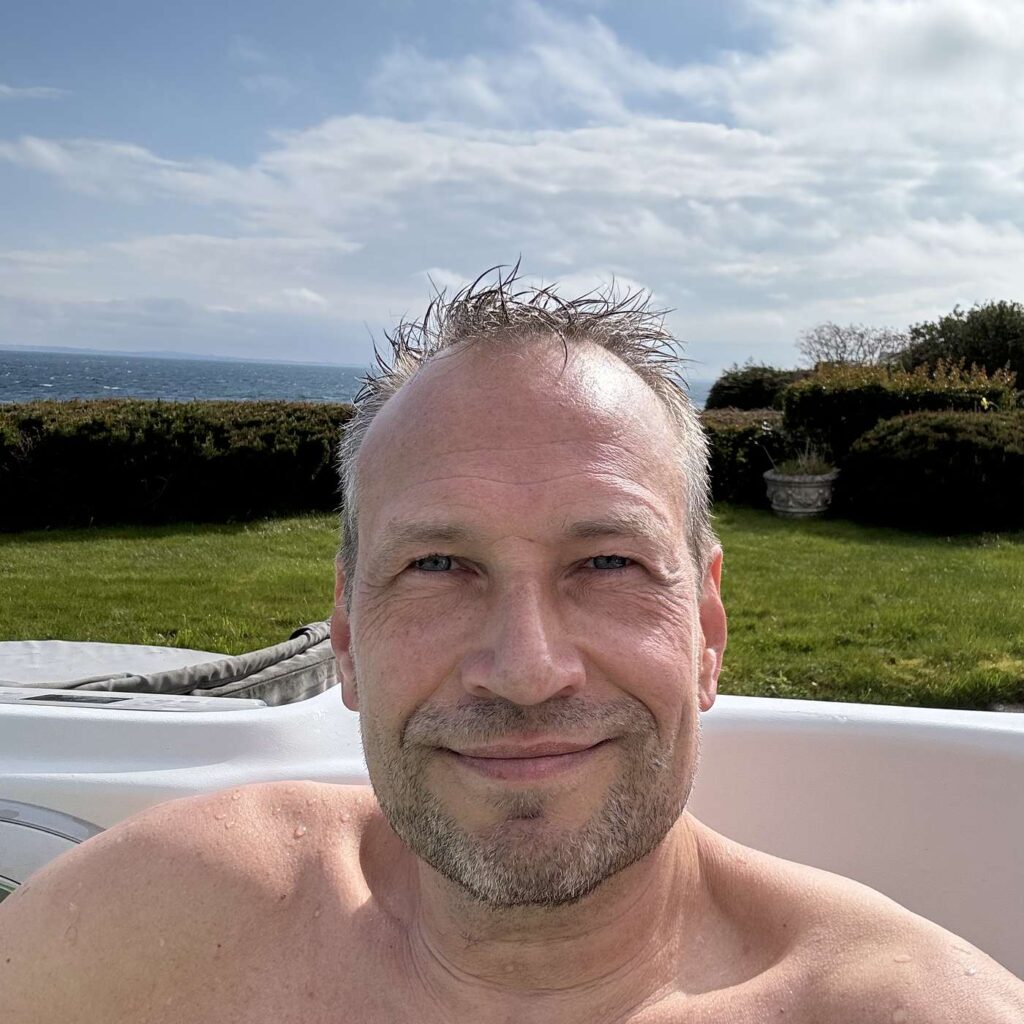
On PR and visibility, Big Bath Day and my thoughts on Ferrari and new technology. I explain how to build a personal reputation and make it easy for journalists to call.
Thorborg’s Diary · Episode 56 · Recorded on 26 April 2024
It’s 26 April. Some call it Great Prayer Day. For me, it’s Big Bath Day. I don’t want the government removing a public holiday, so my employees still have the day off on full pay. And we have a little fun with it.
I’ll return to the day and a little about PR shortly. First, I’ll discuss a Ferrari I drove behind yesterday. It sparked thoughts about technology, status and what we’re actually paying for.
A Ferrari on Strandvejen
I live on Strandvejen with my wife and our children. Let’s put it this way: My car doesn’t attract attention there. That’s not why I bought it either. I still have my Audi e-tron GT RS, and I simply think it’s lovely.
For me, it’s the most beautiful electric car. It’s a good-looking car that’s been electrified. No strange side mirrors, odd rear end or anything else. It just looks sharp and clean. The Germans are good at that design, although the French and Italians can compete too.
Yesterday, I drove behind a Ferrari. I don’t know the model. It looked relatively new, and a middle-aged man with stylish sunglasses sat looking very pleased. He peered eagerly through the windows as though making sure everyone saw him.
Fair enough. When you’ve paid that much for a car, you should bloody well be allowed to show it off a little.
You can learn from people who make an effort
I feel somewhat similarly when I see a man or woman who’s fit and defined. My wife and I don’t necessarily agree on what looks good. But if you’ve spent years in the gym making an effort, I think you’ve earned an admiring glance too.
That’s how I feel about people who become really skilled at something. Even if I wouldn’t spend my own time on it or find it particularly interesting. There’s something interesting about people who make an effort.
I’ll never be as extreme as some of them. But I think we can always learn something from the extremes. I see it as a buffet. How do you train? What do you eat? What habits do you have? Then I can take individual things and think: I could actually fit that into my daily life.
It could be a way of preparing vegetables or a small change in exercise. I don’t need to copy the person’s entire life. I can take what suits me and still make my own everyday life work.
That applies to entrepreneurs and investors too. I’ve read a lot about Warren Buffett because he fascinates me. I won’t become Warren Buffett, but perhaps I can become ten per cent better at doing some things. That can make a difference in my life too.
When does a new car become old technology?
Back to the Ferrari. My wife and I looked at each other and knew what the other was thinking. Although the car was new, in a way it seemed old-fashioned.
I don’t know what it cost. We guessed several million, but that was a guess. It wasn’t an old car. Yet hearing its petrol engine gives me a little of the same feeling as someone driving up and down Strandvejen in a 1965 Ford Mustang.
That’s not to disparage classic cars. I just get a sense of enthusiasm for something from the past. Perhaps calling a new Ferrari a classic car is a little harsh. An enthusiast’s car is probably better.
And if I sound a little out of breath, it’s because I’ve just done 133 floors on the stair machine. Then getting into a car with ventilated seats is luxury.
For me, the petrol car is old technology: It makes noise, and I experience it as inefficient compared with an electric car. And acceleration is no longer something expensive sports cars monopolise.
Ten years ago, perhaps you could impress people with your Ferrari reaching zero to a hundred in around three and a half seconds. But you can get that acceleration in an electric car at a fraction of the price too. My point is that the man in the Ferrari can meet an ordinary schoolteacher in a Tesla Model 3 Performance who gives him a run for his money.
So if you bought the car to be faster than everyone else, that argument is challenged. Why have a Ferrari then? Perhaps because it’s beautiful. Perhaps because it has a particular image. I think that’s fair enough.
You can also say: I’m so rich I can spend lots of money on something just because I want to. Fine. I simply think the arguments change. For me, the electric car’s comfort and technology carry more weight. But if you think the Ferrari looks good and want to show it off, do it.
Ferrari could end up like a Rolex
I wear an Apple Watch. I have a Rolex too, but usually don’t bother wearing it. My Apple Watch is far more useful to me. I use it for many different things and really like it.
Yet there’s still a market for Rolex. Many use a watch as a status symbol. So I’m not saying Ferrari will necessarily lose its market. Perhaps Ferrari ends up as an expensive version of Rolex.
It’s not just about practical purpose. You can see the time on your phone and still want an expensive watch. Likewise, you can buy an expensive car even if your transport needs could be met another way. I think that difference becomes even clearer if cars become self-driving.
I think of a peacock with its enormous plumage. It carries something that looks rather impractical. But it signals: Look how strong and superbly equipped I am. I can even carry all this around.
I think humans use those kinds of signals too. And that’s why I think there’ll still be a market for Ferraris.
PR and visibility start with building a reputation
I also promised a little about PR. How does our Big Bath Day end up on the front page of Finans? Of course, part of the explanation is the reputation I’ve built over the years.
You can start doing that too if you want to become known in a particular field. A fairly simple starting point is following Danish journalists on Twitter, now called X. I follow quite a few myself, and you can find some through my list too.
Then start writing something intelligent. Start a blog, for example in WordPress, or use LinkedIn. What matters is publishing something you can link to.
Write columns. Once you’ve written one you think is really good, you can send it to the newspapers. Don’t expect them to take it the first time. Building it takes time.
Share it on X too, with a good headline and an introduction making people want to read. Then repeat. Comment on different things, but consider your target audience: Who do you want to reach? What do you want to achieve? What’s your expertise?
You need patience. As you follow journalists, some may follow you back. Others share your posts. Slowly, you build expertise and a personal name in the field you want to be known for. If you want to read more about creating visibility around your business, see Iværksætter til jeg dør 2.0.
Make it easy for journalists to call
At some point, journalists may start calling. So make sure your phone number is easy to find on your professional profiles. And answer when it rings.
Journalists won’t necessarily want to call repeatedly. Especially if you aren’t very well known yet. Then work onwards from there.
If you can write reasonably well, have a useful opinion and understand your audience, I believe you can become one of the experts the media quote. It can take three to five years to build. It took time for me too.
Now I’ll enjoy my Big Bath Day. I hope you have the day off too. If not, here’s my slightly provocative encouragement: Rebel, go to a café, eat some open-faced bread with smoked salmon, drink a draught beer and send your warmest middle finger towards Christiansborg.
Have a really good day. Love you.
Listen to the episode
Watch the episode on video
Listen in your podcast app:
All episodes on Apple Podcasts · All episodes on Spotify · All episodes on Amazon Music · RSS Feed