

My biggest telling-off and why I'm not going into politics
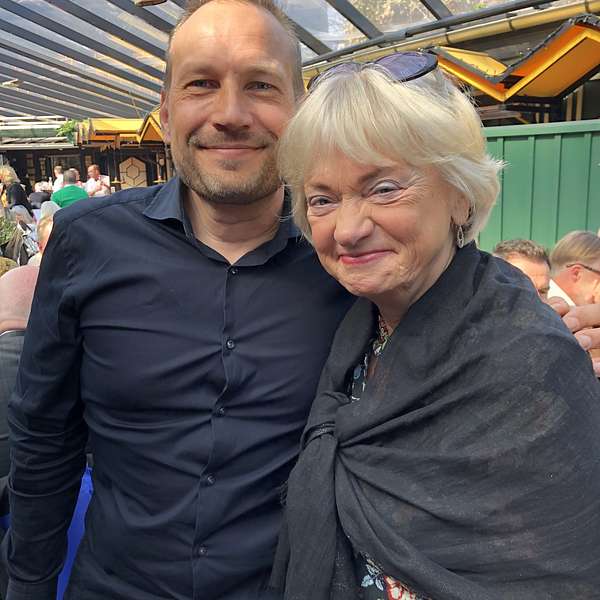
About politics and business, my telling-off at Marienborg and why I prefer building businesses. I also talk about Capino and long-term investments.
Thorborg’s Diary · Episode 112 · 25 November 2025
Listen to the episode
Watch the episode on video
Listen in your podcast app:
Apple Podcasts – this episode · The podcast on Spotify · All episodes on Amazon Music · RSS Feed
Find more episodes here
Hello and welcome to Thorborg’s Diary. It’s November 25. It’s grey, dark and dreary, and I love it. I’m enormously fond of Christmas. I’m the Christmas devil himself.
I’ve just bought an enormous Advent wreath. It cost almost as much as Lars Løkke’s shoes, so you can imagine the level. But it’s beautiful, and there’s a lovely countdown candle too. Now I just need to put lights up in the garden. I haven’t managed that yet because it’s been full-on with both work and enjoyable things.
We’ve just been at Marienlyst with the family. Jannie’s brother Jesper came, along with our kids and Mads’s girlfriend Malou. We stayed until three or four in the morning and had so much fucking fun.
There really isn’t much nicer than partying with your older children. One aged 17, one 19 and one 22. And Malou, who’s both beautiful and clever. Mads has done well, and so has she, because he’s a lovely lad.
Then on Sunday we went to Morten Messerschmidt’s annual Christmas party. It’s one of the year’s highlights. There’s a completely strange mixture of people from different political parties, artists, actors and all sorts of others.
Lizette was there too, and of course I couldn’t resist joking about the stories about her. I almost hoped I’d get a little pat on the bottom when she walked past, but nothing happened. So my own very limited experience was that she behaved decently that afternoon.
It’s not a club of white men over 50 standing around only discussing sending immigrants home. It’s a really lovely gathering of very different people. You can meet everyone from Klaus Riskær to people like Søren Fauli, who was there last year. It’s a broad mix.
And why am I telling you this? Because this is my diary. That’s pretty much the promise in the title.
Politics and business: Why not go into politics?
I got talking to Frederik Vad from the Social Democrats, and he asked why I don’t go into politics. I’ve considered it before, because I’ve actually spent quite a bit of time at Christiansborg over the years.
I’ve sat on committees and attended various meetings. I’ve been to Marienborg discussions with Poul Nyrup and similar occasions with Anders Fogh. Businesspeople came in, had a good dinner and could say something about their industry.
The telling-off at Marienborg
And it was actually at Marienborg that I got one of the biggest tellings-off of my life. Perhaps only surpassed by one from a captain in the Royal Life Guards. I’ll tell that story another day.
The telling-off at Marienborg came from Lone Dybkjær, who was married to Poul Nyrup. Imagine being relatively young and sitting with the prime minister, his wife, ministers and some of the heavyweights of the IT industry.
There were CEOs from Microsoft, IBM, Oracle and the like. Hardcore suits and ties. Hardly my natural habitat, but of course I can put them on when the occasion calls for it.
I knew I might be asked to offer input about the internet. This was when many still saw it as something a little futuristic and uncertain. A bit like people discuss quantum computers today: You know something’s happening, but not everyone has a relationship with it.
So I thought about explaining that the internet wasn’t just a tool for businesses. I was facing a Social Democratic prime minister, so I also wanted to explain the social side.
I said something about ordinary people using the internet to stay in touch and have a bigger social life. Then I happened to mention single mothers as an example of people who might struggle to get out and could benefit from meeting others online.
I think I’d also used the word vulnerable near single mothers. And then I’d let the devil out of the box.
Lone Dybkjær had been a single mother herself. I didn’t know that, and it wouldn’t have changed my intention. I didn’t mean anything derogatory about single mothers. I was trying to explain that new technology could also create opportunities for people who couldn’t easily get out.
But that wasn’t how my words were received. She stood up and gave me a proper dressing-down. I remember five to ten minutes, but when you’re being scolded in front of the prime minister and a room full of suits, time probably feels different.
I stood there in my best suit and polyester tie, practically feeling my hair blown backwards. My cheeks were redder than a postbox.
At some point Poul Nyrup turned to her and asked her to sit down and take it easy. I don’t remember exactly how it all ended, but it did end, and I got home before midnight.
It’s a story I still think about when we discuss words and intentions. Some latch onto a particular word, while others try to understand what someone actually meant.
I think we can go so far in policing words that people become afraid to open their mouths. You can barely say dustman or chairman without someone wanting to discuss what it signals. And if you happen to use an old term about a wheelchair or disability, the whole conversation can become about that.
I think it’s deeply ridiculous if we forget the person and intention in all that. That doesn’t mean Lone Dybkjær didn’t do much good. She did. But I remember that experience very clearly.
I didn’t get to tell Frederik Vad that story. He was going out to smoke, I needed fresh air and it was bloody freezing. So you’re getting a much longer version of a very short conversation.
The entrepreneurship committee that felt like a play
Another experience mattered more to why I don’t want politics. At one point I was asked to chair an entrepreneurship group under a ministry. I remember it as the Ministry of Business, but don’t hold me to the exact name.
There were to be several entrepreneurs, including Janus Friis from Skype. He was a rock star at the time. I can’t remember all the other names, and I won’t guess them into the story.
I initially said no. I didn’t feel qualified. I had no political experience and didn’t know how to lead a process like that. But they called again and explained I’d have a civil servant to help with practical matters.
Eventually I said yes. It sounded exciting. We’d suggest how Denmark could become a really good country for entrepreneurs. I wanted to be part of that.
We met in a nice room, with a row of civil servants. The task was explained and some proposals they already had were presented. But now they wanted our ideas.
Then came meetings over several months. We sat discussing, and an experienced civil servant guided the process. I was glad of the help because I didn’t know all the procedures. How do you start? How do you sum up? How are conclusions passed on?
But when we finally had the result, I could barely believe it. As I remember, the proposal list was practically identical to what we’d been shown at the start. Barely a comma had changed.
So what the hell had we actually done? We’d spent months meeting, talking and discussing. But what came out seemed to have been decided in advance.
To me it felt like a play. We’d been extras who could stand in a photo and legitimise the project. Now they could say they’d listened to the country’s leading entrepreneurs and made a plan with them.
That was my experience of it. Afterwards I sat thinking our names and faces had been more interesting than what we actually had to say.
At the same time I’d read a book about psychology and manipulation. How to steer groups and get people moving in a particular direction. Thinking back to the meetings, I felt I recognised some of those mechanisms.
Discussions and groupings emerged and were handled in a way that brought us back to the desired conclusion. Part of me was impressed by how elegantly it was done. The other part thought: Fuck, that was disgusting.
Only afterwards did I really feel I’d been a ventriloquist’s dummy. As if a civil servant had a hand up my back, and when my mouth moved, the words weren’t really mine.
And then I thought of all the other committees and meetings I’d attended over the years. All the pictures with ministers. All the litres of coffee. What had I actually achieved?
My own answer was: Far too little. And then I had to acknowledge I don’t understand politics very well.
A team in business and a different game in politics
I’m used to being a business leader. Fundamentally we work as a team. We have different tasks and can disagree, but we try to improve the business together.
Of course there can be people who aren’t team players. But if they destroy cooperation, they become a problem for a company that needs to compete. We need to improve or others take our customers. My criticism of the public sector is that citizens often can’t take their money elsewhere. So I feel that competitive pressure is missing and there’s too little innovation.
I have my colleagues’ backs, and they have mine. At least that’s what we try to build. We face a task together and compete with other businesses.
I get the impression politics is a completely different game. The fight isn’t only against other parties. Internally there’s also fighting for posts, positions and the perks you can get.
You’d think people in the same party stood shoulder to shoulder. But there can be internal competition where a colleague’s weakness becomes your opportunity. That’s not an everyday life I want.
I’ve also followed the case of Pernille Rosenkrantz-Theil after the local elections. She aimed to become Lord Mayor of Copenhagen, and when that didn’t happen she chose to withdraw from politics.
I’d heard her say she’d honour the mandate voters gave her. So I find it hard to see her leave everything when the position she’d wanted wasn’t the outcome.
To me it becomes an example of how much the post can matter compared with the task. I think it sends a bad signal to those who voted for her. And I get bloody annoyed at the distance I see between grand words about responsibility and what happens afterwards.
That doesn’t mean I’m saying all politicians are the same. But I think there’s a problem with an environment where the seat, power and next job can matter so much.
And then I have my own very cynical prediction: I wouldn’t be surprised if at some point she lands a well-paid job in an organisation or another part of the political network. That’s a guess on my part. I don’t know what she’ll do.
But that’s exactly the distrust I’ve developed towards the system. When you have strong connections, you often also have opportunities to find a new place to land. And I think it can be hard to distinguish between the greater good people talk about and their personal interests at the same time.
I’d rather build businesses
So when Frederik asks why I don’t go into politics, the short answer is: Why the hell would I?
I’m sitting with my colleagues building a product that, at the time of recording, helps around 105,000 small businesses with administrative burdens. We give people more time for their business, family and own lives. That’s a real difference.
Should I swap that for less pay and everyday life where I have to watch both the knives in my own back and what everyone else wants? Then after four or eight years risk thinking I’d spent most of the time in committees without getting much done?
No fucking thank you.
I want to help change something in Denmark. It doesn’t have to be the whole country at once. Making everyday life easier for so many small businesses is also a mark I can be proud of.
We had the idea together. We financed the company, built it and made it a good business. We have around 115 people earning salaries and paying tax. We have happy customers, and the owners we sold to in 2016 are happy too.
That’s something concrete I can point to. That’s what I want to spend my working life on.
I have a slightly funny memory from Carmel in California, where Clint Eastwood had been mayor. There was a story about public toilets he’d helped get built. It sticks in my head, though of course he had other responsibilities.
But I think: Is that what I want to spend years fighting for when I can build something with my colleagues? I’m not even sure I’d get as far as he did.
So I’ll stay in business and keep my hands off politics. At least as I feel today. I say almost, because I don’t want to be caught in ten years by a categorical statement about something I’d never do. You don’t know what life brings.
Now I’m nearly at Dinero. I have a management meeting and a meeting with one of my managers, then I need to speak to Mette about Capino and Saxis.
Capino and long-term investments
Things are actually going brilliantly. Over the summer I was a little down about Capino not having enough activity. But now we’re having a record year.
We’ve just passed 1,000 investors on the platform. That’s 1,000 people interested in lending or investing money in businesses. They have different interests, so you can find people suited to a particular project type.
Many bring more than money too. It could be an experienced executive who’s freed up capital and wants to help a new business. Knowledge, networks and someone who can open a door or help you avoid holes they’ve fallen into themselves.
We’re also breaking revenue records. Placing an ad costs a little. During recording I remembered an amount between 1,000 and 5,000 kroner depending on how much capital you’re seeking, but I wasn’t sure of the exact price. We’re getting almost a new investment opportunity every day right now, perhaps around five a week. So there’s something to see whether you’re seeking capital or want to invest.
I could almost wish I had more cash lying around myself. But my money is out working. On Bornholm, in Visma shares and in Novo, among other things.
Novo hasn’t been a fantastic investment in the very short term. And someone on X called me a bastard. I’m guessing he’d bought after I said I was doing so.
But I said what I was doing myself. I didn’t say he should do the same. And I said it was long term. For me that can be ten years. It’s not three months.
Of course buying cheaper would have been nice. Then I’d have got more shares for my money. But I can’t predict the short term, and I can’t promise anything about the long term either.
I just think being called a bastard because someone projected their own idea of a quick result onto what I said about my own investment is a little lousy.
Well, now I need to go in and work with my good colleagues. Have a fantastic day.