

My dad and me
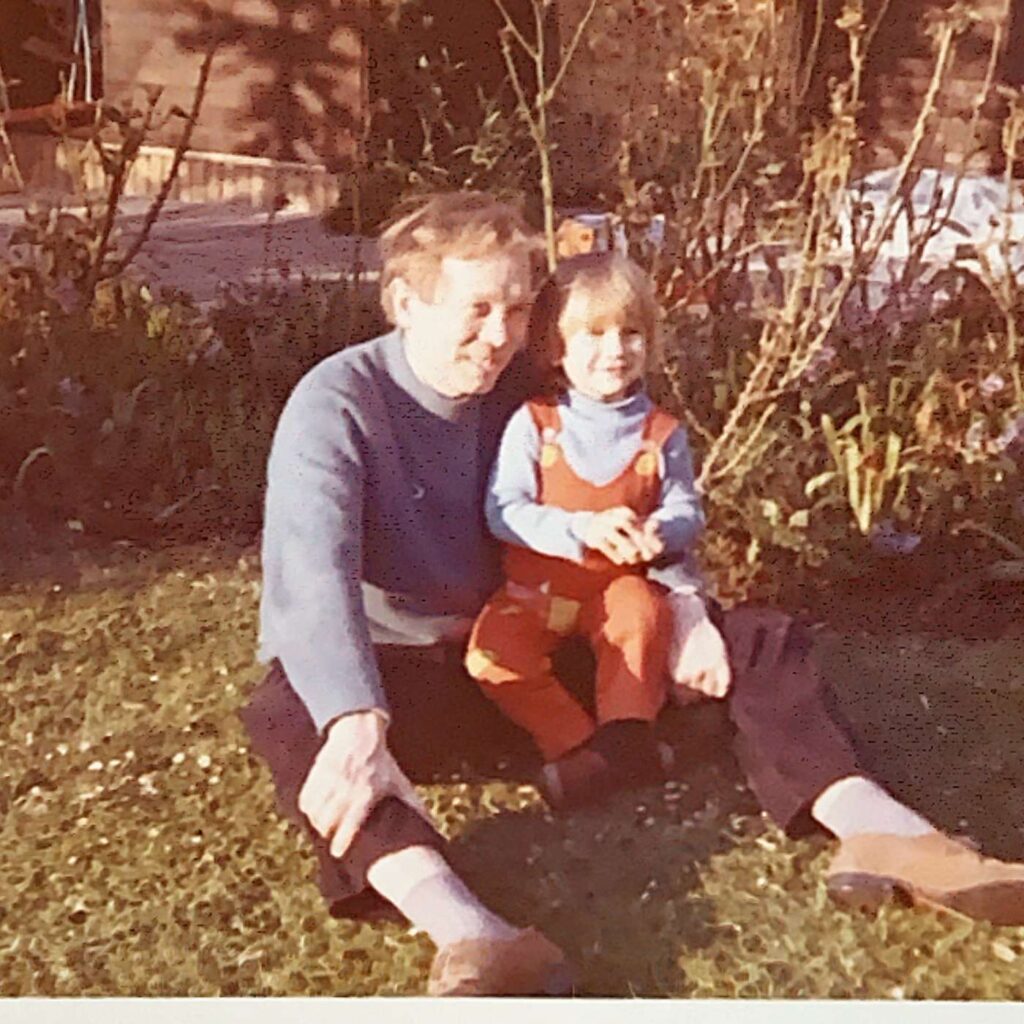
About my relationship with my father, his birthday, longing for recognition and the conversation that changed our relationship. And about forgiving and moving on.
Thorborgs Dagbog · Episode 107 · 23 September 2025
Listen to the episode
Watch the video episode
Apple Podcasts – this episode · Spotify · Amazon Music · RSS Feed
It’s 23 September, my father’s birthday. This year marks ten years since he died. I also realised I’d passed 100 episodes without celebrating it. I’m terrible at anniversaries. I actually think you should celebrate them, but so much is happening that I sometimes look for things I don’t need to do. That’s both spoiled and a bit harsh, and yes, I could say no more often.
We just went to see MMA at KB Hallen with Jannie and the boys. Fighting isn’t my thing at all, but Jannie has competed in taekwondo, and the others thought it was fantastic. As a show, it was a thoroughly well-produced experience too. There were lots of interesting people to talk to during the breaks, including Lars Mikkelsen, who’s also served in the Life Guards. Mads is going there himself, so they had a good chat. Mads joked that Lars’s narration in history lessons had bored him. I said it was probably still better than just sitting with a book, as we did.
We are also going to Wallmans at Cirkusbygningen. I have been there many times and am still impressed that they can make good food for so many people while putting on such a polished show. I would not praise something I did not think was good myself. But it is really my father I want to talk about. My relationship with him is also part of my autobiography If You’re Gonna Be Dumb, You Gotta Be Tough.
An interview took me back to my father
I heard Peter Lund Madsen’s son on Genstart. It was an incredibly moving interview. He talked about his father and their relationship. The interviewer asked about their last conversations, which had included finding a restaurant. Was he sad he hadn’t known what was going to happen so they could have had a deeper conversation?
As I heard his answer, they’d talked a lot, and the son had no doubt his father loved him. So he didn’t have the same need for a big final reckoning or a special ending. I thought that was beautiful. It made me think about how many people have unresolved issues with their parents. Many of my male friends have something with their father they’ve never really talked about.
Men from an older generation could be a bit closed off and struggle with feelings. My father certainly wasn’t good at talking about them. My mother later wondered whether he might have had some traits resembling Asperger’s. That’s our reflection afterwards, not a diagnosis. My mother loved him incredibly deeply. There still isn’t a day when she doesn’t talk about him, and their relationship is in many ways a good example for me.
Jannie and I both have tempers and strong wills too, and over time we’ve got to know each other better. That makes it easier to navigate each other’s rough edges. I’m quite absorbed in everything going on inside my head and don’t always notice what’s happening in the room. I can be self-centred and should probably contribute more at home. Other people aren’t the only ones who can be difficult.
A gifted father who was hard to budge
My father was old school. He and his sister travelled through Europe and devastated Germany around the end of the war. My aunt Helle Thorborg has written about their travels. Imagine two young people hitchhiking through cities where much has been razed to the ground and people can barely get by. It must have been overwhelming and left its mark on them.
I’ve probably been hard on my father sometimes too. But children are entitled to be treated properly. You didn’t choose to be born. There was never violence in our home, and my mother was there for us. My problem was that my father wasn’t particularly understanding and could be inflexible in his opinions. Once he’d made up his mind, he was hard to budge. He loved arguing. So do I, but I think I’m better at listening and changing my mind.
He was extremely gifted. He spoke several languages, spent a lifetime as head of development at a loudspeaker factory and invented things. For the last many years of his life, he sat in front of the computer with formulas in an Excel spreadsheet. They were so long and complicated I’d never seen anything like them.
As I understood his work, it was about calculating how a loudspeaker driver would behave, including the surround that holds the cone. That part was difficult to account for in a simulation. He spent many years developing a formula for it. Shortly before his death, he was honoured among leading acousticians in Vienna, with my mother there too. It was a very big day for both of them.
When I asked what he was doing, he tried to explain. But it quickly went in one ear and out the other. I could understand the broad idea. It’s a bit like the developers at Dinero. I can talk to my CTO about how we can train AI agents to develop software and understand the direction and opportunities. I can’t sit down and program the solution.
My father knew an enormous amount about history and geography and was almost impossible to beat at chess or Trivial Pursuit. Entertainment and sport, on the other hand, weren’t his area. I was worse than him at many of the disciplines he excelled in. As a boy, you look up to your father, and I wanted to become a loudspeaker engineer too.
I found a different path, but missed the recognition
One of my father’s friends from Sony once came to our home with an early CD player, which we powered using the transformer from my slot-car track. From what I’ve been told, it was the first CD player played in Europe. It happened in the basement of my childhood home. Things like that were part of the world I grew up in, and they made my father a big role model.
But when I took the maths track at upper secondary school, I had to admit that maths, physics and chemistry weren’t my strengths. I like the big ideas in science and development. When we get down to integral calculus and the details I need to concentrate on to calculate something, I lose interest. I left school and got a job at a petrol station. That gave me a complex in relation to my father.
When we sold Jubii for 100 million euros, I called and told him. He said that was impressive, then started talking about my sister’s daughter Olivia, who was visiting and had done something he thought was fantastic. The rest of the conversation was about her.
As a grandfather, of course, it was a big thing for him. But I felt the pain of his not being able to spend just a minute on what I was telling him. Ask about it, say bloody hell, well done, or invite me home for some marzipan ring cake and a schnapps. Just some kind of recognition. I hadn’t finished upper secondary school or become an engineer, but I’d found another path and achieved something on it.
Being included in Blå Bog meant a lot to me too. Others have made a virtue of not wanting to be listed, but for me it was a little like getting the graduation cap I never got. A kind of recognition from society I had apparently missed. A psychologist could probably make quite a lot of that.
The conversation that changed my relationship with my father
My father got cancer, and at some point we knew his time was limited. I was also having other problems and sometimes saw a psychologist. That helped me put things in perspective, including my relationship with him. I could see there were boundaries I hadn’t set and things I hadn’t said.
I decided to go to my parents’ home and tell him what had hurt me. My mother was there too. It became a long conversation with moist eyes on both sides. My father was sad to hear it and told me things about his own childhood I hadn’t known. He’d felt like the black sheep himself and hadn’t received the recognition he needed from his parents.
When we’d finished, I saw him differently. To think that someone with that starting point had actually become as good a father as he was. Your childhood shapes you. I’m not perfectly balanced and free of demons either. I have a fair idea where mine come from and try to keep them in check.
I’ve made a rule for myself: my father was a better father than his father, and I need to be a better father than mine. I hope Mads and Holger become even better fathers. It’s a kind of development across generations. I’ve made mistakes too that my children will carry with them. Perhaps one day they’ll come to me with tears in their eyes and tell me about something that’s hurt them. Then I need to listen, try to give them some peace and learn from it myself.
"Martin, I love you"
One of the things I’d told my father was that it hurt me that he’d never said he loved me. I wasn’t necessarily in doubt, and he showed it in his way, but I needed to hear the words.
Shortly afterwards, he was seriously ill in Herlev Hospital. I’d bought him an ice cream he could barely eat. We were sitting there, and then, completely unprompted, he looked at me and said: "Martin, I love you. I always have." I said: "Dad, I love you. I always have too." I still almost tear up telling the story. It released something in both of us.
My sister and I relieved my mother, who was finding it hard to cope. He was her everything. We took twelve-hour shifts, taking turns to be there day and night. We called the nurses when needed and tried to make him as comfortable as possible. My mother came in and massaged his feet, and we talked to him.
One morning, I was holding his hand and could feel something was different. My old friend Mogens had talked to me about giving a dying person peace of mind about those left behind. I told my father I was with him, that I’d look after Mum and my sister, and that he could let go. Shortly afterwards, he died. It was an overwhelming experience, and I called my sister in tears. She came straight away.
Today, I’m at peace with my relationship with my father. I don’t blame him for anything. He did better than his own father had, and given his starting point, he was a good father. I said what I needed to say, and I think he said what he needed to say too. There’s no hole left by something we never talked about.
If you still have your parents and have unresolved issues, my encouragement is to say it. It can be difficult, and it isn’t always received well. I’m not a psychologist and can’t promise that every conversation ends like ours. But for me, clearing the air while we could still talk was an enormous relief.
Forgiveness sets you free
It also made me think about forgiveness. At the time of recording, I’d seen Charlie Kirk’s wife say she forgave her husband’s murderer. I didn’t know much about Charlie Kirk or his views, but I think the violence is terrible. I can disagree profoundly with Donald Trump without wishing him physical harm. I’m also against the death penalty. I think society should be able to rise above the individual perpetrator.
I don’t know how she feels deep down, but I hope forgiveness can bring her some peace in the long run. The same applies in smaller conflicts. You see neighbour disputes where people spend years complaining about each other. Imagine spending your life on that. Find a solution, move or make peace, if it’s at all possible.
I’ve forgiven almost everyone who’s hurt me. Not because what they did was OK, but because I don’t want to keep carrying it around. If you’re constantly thinking about the other person’s malice, you keep feeling the damage. Those bad thoughts poison your own everyday life. They don’t punish the other person.
You don’t necessarily need to tell the person you’ve forgiven them. You can do it inside yourself and decide to move on. I also think people who repeatedly treat others badly often create a bad life for themselves. Not as a religious idea of karma, but as a consequence of how they meet the world.
When someone writes something nasty to me or does something bad, I try to remember I don’t need to help them push their negative train. I’d rather spend my energy on family, friends, work, development and good experiences. That’s where I want to be.
And thank you to those who helped with Capino after the last episode. There were lots of good emails and practical suggestions for improvements, and things were already picking up a little again. I didn’t find an obvious explanation for the quiet weeks, even though we’d tested registration and payment. Perhaps it had just been an odd coincidence. In any case, the help was appreciated.