

Mental load affects both sexes
In my opinion, mental load is something both sexes can experience. The invisible responsibility in a family involves birthdays, laundry and Christmas as well as finances, work and everything else that needs to function. I think we should look at the whole picture and let families find their own way of organising things.
It’s 29 July 2024, and summer is well underway. This week looks set to be fantastic. For once, I’m not sitting in my bathtub in front of the house in Skodsborg, but on the terrace in Carlsberg Byen, where Dinero and Visma are based.
That speech for Jonas Vingegaard made me nervous
It’s been an intense Tour de France. I haven’t followed it that closely because sport doesn’t interest me very much. But I do read the headlines.
Of course I hoped Jonas Vingegaard would win again. It gives the Visma brand maximum exposure, and I’m a Visma shareholder. But perhaps that’s a lot to ask of a man who, just a few months earlier, was lying on the tarmac with broken bones. I think he did bloody well.
Last year, I welcomed him here at the Visma building after he’d been to City Hall and Tivoli. He was here for an hour or an hour and a half, and I had to give a speech for him.
Between 400 and 500 employees had turned up. Danmarks Radio and TV 2 were there, and I had to give the speech in English for one of Denmark’s biggest sports stars.
It was one of the hardest speeches I’ve ever given. I was bloody sweating. I don’t think his challenge on the bike felt as terrible as that speech felt to me right then.
But it went all right. In those five minutes, I touched on how both Jonas and those of us here are nerds. The positive side of being focused, working hard and becoming good at something. And then the whole sportsmanship aspect. I tried to connect his sporting victory with what we do.
Businesses have no finish line
I also mentioned the big difference: he can stand on top of the podium as the winner. Those of us here never win in quite the same way.
There’s no endgame in a business. You get a result, and then the next year begins. It goes on and on.
That can occasionally be a little frustrating as an entrepreneur and business owner. Jonas can say: I’ve won the Tour de France. I haven’t won Dinero or an accounting competition. Not in that sense.
It’s not something that weighs heavily on my life. I generally go around feeling happy. But there’s something interesting about the difference.
The train driver is off duty when he leaves the train
When people ask how much I work, or whether I’m on holiday when I’m on Bornholm, I struggle to answer.
I’m never entirely at work, and I’m never entirely on holiday. That’s how my life has been for about 30 years, since I became self-employed.
At Hornbæk Havnefest at the weekend, I spoke to a really lovely train driver. He had a great classic Porsche. I’ve had classic Porsches too, so we connected over cool old German cars.
The big difference between our lives wasn’t really the car. It was that when he leaves his train, he’s free. Completely free. He has nothing work-related to think about.
Perhaps that wouldn’t suit me. I haven’t known that state for 30 years. But there’s never a moment when I can say I’m completely free.
There may be several days when nothing happens. But the phone is still in my back pocket. People are working in my businesses, something could go wrong, and a journalist could call in five seconds with an issue I need to deal with.
Yesterday, when I was supposedly off, a chairman wrote to me. He was in a cabin in Finland and couldn’t get to a computer. Some papers needed sending to lawyers in connection with some difficulties.
So I had to drop what I was doing, find the computer and spend two or three hours looking for the documents in different places and sending them to Norway.
That’s the thing. I could get a call in five seconds, and then I’m no longer off duty.
Tinderbox with friends and family
On the other hand, I’ve had quite a lot of time off over the past month. There haven’t been many calls from the office, and we’ve had a great summer.
At Tinderbox, about 20 of us had bought a cabana by Magicbox, the electronic part of the festival. We had our own area, kept stocked with vodka and drinks, and we partied flat out.
Great electronic music, dancing, laughter, networking and good times. Jannie’s brother Jesper, some of his friends and some of ours. It’s fucking lovely.
A hot dog van and 130,000 kroner for the Red Cross
We also went to Roskilde Festival. I’ve been involved with Klub 10, which raises money for the Red Cross, right back to its early years about 20 years ago.
Back then, we had the Fri Film concept under Jubii. We set up outdoor cinemas around the country. Around 10,000 people could sit and watch films at Frederiksberg Town Hall Square.
I believe we reached around 100,000 people over the years we ran it. We sold Red Cross survival blankets for 100 or 200 kroner, which we’d bought much more cheaply, and passed the profits on to the Red Cross.
I’ve teased TV 2 about practically stealing the concept later. Perhaps we’d simply grown tired of it ourselves too. But that’s another story.
Once you’ve been in Klub 10, you move on to the senior club, Klub 100. We typically meet for a Christmas lunch and at Roskilde Festival, where there are charity auctions among other things.
I supported that this year too. I bought a hot dog van with hot dogs for 100 people. Dinero donated 130,000 kroner to the Red Cross, and the van will come out to our staff when we find an occasion.
We get a great event, the Red Cross gets money, and the hot dog people get out to serve. Win-win.
At the festival, we meet both our close friends and lots of other fun people. Famous and unknown people to network and have a good time with. It’s a great tradition.
I’ve seen the crown prince. I haven’t partied with him
The phone is still in my back pocket at a festival. Sometimes I have to step away to talk to a journalist. I did that at Roskilde this year too, and perhaps I’ve regretted it a little.
A BT journalist asked whether I thought the crown prince would come. How the hell would I know?
I’ve stood guard for his father and seen him come and go at Amalienborg. So I said something about the father enjoying a party and how it wouldn’t surprise me if the son also thought that sort of thing was fun.
I’d seen the crown prince at Museo once. My kids go to those nightlife spots too. Whether he’d come to Roskilde, I had no bloody idea.
It turned into a lot of articles that some people read as if I partied with him. Then came the Facebook comments: Why am I partying with an 18-year-old?
I’ve fucking never partied with him. I’ve seen him in a club with room for several hundred people. That isn’t the same thing.
Nor have I tried to imply that we go out partying together. That would be ridiculous. A quick interview of a couple of minutes became several stories over the summer, with angles I found completely strange.
It’s silly season. But bloody hell, it’s been ridiculous to read.
Bornholm, full hotels and books at the airport
We’ve also been to concerts and enjoyed ourselves on Bornholm. One concert turned out a little differently from planned because one performer didn’t show up. In the podcast, I said he’d got completely drunk. His partner, on the other hand, was there and was fucking brilliant. I just couldn’t properly remember his name.
We also checked on the hotels, which were full. I’d heard that hotel overnight stays on Bornholm overall were at about index 70, while we were at about index 120. Those are the figures I had here in summer 2024. Jannie must be doing something right. She’s really going for it.
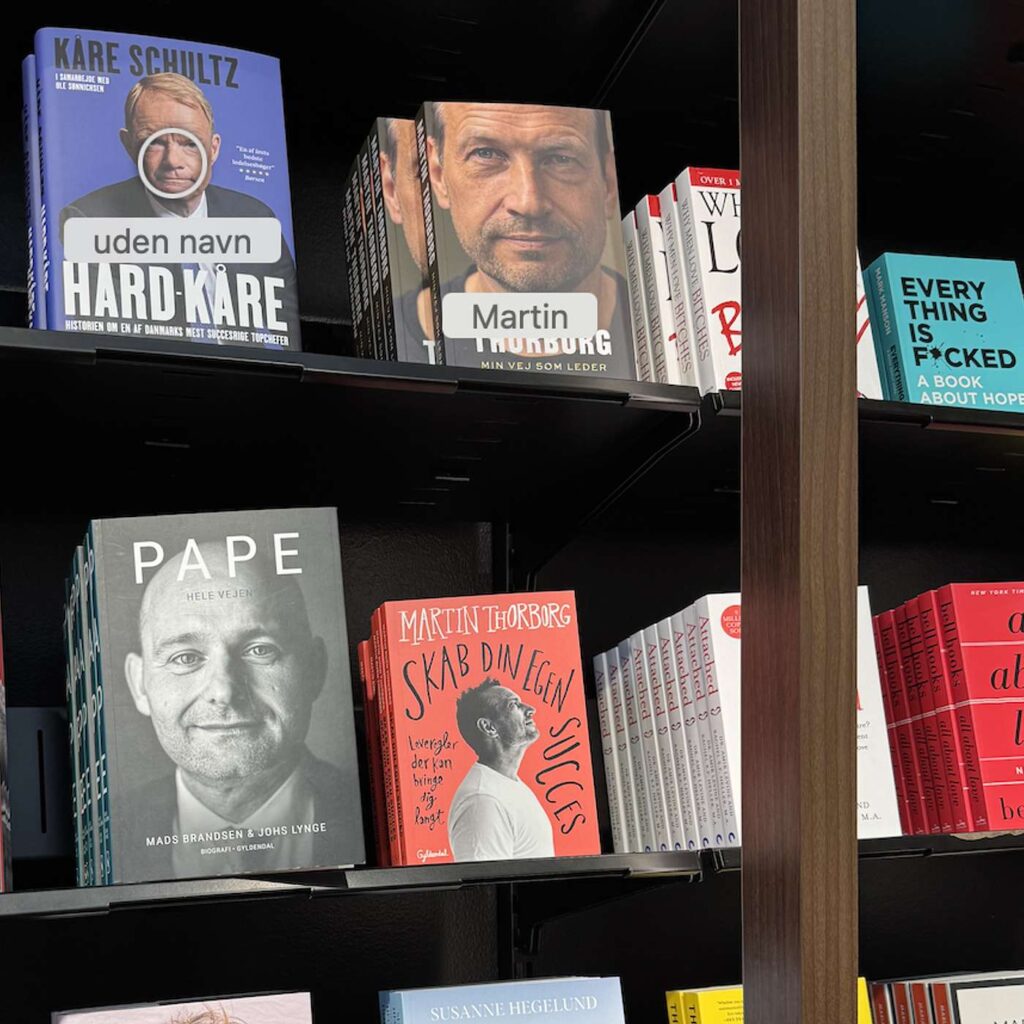
On my way through Kastrup Airport, I saw that both my books were still at the bookshop: Min vej som leder and Skab din egen succes.
I’m a little proud of that. Not all books stay on sale at the airport. One was nearly two years old and the other about 15 months. I thought it was pretty cool that you could still buy them there.
For me, equality is about opportunities
But what I actually wanted to talk about is mental load. I think it’s a slightly funny thing in the debate.
I get annoyed when women are constantly portrayed as victims. My view is that women have achieved an enormous amount in Denmark. I point, among other things, to education, longer lives and fewer suicides, and to women being in charge in many places.
Here in 2024, we have a female prime minister, and we’ve had two. So I think it’s hard to claim that women can’t get to the top at all.
What I particularly react to is the idea that equality should mean equal outcomes. That there should be exactly equal numbers of men and women on boards and in top positions.
We talk less often about equal numbers of sewer workers or people out on oil rigs. It’s typically the prestigious positions that get the attention.
There are studies of how many men and women hold particular positions. But I miss seeing the wishes behind it. How many want that career and the sacrifices it requires? I haven’t personally seen a study that gave me that answer.
For me, equality is about equal opportunities. People should be allowed to choose what they want.
For example, I imagine there may be more women who want to work with childbirth and care, while more men find working on an oil rig in freezing weather and a gale interesting. And some women giving birth may prefer a woman to deliver the baby.
People should work that out themselves. My view is that in Denmark, we largely have the opportunities, regardless of sex.
You don’t get good at karate by watching Bruce Lee films
A board seat in a large business isn’t something you simply get because you have a high IQ and lots of education either.
Take Carlsberg. A board needs to discuss real problems with the executive team: geopolitics, distribution, sales, marketing, management, law and everything else the business faces.
That requires practical experience. You can’t just bring in someone who’s only been in education and expect them to help with everything.
How many Bruce Lee films do you need to watch to get good at karate? Get my point?
That doesn’t mean education is irrelevant. Theory needs connecting with practice. Go out and try it, come back and learn more, go out and use it again. Gaining experience at that level takes many years.
My argument is that fewer women than men have chosen to go all the way to those major top positions. We can then discuss why.
I think part of the explanation is the choice to pay the price. Evening work, weekends and major sacrifices involving family and friends. My guess is that more men are willing to do that.
I also wonder whether some of it relates to our old roles as hunters and those who looked after the home. Whether drive, aggression, daring and care play different parts. That’s my consideration, and of course there are plenty of exceptions.
There are women who take that path, and they do bloody well. My own management team has three women and three men. That’s not because I decided it should look that way. I chose the people I think are best.
On our board platform, I believe we have just under 30 per cent women and just over 70 per cent men. We’ve even put more energy into bringing women in.
I’ve had a feeling quotas might come, forcing larger businesses to bring in more women. And of course I’d like to capitalise on that. I’m a capitalist, after all. Those were my thoughts at this point.
Mental load can also mean responsibility for the family’s finances
Back to mental load. The debate I’ve followed through spring and summer has mainly been about women remembering birthdays, buying presents, taking responsibility for Christmas and dealing with the laundry and all sorts of other things.
I understand the thinking: these are tasks that occupy your mind even when you aren’t doing them.
But I think something is missing. I have experiences from my own marriages and relationships, and I hear about it from others too.
Many men, myself included, feel responsible for the family’s finances. Making sure the rent and insurance are paid and finding money for everything the family needs.
That’s something you go around thinking about too. Forgetting a load of washing is annoying. But if the finances don’t add up, it can affect the roof over your head and the heating in the house.
I’m not saying that to make the other tasks less important. I just want balance in how we look at it.
I also often see men responsible for gutters, the car, tyre pressure, insurance, the mechanic, the lawn and the hedge. Those are things someone needs to remember and handle too.
My experience is that many ordinary, modern couples actually share tasks reasonably evenly. But then we need to look at all the tasks, including those outside the home.
Three extra hours at work can also be for the family
If I work until 6 pm and my wife comes home at 3 pm, those three hours are also an effort the family can benefit from.
The money can pay for rent and holidays and perhaps fast track at Legoland. It isn’t necessarily just something I do for myself.
If one person, man or woman, works three hours longer, I think it can be fair for the other to do some tasks at home. Remember a birthday, put clothes in the washing machine and hang them up.
That’s part of the overall equation, as I see it.
A gift I didn’t ask for can become a debt
Another thing I’ve experienced is people taking on tasks for their own sake and then turning them into something the other person owes them for.
It might be: Darling, I’ve had a hard day. I’ve changed the bed linen.
Then I might think: Didn’t we get clean sheets five or six days ago? I was actually happy to wait a little longer.
Or there’s a dust bunny in the corner, so the whole house gets vacuumed, even though I thought we could do it on Saturday.
The curtains get washed. Great. But I actually thought they looked fine and could have waited a few months.
If one person does it because they want it done at that exact moment, then says the other now owes an equivalent effort, it can feel like getting a gift you never asked for but have to repay.
I find some women are good at giving men those sorts of gifts. Then the man sits there thinking: It’s bloody unfair that I’m in debt for something I didn’t want.
If the underpants are hanging the wrong way, I get grief too
My wife is very modern and certainly isn’t one of those who’s bad about this. But we do have our little laundry example.
I hang up clothes and get told the underpants need to hang a different way. Why? Because they dry faster.
Yes, whatever. I just struggle to remember which way they’re supposed to hang.
If I don’t hang up the laundry, I get grief. If I do and hang the underpants wrong, I get grief too. I actually think that’s pretty much the only disagreement we have.
But I hear from friends and acquaintances about lots of things like that. Very specific demands are made about how a task should be done. If the other person doesn’t do it exactly that way, it isn’t good enough.
If you keep hearing that what you do isn’t good enough, I can understand eventually withdrawing. Thinking: Then I can’t be bothered to do a fucking thing. It’s easier to go for it at work and excel there.
I also think the debate can become ridiculously preoccupied with decorating the children’s food, exactly the right organic cotton clothes and everything you have to do to be hip with the hip crowd. We create some of the tasks and demands ourselves.
Let families choose their own lives
My point is that the debate lacks nuance and is bloody irritating. We’re individuals. We’re different people.
You can generalise if you absolutely want to divide everyone into two groups. But there are plenty of women with traits called masculine and plenty of men with traits called feminine.
Why do we have to put people into boxes?
If a man wants to stay at home while his wife pursues a career, that’s fine. If a woman wants to work part-time, be home more and look after the family, that’s fine too.
Why should anyone feel guilty about not being career-minded enough, whether they’re a man or a woman?
Start with the individual’s skills, desires and interests. Let people organise their family lives. Who takes parental leave? Who leaves early? Who works part-time? Who does the household tasks?
Let families work it out, and let’s stop picking on each other’s different ways of living.
I think we’ll be a little happier if we give each other that freedom and the state interferes less in who does what and why.
200,000 downloads and lots of hugs
If you’re bored, have a look at Saxis and Capino. They’ve picked up far more over the summer than I’d expected.
There are some interesting businesses for sale and investment opportunities. If you’re considering buying a business, need capital or have capital to lend or invest, you can have a look.
Remember to follow the podcast in the app you use too, so you’re notified when I have something new to publish.
Today, 29 July 2024, I’m passing 200,000 downloads. I think that’s pretty decent for the time I’ve been doing this, without spending a huge amount of time on marketing. Especially considering how much I ramble on about everything.
Thank you so much. Over the past fortnight, I’ve probably had 20–30 hugs from people who came up to thank me for the podcast. I think that’s bloody lovely.
If you meet me, you’re more than welcome to give me a fist bump, a high five or a slap on the arse if that’s what you’re thinking. I enjoy it. Take care.
Listen to the episode
Watch the episode on video
Listen in your podcast app:
All episodes on Apple Podcasts · All episodes on Spotify · All episodes on Amazon Music · RSS Feed