

Some thoughts on starting out as self-employed
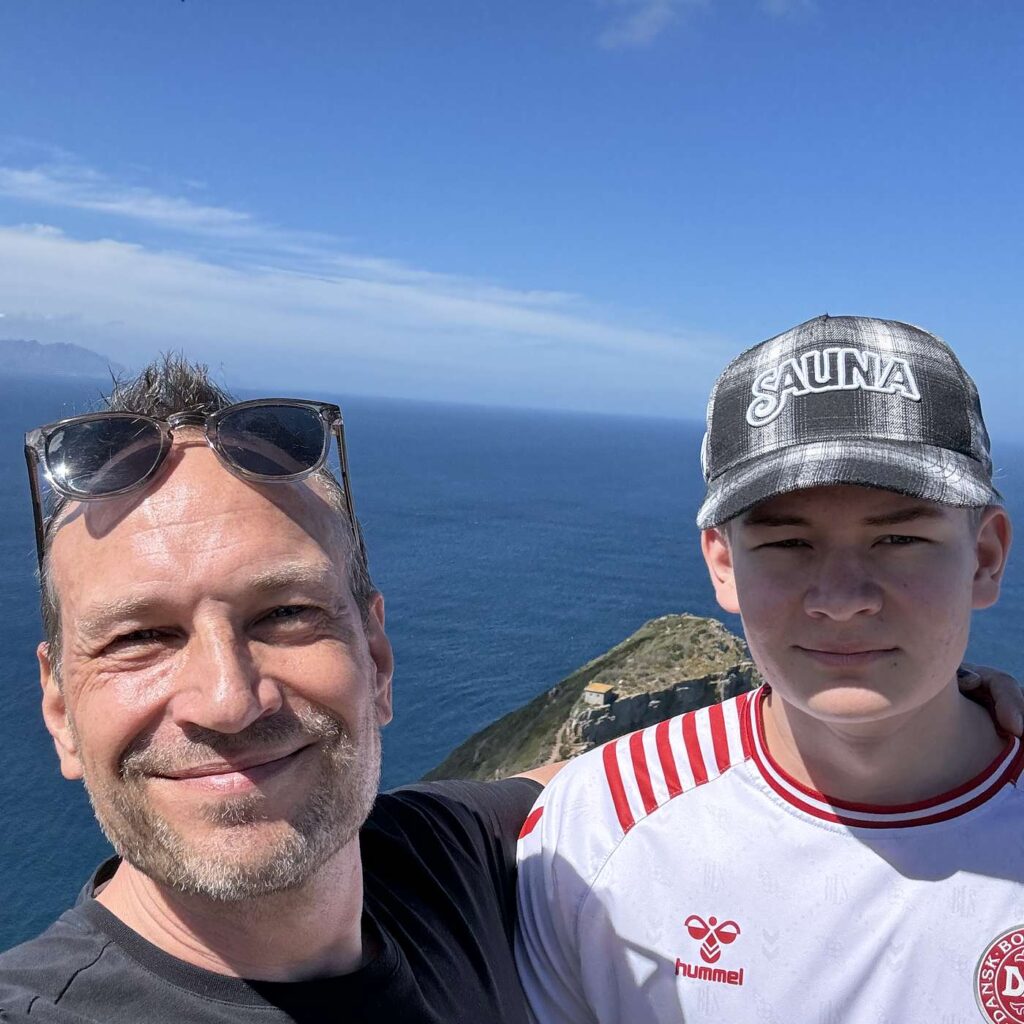
My eldest son Mads has started a business. That gives me a reason to talk about starting out on your own, investors, visibility and the kind of business I find interesting: one that can also make money while I’m on holiday. But first, a few stories from Folkemødet.
Thorborg’s Diary · Episode 62 · 20 June 2024
Watch the episode on video
Listen in your podcast app:
All episodes on Apple Podcasts · All episodes on Spotify · All episodes on Amazon Music · RSS Feed
You don’t build a big business in 37 hours
It’s 20 June, and it’s been bloody busy since last time. I’ve been to Folkemødet with Jannie, had some good draught beers, met up and partied with good friends and taken part in a few debates. It’s been really enjoyable.
Dansk Industri invited me to a debate about entrepreneurship and work-life balance. I think they expected me to talk about how important it is to take all your holidays and look after yourself.
I also think it’s important to take time off now and then. But especially because you get better ideas when you’re a bit more relaxed.
If you’re starting a business to have more time for the children or create a particular everyday life, you may well be able to build it while still having plenty of time for friends, family and relaxation. I couldn’t say.
But if your ambition is a larger business with lots of employees, exports and the production of services or products, I think it’s comparable to other elite achievements.
That goes for sport, top chefs and mountaineers. It takes an incredible number of hours and an enormous amount of hard work. You pay in insecurity, uncertainty, defeats and beatings. And of course you also take the victories that hopefully come along.
It’s an extreme roller coaster.
You don’t become Caroline Wozniacki, a bloody brilliant mountaineer or chef, and in my opinion you don’t build a big, well-oiled business either, on anything resembling 37 hours a week.
So they were probably a little surprised or disappointed by my answer. It was fun to challenge them a bit. The debate is available as a podcast from Dansk Industri, and I’ve also shared some of it on my social media.
I miss the anticipation, but not the worries
After all those years as an entrepreneur, I’ve become someone who lives very much in the moment.
I can really enjoy something when it’s good. Perhaps even more than most people. But I don’t look forward to things very much in advance, and I don’t fear the future very much either.
That’s a loss when people say anticipation is the greatest pleasure. I practically don’t start looking forward to a holiday until I’m sitting on the plane with a double gin and tonic.
On the other hand, I don’t go around brooding over all the things that could go wrong. What if I get ill? What if something happens to the children? What if I fall off my bike? That sort of thing doesn’t occupy my mind.
I’d like to feel more anticipation. Having something to look forward to is fantastic. But I’m not sorry to be free of the worries. There are certainly plenty of those.
A debate about the royal family and stories from the Royal Life Guards
I was also invited to a podcast about the royal family with Pia Kjærsgaard and a historian.
Normally I’d say no. I’m hardly an expert on the royal family. I’ve got a few funny stories and served in the Royal Life Guards, so it could probably be interesting, but it’s not my particular subject.
On the other hand, the journalist often helps me get publicity when I need it. That’s valuable to me, so of course I’m happy to help when she needs me too.
So it became a debate about the royal family, which you can find among B.T.’s podcasts if you want to hear tall tales from my time in the Royal Life Guards.
Pia Kjærsgaard didn’t come, and the historian fell ill. Instead, it was Joachim B. Olsen, me and a political commentator whose name I couldn’t remember off the top of my head.
That’s a bit unkind and can seem condescending. But I’m incredibly bad with both faces and names. If you’re listening to this, I’m sorry. It wasn’t because you weren’t interesting. I thought you made some great points.
Folkemødet can shift my prejudices too
For me, there was more draught beer than politics at Folkemødet. That’s been the case for the past few years.
I think it’s a fantastic event. When I hear that ordinary people can’t get over there, or that it’s only for a particular sort of person, I don’t recognise that picture.
I’ve been there for the past four or five years. I see pensioners, people of all ages and different ethnic backgrounds. I really experience it as a festival for everyone.
As an ordinary person, you can walk up and talk to a politician, and they actually stand there and listen.
Last year I passed a trade union stand. They gave me a draught beer, and we had a really good chat. At first I thought it was the local 3F branch, but it was Dansk Metal.
They told me about their work bringing jobs to Bornholm, which I actually thought made a lot of sense. Some good guys and a good, cold draught beer. Thanks again for that.
It opened my mind a little towards that part of the trade union movement.
I still have plenty of prejudices about other parts, and I think they’re well-founded. I get annoyed by what I see as pointless labour disputes designed to make the organisations relevant and fund high salaries, lavish open sandwiches, velour carpets and Golden Age paintings. I’ve visited some of those places.
But that’s precisely why Folkemødet is useful. It can add nuance. And that conversation really did give me a more nuanced view of what the trade union movement can also do.
Guitar, singing and a long day at Café Victor
We also had a lovely time with our good neighbours Stine and Ole and their friends at Nordlandet.
Stine, who’s married to Ole from Lagkagehuset, played guitar, and we sang along to old songs. It’s become a tradition that we turn up once they’ve finished their knife-and-fork dinner.
At Folkemødet, I prefer draught beer, burgers and sausages. We get plenty of red wine and knife-and-fork meals in everyday life. But it’s bloody lovely to turn up afterwards and sit with them.
I’ve also been to Café Victor with good friends. We sat there on Tuesday from 1 pm to 10 pm. You can get through quite a lot of drink on a day like that, so it’s taken me a couple of days to recover.
Today I took Mads and Jannie into Dinero with me. It’s been a lovely day.
We have new plans for Capino
Jannie and I are planning something new involving Capino. I’m really looking forward to telling you about it.
I think it could be quite a revolution and make waves on the Danish entrepreneurial scene. But here in June 2024, it’s still something we’re planning. It probably won’t be ready for another six to twelve months.
It’s mainly Mette and Jannie handling it. I’m more involved in the ideas and brainstorming, because I’ve got my good job at Dinero and plenty to do.
Now we need to make it concrete. We may need to hire another employee or two. I don’t think Mette, who’s our only employee at Saxis and Capino, can manage it all on her own.
Rune found six million kroner through Capino
I had a lovely lunch with my good friend Rune. He’s been working on his business for about ten years. It makes a product for women with incontinence problems.
He needed six million kroner and, without me having noticed, had listed his business on Capino a couple of months earlier.
He told me that the roughly 1,000 kroner he’d paid for two months was some of the best money he’d spent.
He’d found three investors who each put in two million kroner, and a mentor who helped with the product approvals.
I was bloody pleased. He’d actually thought this might just be some little toy I was playing with, and now he had three good investors and six million in the bank.
I hear both from people who haven’t received a penny and from people who’ve raised a lot of money. And I can often see the difference when I look at their presentations.
Tell the investor what they’re getting
Some listings are almost entirely about the person looking for money: What do I need? What would I like?
But the person putting up the money wants to see how they can get it back.
It’s like a job interview. If you only talk about your own needs and not what you can offer, you won’t get a job or an investment.
Rune is professional. He talked about his advisory board and board of directors, how far along the project was, which approvals were in place and how much money he needed.
He explained what the money would be used for, which market he was entering, how many potential customers there were and his expectations for the company’s future value.
Investors have worked for their money themselves. They want to see someone on the other side doing everything they can to make it a good investment.
It’s not charity. Wanting money so you can also pay yourself a bit of a salary isn’t an argument in itself.
Explain the opportunities, the obstacles, how you’ll overcome them and what you’ve done before. Why should I believe you can use my money properly and that I can get it back?
I’ve seen others raise money the same way, including Jakob, who found three million kroner. You need to make an effort, explain the market and the idea thoroughly, and weed out the spelling mistakes.
We’re now writing case studies to inspire people. I asked Rune if we could do one about his experience, and he said yes.
Starting out on your own: Mads sells supplies to preppers
My eldest son Mads has been thinking about becoming an entrepreneur.
When he was little, we lived in the US for four years. I had a friend there, Morten, who’s now almost more American than Danish. He worked with ReadyWise and freeze-dried food with a very long shelf life, sold to preppers.
Back then, it was the really hardcore types with gas masks, shelters and shotguns. Morten was also very fond of Mads. He had three daughters and no son, and enjoyed borrowing my boy for a bit. Mads remembered that.
When he started considering entrepreneurship, there was a lot of talk about Russia and a possible third world war. So he thought supplies might be a good idea.
He’s been given permission to sell the products in Denmark and gets them delivered from England. Morten is no longer involved in the business, but he sent a quick email to the European distributor so Mads could get started.
Now he’s started forsyninger.dk. He’s sold around 25,000–30,000 kroner worth in the first three months. Orders are around 3,000 kroner each, so it’s not a gazillion. But getting started takes time.
He uses SHUP, the online shop system I’ve invested in. I’ve got him a free account that would otherwise cost a couple of hundred kroner a month. So he is a little spoiled too.
The accounts gave him an overview
Mads has just turned 18 and got his business established. Now he could set up his accounts in Dinero and needed to record the sales and the goods he’d imported.
He was a little stressed about how to do it. I got one of our support staff to sit with him for a few minutes. Then he got it done and reconciled everything.
He was relieved: now he could see what he’d earned and lost, and get an overview of the VAT.
We also talked about what had come into and gone out of the till. He’d spent around 30,000 kroner on goods and brought in around 25,000, so in cash flow terms more had gone out than had come in.
But he also had around 15,000–17,000 kroner of stock left. We had to include that in the picture. My assessment was that he’d actually made a few thousand kroner. That’s pretty good when you’re 18.
Alongside that, he’s at business college, works at 7-Eleven once a week and works at the Monte Carlo stall at Dyrehavsbakken. If you meet a tall, blond lad who looks a bit like me, shouting and trying to tempt you to win chocolate, it could very well be Mads. Say hello from me.
There’s an opening to become the person the press calls
I asked him today: Who’s the spokesperson for prepping? Who does the press call when they want to know about emergency supplies?
He didn’t know. Fine. Then there may be an opening to take.
If you write posts about prepping, emergency food and freeze-dried food, and use the words people search for, you might become the person journalists find when they need someone to explain what to do.
I’ve mentioned to journalists that my 18-year-old son has started doing this. I’d hoped someone might think it was a fun story. But not a single one has bitten yet.
I’m not asking them for a favour. I just mention it. Then they move on. My PR hasn’t really worked there.
That’s why I tell Mads he needs to start making a name for himself. Write on Twitter and Facebook, share tips and tricks, and make yourself visible.
Perhaps one day a journalist at a local outlet will need to write about the practicalities of preparing for a crisis. Then they might find Mads and give him a call.
Getting on TV with your business, for example, can generate a lot of sales in a single evening. I mentioned 100,000 kroner as a hypothetical example of what publicity could lead to. It’s not a promise of what he’ll sell.
Put more fishing nets in the sea
He needs to network and talk and write about it in different places. Join other young entrepreneurs and ask how to build an online shop or market yourself.
Perhaps another young person hears one of their parents talking about buying emergency food. Then they can say: There’s actually a young entrepreneur here, try forsyninger.dk.
Suddenly you’ve made a sale that only cost you a few minutes participating in a conversation.
Without spamming, you can put more fishing nets in the sea. You can share your project locally, send a press release to local media and tell the story of an 18-year-old in the area selling something topical.
Det Grønne Område, which covers our part of North Zealand, could be an option. A full page there could be very valuable, because readers may have both the spending power and an interest in what you’re selling.
Again, I mentioned that it might generate 50,000 or 100,000 kroner in revenue if it went well. The point is the potential of making yourself visible, not that such a result is guaranteed.
Then perhaps he’ll also be able to afford the shares he wants to buy. But it starts with his own effort.
Your effort determines what you give a chance
It’s fine that he’s taking exams and looking after his other commitments. If he’s happy with the current level and one sale a week, that’s absolutely fine too.
Perhaps a sale makes 800–900 kroner in profit. That’s a decent addition to the income from Bakken and 7-Eleven.
But if he can make one sale a week with an hour or two of effort, what might happen if he put in ten to twelve hours?
I told him I’d be willing to believe that after about a month he could get up to one sale a day. That’s my assessment, of course, not a guarantee.
If there’s 700–900 kroner left per sale, you can work out for yourself what one sale a day means over a month. It starts to look like something. It might not be the world’s highest hourly wage, but it could beat many of the other options.
My kind of business makes money while I’m away too
Another great thing about an online shop is that sales don’t necessarily stop when you go on holiday.
They may drop, but orders can still come in. You might be away for a week and have earned a few thousand kroner in the meantime. When you take time off from a job at Bakken, there’s no income from the hours you aren’t there.
My basic rule for a good business is that I’m richer when I come home from holiday than when I left.
You may well have a different view of entrepreneurship. But I don’t like a business where I’m only paid by the hour. If I get ill, unwell or old, the income stops.
If you’re a self-employed hairdresser and can’t work for 14 days, you don’t earn money from your own work during that time. If you have an online shop, orders can still come in.
Dinero is another example. If I’m ill for 14 days, people still pay their subscriptions and new customers still join.
That’s the kind of scalability I think is beautiful. I wouldn’t go into a business myself unless there was an element of that.
Ten times the sales doesn’t have to mean ten times the work
I try to teach my children that too.
My daughter lost her job at Letz Sushi when the chain closed. Now she’s become a manager at Lagkagehuset in Carlsberg Byen, responsible for around 20 young employees.
As an employee, her situation is different, of course. But the business itself illustrates something too: if you’ve built an organisation with employees, they can still sell bread rolls while you’re ill. Revenue isn’t determined solely by your own hours.
I think it’s even more fun when it can scale further. If Mads sells ten times as much, he doesn’t necessarily have to work ten times as much.
He doesn’t have to start the car ten times or collect goods from his supplier ten times. He can order larger quantities and go to the post office once with more parcels.
Yes, he’ll need more storage space. The cost of goods and postage rises with the number of sales, unless he can negotiate better deals. And more parcels need packing, of course. But not every task grows at the same rate.
That’s what makes it interesting. You can also read about my experience running an online shop in E-pusher.
Treat customers well and they can become ambassadors
If things go well, more customers also mean more potential ambassadors.
A happy customer might tell their neighbour about you. That’s why treating people well matters so much. That way, the marketing can grow along with the business.
Mads is running ads on Google and Facebook. When a customer comes through a paid ad, acquiring that sale has cost money.
But if that customer recommends him to their neighbour, who also buys, he doesn’t have to pay for another ad to get that particular sale. Word of mouth is incredibly important.
Help your children without taking away their initiative
Getting an online shop going is difficult. I help Mads a little with advice and guidance, and shared his project on LinkedIn today. I’m talking about it here too. But in the early days, he actually tried on his own.
You need to remember to help your children. Just not so much that you take away their initiative. They also need to feel love and support from home when they make an effort.
Mads helps us too. He’s picked me up at the airport and drove in to collect me after I’d been at Café Victor.
It’s great. I save a taxi fare, but more importantly there’s the pride of seeing my big, handsome boy drive up in the car. Then I can slide into the back seat and wave to my friends.
There aren’t many greater joys than seeing your children get their driving licences, become independent and start managing on their own. Helpful, kind, honest and hardworking. It’s a huge pleasure.
A little plug for SHUP
Do have a look at forsyninger.dk and see what Mads is doing. Even if the product doesn’t interest you, you can see how his shop is built.
It uses SHUP, which I’ve bought a stake in with my old partner Nicolai Frisch. Christian, who’s behind De Unge Iværksættere, works with the system.
I think it’s a fantastic shop system. You can quickly get a shop up and running with payment options, and in my experience you can get a long way in an hour and connect the domain within a day.
You don’t need to know how to code. I usually say my mum could do it.
That was a little advert. I don’t sell advertising space on my podcast, but occasionally I mention something I’m involved in and think is good. That’s part of the price of listening to me.