

Innovation while growing
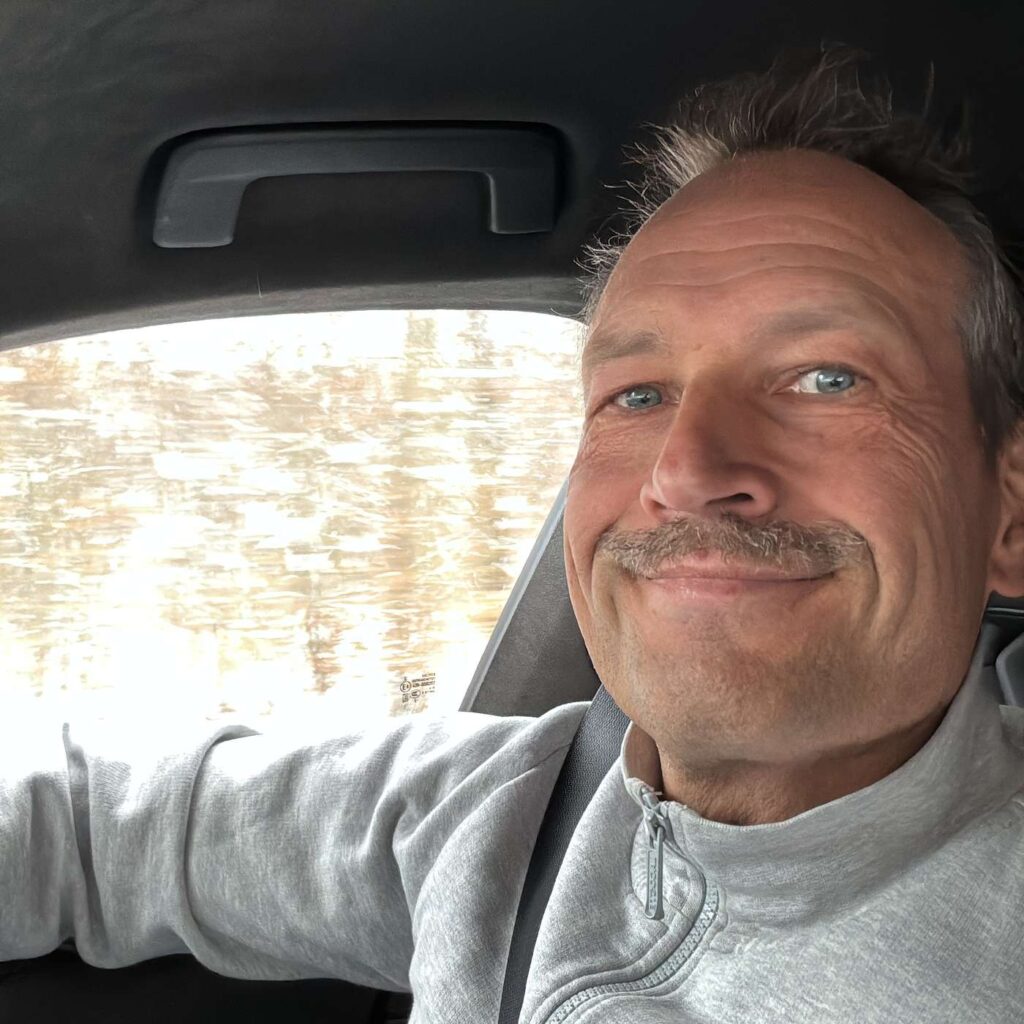
On innovation in a growing company. I talk about culture, leadership, customers’ ideas and the vision of Dinero’s virtual chief financial officer.
Thorborg’s Diary · Episode 122 · 4 February 2026
Listen to the episode
Watch the episode on video
Listen in your podcast app:
Apple Podcasts – this episode · The podcast on Spotify · All episodes on Amazon Music · RSS Feed
Find more episodes here
Hello and welcome to Thorborg’s Diary. It’s 4 February, and holy shit, it’s cold. My house faces the Øresund, and when the wind comes from the east, the cold is blasted straight into it. Fortunately we’re set back a little from the water, but you can certainly feel it.
I’m happy with our heat pump. It’s been running for four or five years without problems, and I can control it from my phone, turn it down on holiday and up again on the way home. Amalo, which I’m involved in, has installed well over 1,000 heat pumps at the time of recording, around 1,500 as I remember it. That gives us a lot of experience in installing and configuring them. Around the time of recording, the heat pump grant scheme with 27,000 kroner in support has opened again. For the past three months, many people have been waiting for it, and I understand why. The old oil or gas boiler costs extra in the meantime, but for most people it’s not an extra 27,000 kroner in one winter. So the grant really affects when people make the decision.
But heat pumps weren’t actually what I wanted to talk about. I’m on my way to a board meeting at Dinero, and that got me thinking about innovation. How do you keep the energy you had as a small company when you grow bigger and get managers, processes and more money?
Board work and making room for others
Our board meeting takes place on Google Meet with people from Norway, Sweden, Finland and Denmark. Yesterday I was at a board meeting at e-conomic, where Karina is doing really well as CEO. I learn a lot from being involved in other companies. e-conomic has grown enormously in recent years. I remember revenue of around 300 million, and now we’re talking about a billion. That’s bloody impressive.
I also sit on other boards, including Fiscozen and PensoPay. Board work is exciting, but it’s a responsibility too. It’s not just turning up, drinking coffee and having some good opinions. You can take on personal liability, and you need to understand that before saying yes. An advisory board is a different role from a formal board of directors, but you still need to be clear about what you do and what agreements you have.
At Dinero, I also need to give my colleagues room to present their areas. Thijs is in charge of the product. He started in support around ten years ago and has developed fantastically. David works on strategy and previously led product. Those two complement each other well. We also include our finance function, so the board gets insight into the different parts of the business.
Part of my role is to welcome everyone and give a sort of state of the union: how are we doing? What’s going well? What’s going less well? What’s taking up our attention? But I shouldn’t sit there taking over everyone else’s presentations. They should speak, and then I can add things and ask questions. That’s part of developing an organisation too.
The small company is forced to find solutions
When you start a business, innovation often comes naturally. You’re a small group. You hear customers directly. There aren’t five layers of management between a problem and the person who can solve it. And you rarely have much money.
That last part matters. When you can’t afford the obvious solution, you have to find another. Can we do it more cheaply? Combine something? Cut out a step? Do it ourselves? Those constraints can be enormously creative. It’s not that poverty itself is fantastic. It’s that you’re forced to think.
At the same time, the stakes are real. Rent and wages are due on the first. You can’t just say: it’ll probably be good in two years. You need something working now. I’ve worked sixteen hours a day, seven days a week, and still been close to going under. I’ve also gone bankrupt. I don’t want to romanticise it, but it changes how you solve problems.
I can compare it with some tough experiences in the military, where you’re pushed and discover you can do more than you thought. I’ve stood guard in biting cold thinking I bloody well don’t want this. But of course that’s not the same as being at war. The point is the mental experience of being under pressure and having to keep going.
As an entrepreneur, you don’t always fit the boxes the system has made either. The bank wants something familiar. You arrive with something unlike the others. It can feel like forcing a triangle into a round hole. It’s frustrating, but also part of why we end up finding new routes.
And one thing: you don’t need to build a huge company to be a good entrepreneur. If you’re a hairdresser who’s created a good business providing a decent salary and a good life, you’ve made something valuable too. I respect that. Not everyone needs a hundred employees and a sale to a private equity fund.
When managers come between you and employees
At some point the company becomes too big for you to manage everyone. Things often start creaking at around fifteen to twenty people. My starting point is that a manager shouldn’t have too many direct reports. Ten or twelve is a level I find sensible, depending on the work and people.
Then you need managers. And many make the mistake of taking the best specialist and making them the boss. But the best programmer isn’t necessarily the best manager. You need to understand people, listen, have empathy, give feedback and handle problems. It’s different work from being technically brilliant.
When the first middle managers arrive, a small identity crisis often follows. Before, everyone could go straight to the founder. Now they have a boss who isn’t the founder. Some miss the old days. They feel the company has lost something. That’s understandable, because something is changing.
But you also need to accept it can’t stay as it was forever. If I keep bypassing managers and giving their employees direct orders, I undermine them. Then we’ve hired people to manage without giving them the chance to do it. I need to respect the structure while keeping the door open to ideas. Those two things can coexist.
A good idea doesn’t have to come from a director
One of the most important things for me is judging an idea on its merits. It can come from a director, support worker, office assistant or employee in a subsidised flexible job. It doesn’t matter at all. We pay people differently because their roles and skills differ. That doesn’t mean the highest-paid person’s idea is automatically best.
On the contrary, people close to daily work see things I don’t. If you handle customers’ problems all day, you can spot a pattern long before me. If you work on a factory floor, you can see something in the process management misses. There needs to be room for that.
I also think new employees are a fantastic source of ideas. They haven’t yet been contaminated by our explanations for why we do things our way. They can say: why the hell do you do it like that? And we shouldn’t just answer that we’ve always done it that way.
Ask them to write down what puzzles them while they still have fresh eyes. And promise nobody will laugh at them. Some things have a good explanation. Others might once have had one that no longer applies. Bringing them out is worth its weight in gold.
We still need to choose the right ideas
Of course, that doesn’t mean building everything someone suggests. We have around forty people in support, not all full-time, and they receive loads of requests. It’s a huge source of knowledge. But a request needs an acid test: does it help our target audience? How many people benefit? Does it fit the product? Does it improve the business longer term?
If a floor layer wants a big button on the front page calculating prices per square metre, that could be fantastic for him. But what does that button mean for a journalist, consultant or speaker? If we build every specialist request into the same interface, the program quickly becomes hard to use.
We need to listen properly while also saying no. A no doesn’t mean the customer’s need is stupid. It means we have to make a decision for the whole product and the group we’re trying to help.
That was also part of what I discussed in the episode about starting with a narrow niche. We started with a specific audience and expanded from there. That discipline doesn’t disappear just because you’ve gained more customers.
A sale mustn’t make you complacent
Along the way, I’m interrupted by a police officer running a red light without flashing lights. I get bloody annoyed and flash my headlights at him. Anyway, back to Dinero.
We sold Dinero to Visma in 2016. I receive a salary and bonus and also have financial interests in what we’re building. But that’s not the whole explanation for why I still want to do it. I’m enormously proud of Dinero. I won’t be the one sitting there letting the business stagnate. Not on my watch.
We shouldn’t just milk what we’ve already made and raise prices. If customers pay more, they should get more value too. The product needs to improve. We need to spend money developing it and still want to do things in new ways.
It’s a different market from selling a television to the whole world. Our potential Danish audience is limited, and we need finances that can fund development, operations and support. But that makes it even more important to be clear about the value we create for customers.
I need a sip of my green vegetable smoothie because my throat’s dry. I’ve been drinking them for two or three months and I’m really enthusiastic. They’re delivered in an insulated box with enough for the week. There’s fibre in them, and it’s quite a coarse smoothie. I find it fills me up and gives me energy. No, I haven’t invested in them, at least not yet. It’s just something I enjoy.
I’ve seen companies bought, then the founder disappears and someone arrives mainly wanting to prove the old team did it wrong. They replace people, change the office and introduce lots of systems. Some changes may be necessary, but destroying the culture and removing those who understand customers can also destroy innovation.
When we talked to potential buyers, there were models where Dinero might end up having to move onto another platform. I saw a risk that much of what we’d created would disappear. A shared platform can make financial sense, but isn’t automatically good for the product or customers. One thing I value about Visma is that we’ve had room to run and develop our own company.
A vision is more useful than a rigid five-year plan
I’m not keen on extremely detailed five-year plans. How the hell should we know which technologies we’ll have in five years? What competitors will do? What the economy will look like? It changes constantly.
I prefer a vision sitting out there like a cloud. We know the direction we want, but can choose different routes. For Dinero, that vision has long been a virtual chief financial officer. As early as around 2014, David and I discussed helping customers run better businesses. We also described it in the sale process material in 2015, before the 2016 sale.
Back then, the technology wasn’t ready for everything we wanted. We could work with data and statistics, but much was manual and we lacked access to information and integrations. We were also waiting for opportunities from the authorities. The vision was there, but not the tools.
Now we’re really starting to do it. We can use anonymised patterns across many businesses to understand what’s happening in different industries. What does a webshop’s season look like? How are invoices paid? Is there something in cash flow the customer should notice?
We have around 103,000 users at the time of recording, so there’s a large foundation for helping people. Not by handing out other businesses’ accounts, but by understanding patterns and combining them with the customer’s own figures and goals. Perhaps they want more revenue. Perhaps more profit. Perhaps they just want more time with their children.
At the time of recording, we’re already helping around 15,000–20,000 customers with statistical insights, gradually rolling it out to everyone. It’s not a guarantee a particular marketing idea will work. But we can give a much better starting point than simply holding accounts showing what happened last month.
Working life is changing too
I think more people will work flexibly and independently. Some from Thailand. Others from a motorhome or home. Some will combine different tasks and spend fewer hours on what they don’t enjoy. Denmark offers some opportunities for that I think are good.
That influences what Dinero needs to do. We need to help people who want to earn a living from their skills and enjoy everyday freedom without spending the whole evening on accounts. That’s also why our first audience was people selling their time.
I try to distinguish between developments we can already see and my own guesses. In my view, AI will change many work tasks, but I don’t know exactly how quickly or how. The same applies to my thoughts on assets that can’t simply be produced digitally: a well-located property, a forest, an antique or an old Porsche. I can see possible value in scarcity if digital production makes the world richer. Those are my considerations, not something I know will deliver a particular return.
Culture is a competitive factor too
Many of our managers started elsewhere in the company, including support. I’m proud of that. People can start with one task and develop into project management, business development or leadership. We need to give them responsibility and room to grow.
There are around 110 of us, and our eNPS is 89 at the time of recording. I’m happy with that figure, but what matters more is how people experience coming to work. Do they feel safe? Can they voice something they’re unsure about? Can they suggest an unconventional idea without being ridiculed?
Henrik Stendahl works a lot on that culture. I’ve also written about leadership in Min vej som leder. For me, part of it is being people before we’re job functions. If I come in looking angry because something personal is weighing on me, saying so can be a good idea. Otherwise people might start thinking the company is closing or they’ve done something wrong.
That doesn’t mean everyone must share everything about their private lives. It means you can create clarity and security. And that security makes suggesting the ideas we need easier. If you’re afraid of humiliation, you shut up. Then we might lose the best idea in the room.
Innovation is also everything you don’t see
Customers don’t necessarily see all our improvements. We put many resources into making Dinero faster, more stable and more secure. We spend millions on cybersecurity and can also draw on Visma expertise to test and challenge the systems.
It’s not a big new button for customers to click. But it matters. You can miss the price or simplicity of an old version and forget how much has happened behind the scenes. Put a 2016 version next to today’s and the difference would be enormous.
Nobody can promise a system that can never be hit. But we need to keep working seriously on operations, security and quality. That’s just as much part of product development as the features easy to show off.
Longer term, I think the accounting program will occupy less of the customer’s attention. In a way, Dinero needs to disappear. Not the company, but the manual task. The accounts should simply work in the background, and we should be the sounding board helping you run a better business.
My estimate is that we already automate around forty per cent of the work overall, including users who haven’t connected their bank. For some who’ve set everything up, it can be much more. But there’s still plenty to do.
For some, the goal is building a big company. For others, it’s picking up the children and taking time off without guilt. Both are fine. Our job is to help them closer to what they want. That vision keeps me fired up even after the company’s grown.
Now I’m heading into the board meeting, and I’m actually looking forward to showing off a little about the new things we’ve made and how far we’ve come with the virtual assistant. I think we’ve made quantum leaps. We’re bloody innovative, and I’m fucking proud of it. Take care. Bye for now.