

Dinero now has an MCP server
I talk about Dinero’s new MCP server and how AI can work with your accounts. Along the way, it’s also about the Faroe Islands, dynamic hotel pricing and our plans for Klippen Hotel in Gudhjem.
Thorborg’s Diary · Episode 138 · 26 August 2026
Listen to the episode
Watch the episode on video
Listen in your podcast app:
Apple Podcasts – this episode · Spotify – this episode · All episodes on Amazon Music · RSS Feed
Find more episodes here
It’s 26 August, and this episode is the most troublesome I’ve ever made. This is the third attempt, so I’m trying to keep my spirits up. The first time I was relaxing in the Jacuzzi and thought I’d had a little revelation, but when I finished, I realised I’d talked about some of it before. I simply couldn’t do that to you, so I deleted the bloody thing, and half an hour’s work was gone.
Yesterday I tried again on the way to work, approaching the subject from another angle. I entertained myself for 25 minutes, but when I arrived and went to upload the podcast, the technology had wrecked the recording. So now I bloody well hope it works.
I’m in love with the North Atlantic
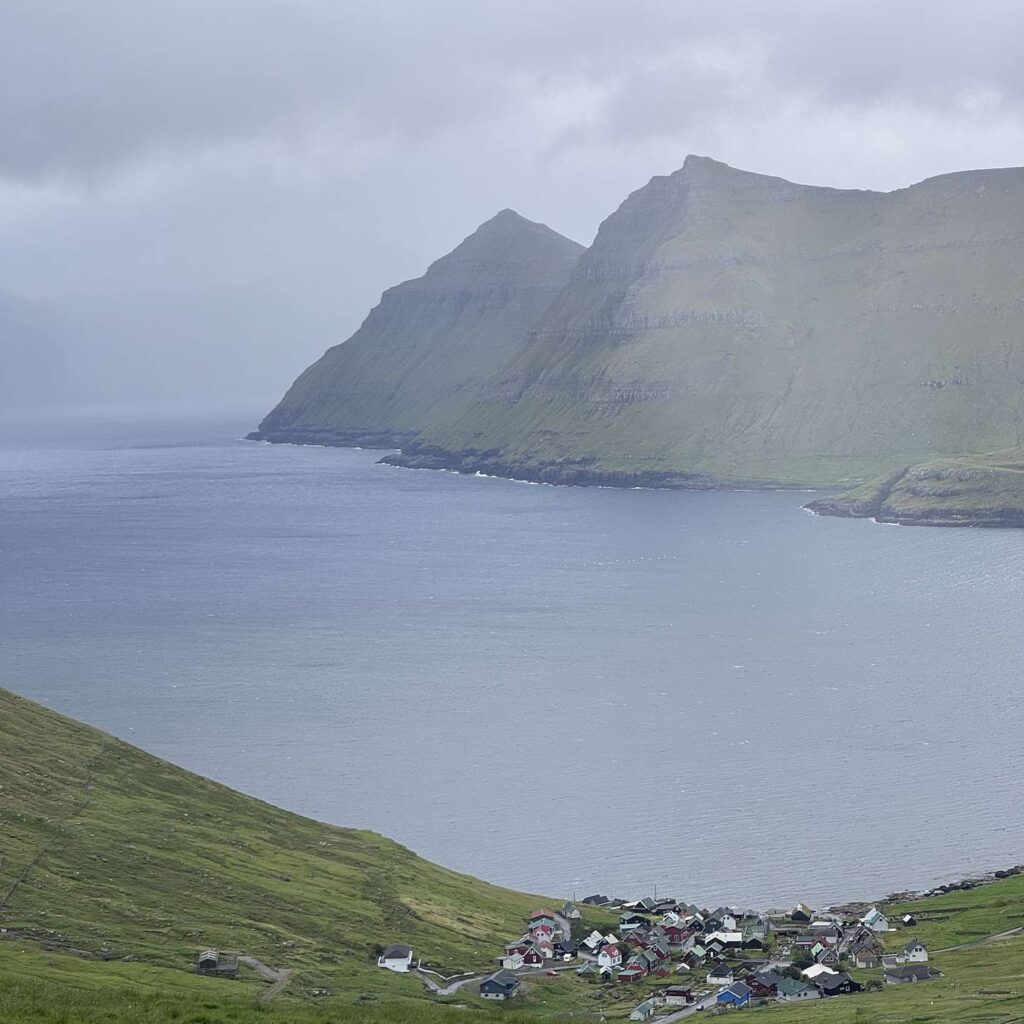
I’ve just returned from the Faroe Islands. I’m not really giving talks at the moment because I don’t want my diary filled with all sorts of things, but when the Faroe Islands or Greenland call, it’s hard to say no. I’m a little in love with the North Atlantic.
In a way, Bornholm is a demo version of some of that landscape. Now, people on Bornholm shouldn’t get annoyed, because I love Bornholm enormously, but I mean the rugged cliffs and the sea. Bornholm also has the forests and beautiful beaches I love, but I live in North Zealand and am driving through a forest right now, so I have those at home too.
What particularly draws me to Bornholm is the coast from around Årsdale up towards Hammeren and around the other side. Rugged cliffs and the raw Baltic Sea. In the Faroe Islands, you get that sort of nature at full power. Greenland is different again, and Iceland something else, but what they share is the raw nature I find fantastic.
When I’m invited up there, Jannie and I like to take three or four days to wander around and enjoy ourselves. There are insanely good restaurants. Among other things, we’ve had lamb that spent 14 hours in the oven and shellfish pulled from the sea that same day. It’s incredibly good.
We like staying at Hotel Hafnia, where we’ve got to know Petur, who heads the hotel group. I love being there, and talking to him is inspiring. He runs a big business with hotels, restaurants and other activities and is really good at it.
We had drinks in their beautiful new restaurant and then a substantial helping of sushi. I’m not the biggest sushi eater, but this was really good. The conversations about hotel management, booking systems and pricing also gave us something practical to bring home.
Jannie has started working on dynamic hotel pricing
Of course Jannie came too, and she’s the hotel queen. Among other things, we discussed dynamic pricing, which we hadn’t really got round to working with at our hotels. Base prices had largely stayed the same throughout the year, because setting everything up properly takes quite a bit of work.
They used an AI-based tool that unfortunately couldn’t work with our booking system, Sirvoy. But Jannie isn’t easily discouraged, so she loaded our figures into ChatGPT and started working on a more manual solution.
She took four years of bookings, showing occupancy day by day and across weekends and seasons, and added information about events on Bornholm. Folkemødet, Sol over Gudhjem, Wonderfestiwall and everything else affecting demand.
It’s obvious a room should cost more when the island is full for a festival than on a Monday in November. Based on the material, she got help with a detailed pricing plan for individual rooms. Some became cheaper, others more expensive, and prices were better adapted to high season, low season and major events.
A proper revenue management system can adjust continually according to demand. If lots of bookings suddenly come in and only a few rooms remain, prices can go up. If a normally popular period isn’t being booked, they can go down. Perhaps an event has been cancelled or a new hotel has increased capacity.
We’d like that too, but at the time of recording we couldn’t get that solution working with Sirvoy. We’re discussing the possibilities, and until then Jannie is working with the more manual version.
First the roof, then pricing optimisation
Perhaps it’s a bit amateurish that we’re only starting now. But when the choice is between implementing a pricing optimisation system and patching holes in the roof or renovating 14 rooms, I actually think we’ve chosen the right order.
First, guests need a proper experience. Then we can optimise the business further. It’s also reasonable for a Friday-to-Sunday stay to cost more than Monday to Wednesday, just as a flight in the winter holidays often costs more than at a less popular time.
We’re going to Asia ourselves on 25 December, and flying that day is insanely expensive. If I want it cheaper, I have to choose another day or period. Hotels are the same. If you can travel when demand is lower, there should be money to save.
My hope is that the pricing work can raise revenue by around eight to ten per cent while improving occupancy in the shoulder seasons. That’s an expectation we’ll have to see whether we meet.
The slightly annoying part is that running a room in November can actually cost more than in summer. You need heating, and with only a few guests it’s harder to use staff efficiently. Even if only one room is occupied, someone has to make breakfast and come in to clean. So lower shoulder-season prices still need to cover costs.
More income from the places we already have
The bar can help here. We expect to stay open at least through the autumn holidays and are looking into whether continuing longer makes sense too. It can generate revenue when hotel guests are fewer, and a bar has a decent contribution margin.
Buying the old Gudhjem hostel certainly wasn’t cheap, but now we own the place, fantastically located by the harbour. Major bar costs include premises and staff, and we already have the building as part of our overall business.
Of course ingredients cost money too. When you use organic products and make an effort with quality, the ingredient cost can be around 28 per cent of sales. You could probably get it lower, but that’s not necessarily what we want.
As a rough example, daily revenue of 5,000 kroner excluding VAT might leave around 2,000 kroner after relevant operating costs if you exclude the property cost we already have. That’s not a complete set of accounts, but it illustrates why creating more income at the same addresses is interesting.
Initially, you buy lots of square metres, repair, upgrade and make mistakes while rooms are the main income. Later you can start adding other income streams.
For example, we’ve set up honesty bars at all three hotel locations, and guests use them more than we expected. If you arrive on the ferry at 23.00 when much else is closed, it’s lovely to get crisps, a cold beer, a glass of white wine or a soft drink.
We’re also experimenting with small tapas plates and similar things so guests can get something to eat even when there’s no staff for a full kitchen. At the time of recording, the bar is open until 22.00 every day, and in the shoulder seasons small tapas plates in the fridge could be a solution. It improves the experience while helping pay the fixed costs.
Now the fun begins at Klippen Hotel
We’ve had years with lots of the boring costs. Guests don’t praise you because rain doesn’t fall on them while they sleep. With good reason, they expect you to have that sorted.
When you paint rooms, put in beautiful curtains with proper blackout, good lighting and practical power sockets, people start noticing. New guests see a nice place, and returning guests see how much has improved.
The same goes outside. We’re taking the buildings one at a time, patching walls, painting, putting up proper signs and keeping flowerbeds and lawns looking good. People in Gudhjem are also starting to notice the places gradually getting a lift.
Then comes the really fun part. With Jylkat it’s about the whole atmosphere: what should we serve? Lobster hot dogs, Ibérico ham, wine and local beers. What should the bar look like, and what music should play? That’s where guests start feeling the concept.
Tomorrow I’m on stage at TechBBQ, then flying to Bornholm, where among other things we’ll look at premises for a possible gym and options for a sauna and hot tubs.
I tend to think of it as an open-faced sandwich. The rye bread is there, and the toppings are on. Now we need that final garnish that makes people say, bloody hell, that’s delicious.
I want to create an experience that works in winter too
Imagine arriving in November with the Baltic raging and the wind howling. You can get up and go mountain biking in the raw countryside, and once the gym is built, go inside afterwards for weights or cardio.
At Skt. Jørgensgaard, we’ve got beautiful new bathrooms, and we also plan a sauna overlooking the Baltic. We’re working on options for getting into the sea, although that’s a little more complicated to make work and several things need to fall into place.
Afterwards, you can sit with a cup of hot chocolate. At Therns, we’d like to create a small library where you can sit with tea and a good book before going up to your room to hear the wind howl and waves crash against the rocks.
That’s the overall experience we want to create across our three locations. At the same time, operations and pricing need to work so we also earn money to continue all the things we dream of. There’s much more on the drawing board, but that’s some of what we’re working on now.
I tell the story of how Jannie and I came to Gudhjem and got started with the hotels in If You’re Gonna Be Dumb, You Gotta Be Tough.
MCP server in Dinero: An AI gateway to your accounts
At Dinero we’re also doing something I find really exciting: we’ve launched our MCP server. At the time of recording, I haven’t heard of other Danish accounting programs with this solution, so I think we’re among the first.
MCP stands for Model Context Protocol. You can think of it as a gateway enabling your AI assistant to work with the data and features in Dinero that the connection provides access to.
An ordinary API is typically used by other systems. It could be a mileage app supplying information to the accounts, or a system using Dinero to create invoices. MCP makes it easier for an AI assistant to use those possibilities.
For example, you can ask to see yesterday’s revenue or create a dashboard with your best customers and an overview of who owes money. Instead of clicking around yourself, you can ask a question and have the assistant work with the accounting information.
I also imagine sitting in the car and asking to create an invoice, customer or quote without first logging in and clicking through the program. Which actions are available depends on the version, connection and permissions you’ve granted.
The same goes for integrations. If you have a webshop and pay a third party to connect it to your accounts, AI can sometimes help build another solution. The setup still needs to work, but the possibilities become much greater.
Customer data needs proper handling
In the episode, I also stress the need to think carefully when connecting an AI service to your accounts. There may be personal information about customers and other confidential information you shouldn’t simply pass on without knowing how it will be processed.
I mention European solutions as an option, but what matters is understanding the provider, data processing and rules applying to the particular solution.
Editorial clarification: In the audio recording, transferring customer data to American AI services is described as generally prohibited. That is too categorical. The GDPR can permit transfers to the USA, including to companies certified under the EU-U.S. Data Privacy Framework, when the other requirements for data processing are met. Server location alone therefore does not determine whether the solution is lawful.
Your AI’s mistakes are also your responsibility
Interest came quickly. After three days, 97 users had set up their AI connection, and the next day we were at around 150. At the time of recording, I expect us to go well beyond 200 during the day. It’s brand new, and part of the reason for opening it now is to see what people use it for.
But there’s an important point: you need to take responsibility for what your AI does in your accounts. If you give it broad instructions and write access and it starts creating lots of incorrect invoices or entries, you’ll have a mess to clean up.
You can’t assume support can simply remove the traces as though it never happened. Booked errors need handling correctly, which may involve reversing entries or credit notes depending on what’s been done.
I compare it a little to being handed a powerful tool. It can do something fantastic, but AI can also misunderstand, hallucinate and act in ways you hadn’t imagined. So you need to know what access you’re granting and monitor the results.
I think the models will become more reliable and better safeguards will emerge. But right now you need to use it with your eyes open. We’re giving people the opportunity to try it because we think this will be an important part of the future.
There are already users saying they’ve worked with their accounts for several days without logging into Dinero. Others have created their first quote by talking to an AI assistant. It’s a new way to use an accounting program.
Could AI also become a risk to Dinero?
Yes, of course. We’re known for our interface, among other things, but if customers get their overview and perform tasks through an AI assistant, they may never see that interface.
Then the assistant could suggest switching to a cheaper accounting program. If two solutions feel roughly the same through AI, why pay 300 kroner a month if another costs 200? It’s a hypothetical example, but the risk is real enough.
My view is that if people stop choosing us because we’re not good enough, we need to improve. We have to give customers something worth paying for.
That could be reliability, cybersecurity and an accounting program that meets the requirements. We put a lot of effort into that, and I think it has value even if customers aren’t looking at it every day.
Your accounts should help you run a better business
On top of that, there’s our assistant and what I still call the virtual CFO. I’ve been working with that name for ten years, so it’s a little hard to get used to anything else.
The idea is that your accounts can help you build a better business. We have around 110,000 businesses at the time of recording, giving us a large data foundation. Across aggregated information, we can examine patterns among those doing well and use that to give others something to work with.
It might be that the best businesses in an industry typically have more employees or spend more on marketing. That’s no guarantee the same will work for everyone, but it can provide relevant questions and ideas.
I also see opportunities to work with websites, reviews and competitors. What do customers say about you, and about others? Where could you improve your marketing or turn more visitors into customers?
That’s the kind of help we’re building around the accounts so the value goes beyond simply booking the numbers. That’s also why I think we can give a good reason to stay with Dinero even when customers increasingly use an AI assistant as their gateway.
Now I’m on my way to work, where I’m going for a walk with a group of new employees. Once there are enough newcomers, we take a roughly three-hour walk in Frederiksberg Gardens, where I talk about our values, where we come from and where we’re heading. Everyone needs to understand why we should treat each other well, who our customers are and how we can do even better for them. Have a fantastic day. Love you.