

RenBåd in Løvens Hule – how I invest
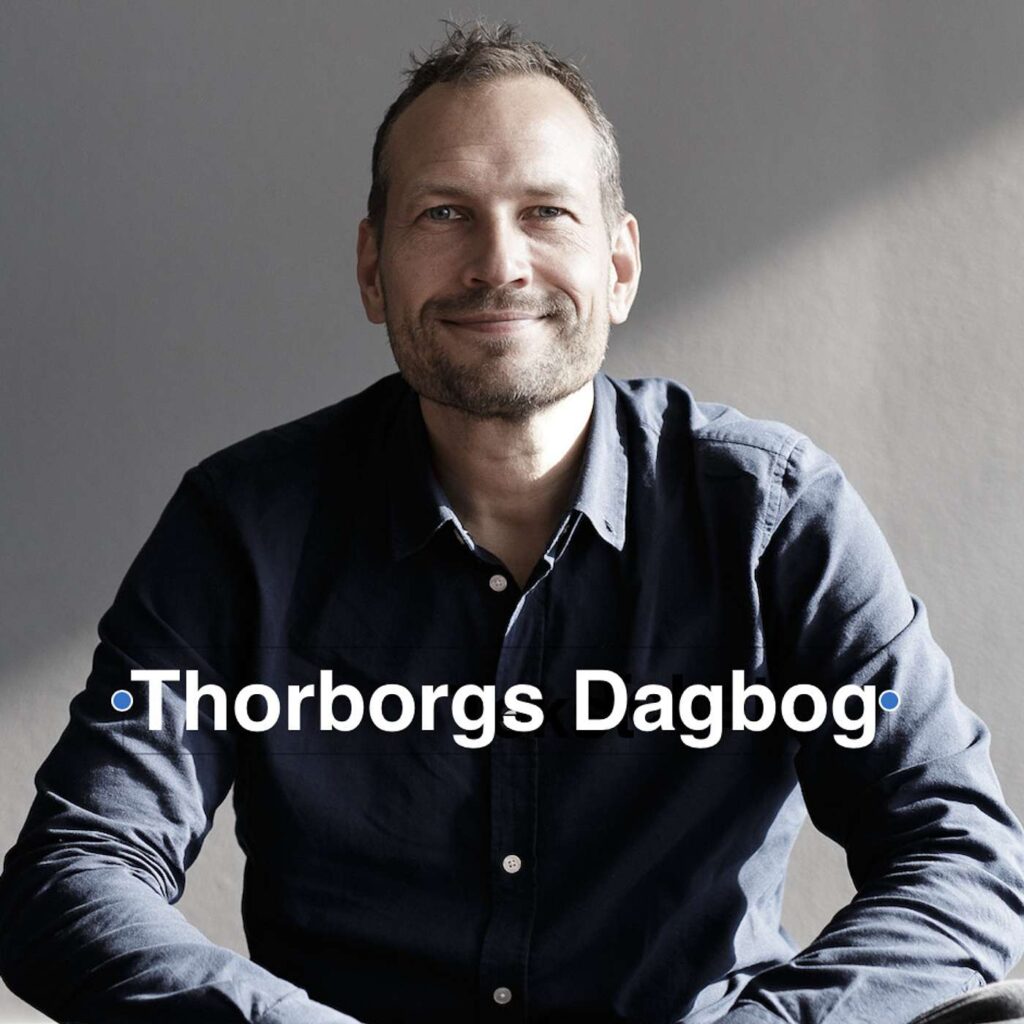
RenBåd’s appearance in Løvens Hule gives me a reason to talk about my investments. I like a market where customers already have a need but there’s no strong brand or more efficient way of running the business. RenBåd is a good example of that thinking.
On 29 February 2024, the business will appear in Løvens Hule. I won’t reveal how it goes. Instead, I’ll explain why I got involved and what I look for when investing.
I’m sitting on the terrace of our new flat in the south of France. So first, you’ll hear a little about where we’ve landed.
We found a flat in Tourrettes-sur-Loup
My good friend Flemming Østergaard has a flat in Le Broc and kept telling us how lovely it was. So Jannie and I went down to look.
It was nice, but the view wasn’t quite what we’d dreamed of. There was an area that seemed a little industrial. You could probably find something else there, but we started driving around the Nice area.
After talking to estate agents and explaining what we wanted, we were sent to Tourrettes-sur-Loup. An old town in the mountains between Nice and Cannes.
Holy fucking shit, it was lovely. Little streets, old houses, peace and quiet. Now I’m sitting on the terrace wall looking over the mountains, the town and the Mediterranean.
A kitten is walking on a roof hunting an insect. In the distance, I can hear some work I’d rather do without, but it’s a living town. In the evening, though, we experience fantastic calm.
The flat is only 42 square metres but has the loveliest terrace. You reach it through narrow, winding streets and stairs. You can’t park a car right outside. That’s part of the charm.
It needs to be easy to use the place
One important reason we chose the area is the journey. We want to use the flat regularly. On the trips we’ve looked at, the flight to Nice takes a little over two hours, and then we have a relatively short drive from the airport.
For us, that makes a big difference compared with a longer journey. And once we’re here, we can walk to most things.
There are little supermarkets, two bakers practically competing to make the best croissants, cafés, a wine bar, a beer bar and several good restaurants. I’ve also noticed places featured in the Michelin Guide.
We’ve just bought cheese, squid, walnuts, honey, salad and a baguette locally and made something to eat. Jannie is lying with her laptop, and I’m sitting in the sun.
It’s around 15 degrees, but in the sun I can sit in a T-shirt. The shade is almost too cold and the sun almost too warm. It’s a lovely contrast to February in Denmark.
Charlotte and the hotel in town
We’ve also stopped by Auberge de Tourrettes and talked with our friends there. Charlotte, who’s Danish, runs it, and we’ve stayed several times.
She immediately offered coffee. I think it’s a fantastic place. I remember breakfast with big pieces of bacon, scrambled eggs, fresh fruit, local yoghurt and good coffee on the terrace with the view.
There’s a little swimming pool, and you can sit under the olive tree and eat. That’s exactly my kind of thing.
It sounds like advertising, but I have nothing to sell there. I’m simply enthusiastic about the town and about now having our own little place.
We want to furnish slowly and buy locally
We’ve just moved in. Yesterday, I spent four and a half hours assembling the IKEA thing we’d bought. Perhaps that’ll also be the only thing from there.
The idea is to find things in town gradually over the next couple of years. Six cups from the local ceramicist. A chopping board from someone who makes them. That sort of thing.
We want to support the craftspeople, shopkeepers and bakers. That also helps keep local life going.
I see an interesting contrast with Gudhjem, where there can be great concern about people who don’t live there permanently buying houses.
The locals I’ve spoken with here are happy about tourists and foreign homebuyers. Their experience is that they spend money in restaurants and shops, maintain houses and contribute to life in the town.
I love Gudhjem, including out of season when you can hear the sea and enjoy the quiet. But I’d like more life outside the busy summer weeks. I think we could learn something from how people here view newcomers and visitors.
RenBåd in Løvens Hule: Why I invested
Now to RenBåd, which I’ve invested in together with David and Rasmus. The business is on Løvens Hule tonight.
I won’t spoil it. But it’s fun to be involved. I own around 15 per cent, as I remember it. I don’t have the precise figure in front of me.
The boat market is an interesting area. I have a RIB myself, a fast inflatable boat, and I love sailing it. But I can’t service the engine myself, and I don’t want to do the antifouling.
We sense there are more boats and more owners willing to pay others for maintenance. My experience is that parts of the servicing market have also been very unprofessional and fragmented.
There are small operators helping in summer who may stop again in autumn. As a customer, you may need to find a new team next year. That’s the experience we want to make more joined-up.
Keeping boats together makes operations more efficient
One thing we’re working on is bringing boats together in large halls over winter. We collect them in autumn, store them, do engine servicing, antifouling and other work, and return them in spring.
Normally, a task might require a vehicle with a couple of employees to drive to a harbour, find the boat, get it ashore, work on it and drive home again. The work can stretch over several days.
Having many boats together so you can handle them one by one is different. It creates major operational advantages.
I’m in the target audience myself. I think it’s fantastic when someone collects the boat, stores it protected from wind and weather and returns it serviced and antifouled in spring.
Of course, I don’t mind if hearing the story makes someone interested in the business. But what I especially want to explain is the business model and my thinking as an investor.
Is there room for a brand?
I like businesses with scaling potential. Here, I saw a fragmented market where I didn’t see a well-known brand customers automatically thought of when they needed their boat serviced.
When you say soft drinks, people can instantly name some brands. Boat servicing wasn’t the same.
That’s a big plus in my book: Is there a clear market leader? If not, and perhaps the category isn’t clearly defined either, I become interested.
The next question is whether we can professionalise the business. Can we make it easier for customers and more efficient to run? You’ll find more of my experiences of building and developing a business in Iværksætter til jeg dør 2.0.
It needs to be as easy as ordering a pizza
Even before we got involved, the people behind RenBåd had made ordering simple. I compare it to ordering a pizza on Just Eat.
You go to the website and answer questions about your boat, engine and the work you want done. They’re questions I can answer as a boat owner. You can see the price as you go.
It’s transparent. You sit at home in peace and make your decision. You don’t first need someone to inspect the boat and then feel pressured to accept a price.
That’s part of scaling too. When customers can order themselves, we spend less time going back and forth about what needs doing.
Last year, that little business with around twelve employees serviced more than a thousand boats. I think that’s pretty hardcore. Efficiency is an important part of the explanation.
A trip for sandpaper can cost four working hours
We’ve also worked on the vehicles and stock. Do we have the right antifouling paints and materials? Are the vehicles arranged so employees have what they need?
Previously, you could be out at a boat and discover something was missing. Then you’d have to go to Silvan for sandpaper or something else.
If two people spend a couple of hours on that trip, four working hours are gone. It quickly adds up.
So we’ve spent time fitting out the vehicles cleverly and getting stock under control. It isn’t necessarily the most glamorous part of an investment, but it can make a big difference to the business.
The halls make us less dependent on the weather
The bigger move was the halls. The business hadn’t previously had the capital or capacity for that solution.
Now we have two large halls full of boats and are looking for more. The idea for next winter is to store two or three times as many boats. That’s a plan at the time of recording, not a result we’ve already achieved.
We don’t need anything fancy. A hall with a concrete floor, reasonable ceiling height and a roof over the boats. Ideally near the motorway, at a sensible price and properly secured. Water and electricity are good too, of course.
It isn’t only storage that makes it interesting. The main gain is in the work. A mechanic can keep track of engines and spare parts and move from boat to boat through the hall.
Out in a harbour, rain can make antifouling and servicing difficult. Inside the hall, we know the boat and engine, and work happens in dry, more predictable conditions.
That makes it possible to work smarter and offer a better price. We’ve also worked on the customer experience, including pictures of the boat before and after the work.
A market with many big brands requires something different
If I were investing in a fast-food restaurant instead, the situation would be different. There’s already McDonald’s, Burger King and a whole range of other brands.
It’s a market with many strong competitors. You need something truly better, different or more efficient.
I’m not saying it can’t succeed. But in my view, it requires more innovation than entering a fragmented market and creating a brand, a better customer experience and more efficient operations.
Those are some of the criteria that made RenBåd interesting to me. Not just that I like boats.
GoLearn became a really good investment
Another investment that went well was GoLearn. I typically invest very early, when risk is greater and the investment can therefore be made on different terms.
I can contribute my brand, network and experience. I find that more fun than simply putting money into something already big.
At GoLearn, I invested a little under a million kroner in total across the rounds. When we came in, the business had around 300 customers and very little revenue.
Five or six years later, we sold to Verdane, which works with learning businesses, among others. As I remember it, the price was around 100 million kroner plus a later payment depending on performance.
For me, an investment of just under a million became around twelve million kroner over roughly five years. That was a very decent investment.
I’ve also lost the entire investment
But other investments haven’t been good. In another business, I also put in around a million kroner, as I remember the amount.
After four or five months, I could feel it wasn’t working. We wanted different directions, and it wasn’t a setup I could see myself in.
I withdrew, and it cost me all the money. So don’t sit thinking Martin Thorborg is right every time. I’m not.
I make mistakes too. But I learn from both things that go well and things that go badly. I try to take that experience into the next investment.
Where do I find the businesses?
I use Capino myself to find some of my investments. Jannie and I own the portal today.
I helped start it around five years ago. We sold part to others, and Nicolai Frisch, who’s CEO of Freetrailer, was also involved. Since then, we’ve bought it back.
Jannie works on it with Mette, who handles daily operations. I’m CEO of Dinero and don’t have time to run Capino or RenBåd day to day too.
My role in the investments is more at board level, where I try to help with contacts, money and various things I have experience in.
At the time of recording, Capino has just under 800 investors, with businesses continually seeking capital or loans. There are cases from different industries and of varying quality.
Among others, the business behind BOLD coffee drinks has found capital through the portal. You can read about some of those journeys there.
It can be a starting point if you’re interested in investing in unlisted businesses. And of course if you run a business yourself and are seeking capital.
I’m not looking for more investments myself right now. I have five or six, and that’s enough for me. So this isn’t an invitation to send me lots of new projects. I simply want to explain where I’ve found some opportunities.
A listing isn’t approval of the investment
It’s important to understand that businesses buy advertising space on Capino. Mette doesn’t sit going through the entire business and approving the investment.
We try as best we can to check people are who they claim to be. But that doesn’t mean we know every investor or business and can vouch for all their information.
As a potential investor, you need to investigate yourself. Do they have the revenue they claim? The profit or loss they report? The customers they talk about?
I’d call some customers and find out whether they exist and are happy. Look at reviews, google the business and people behind it, and do proper groundwork.
It’s called due diligence. To me, it’s fundamentally about investigating whether things actually are as they’re presented.
Even after that work, you can lose the money. I’ve done that myself. My good investments, in return, have had the potential to pay for the mistakes and provide something on top.
That’s my experience, not a guarantee of how others will do. I’ve kissed some frogs, but also had really good results.
Back to the sun on the terrace
Now a cloud has covered the sun, and it immediately gets cooler. That’s the south of France in February too. It’s not always warm and sunny.
But simply being able to eat breakfast and lunch in the sun, look towards the Mediterranean and enjoy French bread and cheese is fantastic. We’ll take a few clouds with it.
Thanks for listening. On the recording day, I’m looking forward to you seeing what happens to RenBåd in Løvens Hule that same evening.
Listen to the episode
Watch the episode on video
Listen in your podcast app:
All episodes on Apple Podcasts · All episodes on Spotify · All episodes on Amazon Music · RSS Feed