

My book is out – and now I am taking on the AI debate
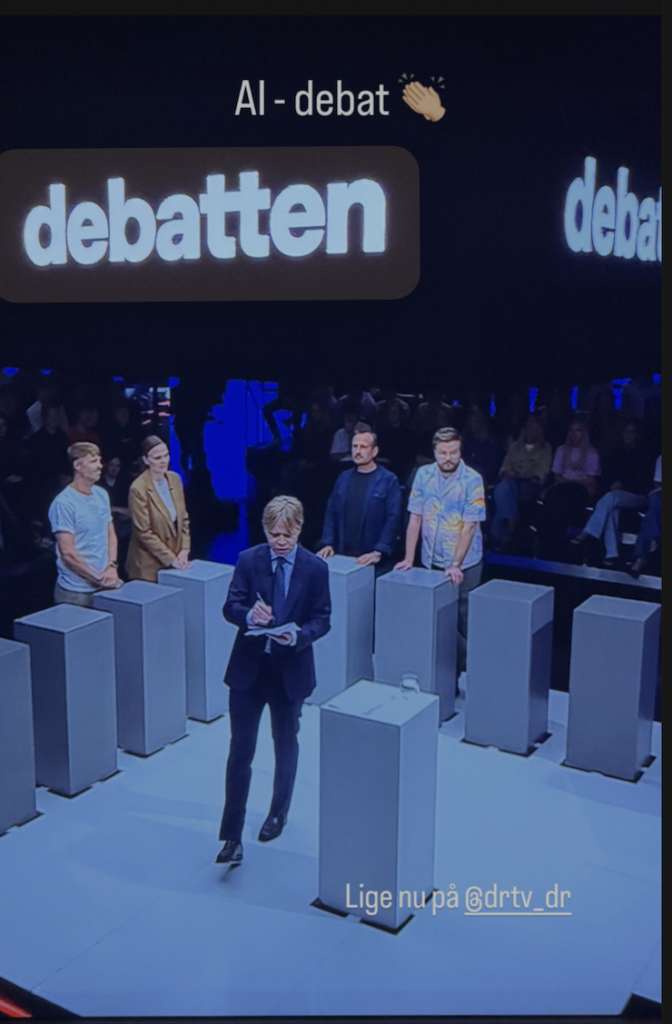
My digital book is out. After 32 days of AI, editing, narration and my own player, people can now buy it. Now I am taking on the AI debate on Debatten on DR: what does the technology mean for authors, publishers and everyone else who makes a living creating something?
Thorborgs Dagbog · Episode 145 · 29 October 2026
Listen to the episode
Apple Podcasts · Spotify · RSS
Now the book is ready
It is a big day. My e-book has launched, it is on the website, and it works. You can also buy it as a gift certificate. I am actually bloody proud of the result.
I have spent many hours getting the whole experience in place. The book page, samples, purchases and gift certificates. I have had Claude attack the solution from every angle and found things that could be improved. Now I think it has become a really nice flow.
I would like you to go and try it. Not because you necessarily have to buy anything. That is up to you, of course. But try the book page and the free chapters, and see what you think of the experience.
The AI debate: I understand why people are afraid
I am going on Debatten to talk about AI and creative work. Authors, publishers, musicians and others who find that their work can be imitated or used to train models.
I completely understand the frustration. If you see your livelihood threatened and at the same time find that your work is being used in a way you do not think is fair, of course you react.
I also understand being tired of all the bad AI content. You open LinkedIn, and suddenly there are long texts from people who used to write two lines. But do they make you any wiser? Not necessarily. Sometimes it has just become more of the same shit.
But that does not lead me to conclude that we should reject the technology. I find it hard to understand when publishers or media organisations respond with very broad rejections of AI. You have to look at how it is being used and what the result actually is.
Good AI support is not built in an afternoon
I was interviewed about our AI support at Dinero. Why does it work so well when so many people otherwise do not want to talk to a machine?
Part of the explanation is that we have put an enormous amount of work into it. My own estimate is that, in total, we have spent between seven and ten person-years developing the support, the method, the help texts and all the experience we have gained along the way.
It probably would not take as long to start today. You can learn from the mistakes others have already made. But you do not get an equivalent solution by putting an intern or an agency to work on something for a couple of afternoons.
It is a bit like my book. AI has made it possible for me to handle far more tasks myself. But there is still a great deal of work behind it.
32 days and around 99,000 words
I have made the book, the player and the whole digital experience with help from AI. Text and audio in Danish and English. ISBN, barcodes, working with the printer, the payment solution and the website. It has become a book of around 99,000 words.
I have also deleted around 20,000 words along the way. Claude has taken the role of a very tough publishing editor and has pushed me hard to remove repetition, filler and too much praise of myself. The book has been read through, proofread and checked against old articles, among other things to verify the chronology.
I have read through it myself many times. The time I have spent is now up to around 300 hours or more. So this is not a book made by writing one prompt and pressing a button.
I estimate that I have spent around 5,000 kroner on tokens, perhaps a little more. That also includes work on the English edition and translating my website. It is my own calculation for this project.
Publishers still have something to offer
This is not a crusade against publishers. I have published books with Gyldendal myself and found them professional and skilled.
A publisher can help assess whether there is a book in your idea at all. It can find an editor or ghostwriter, work on the text and help with distribution, libraries, marketing and PR.
But I also bring some advantages of my own. I have been through the process before, I have broad knowledge of business and digital solutions, and I have my own followers and experience with PR. That makes it more natural for me to try handling the publication myself.
I still think many people will prefer a publisher. They may not have the time, the inclination or the same skills. And there is also something enjoyable about the collaboration, the launch and the feeling of being part of a publishing house. I have appreciated that myself.
On the other hand, I think publishers will have to use AI to make their work more efficient. If some of the logistics, layout and proofreading can be handled with the technology, that should also benefit the author.
That is why I sell the book directly
My digital book is sold from my own website. The package costs 297 kroner including VAT and contains both the e-book and audiobook in Danish and English.
You can switch between reading and listening and between the languages. There are pictures and links so you can explore the stories you would like to know more about. I think it has become a pretty solid product.
I find it hard to make the economics of audiobook streaming make sense for me. In the recording, I use examples of a few kroner per full listen through a publisher and a higher amount if I handle the publication myself. Those are the calculations I am considering myself, not a general price list for the industry.
The point is that I can sell substantially fewer copies directly and still make a business of it. At the same time, I have control over the product and the experience the reader gets.
I know some people already have a Mofibo subscription and do not want to pay extra for my book. That is completely fair. But I am also allowed to choose another way to sell it.
I am excited, but worried too
I do not think AI will make all authors or publishers disappear. But I do think the technology will change the work a great deal, and that many tasks can be handled by fewer people.
I understand those who are afraid of losing their jobs and seeing their skills taken over by a machine. That is not something I look forward to. I am sincerely worried about what it could mean for society.
But the development is not something I alone can control. So I also choose to learn the technology and use it as well as I can. I do not want to just stay on the platform and hope it all blows over.
Choose a concrete project
My best advice is to find a concrete project. Make a game with your children. Try automating something at work. Build a small webshop. Or try making a book, as I have done.
You can also start very small. Every time you need to get something done, ask yourself: could this be automated?
In the episode, I use a hair appointment as an example. The first time, it may take longer to get an AI to help than it would take to call yourself. But the aim is also to learn how to give it a task, what information it lacks and where you need to be involved yourself.
The next task gets easier. Gradually, you can get help with more of the routine things and spend the time on something else. Or feel inspired to make something you previously lacked both the time and the technical skills for.
My book has been the project that really opened my eyes to what I can use AI for in my personal life. I am excited about the possibilities, even though I am also worried about the consequences.
See my new book here, or try a free sample. Then you can see and hear for yourself what has come out of the project.