

How I made my new book with AI
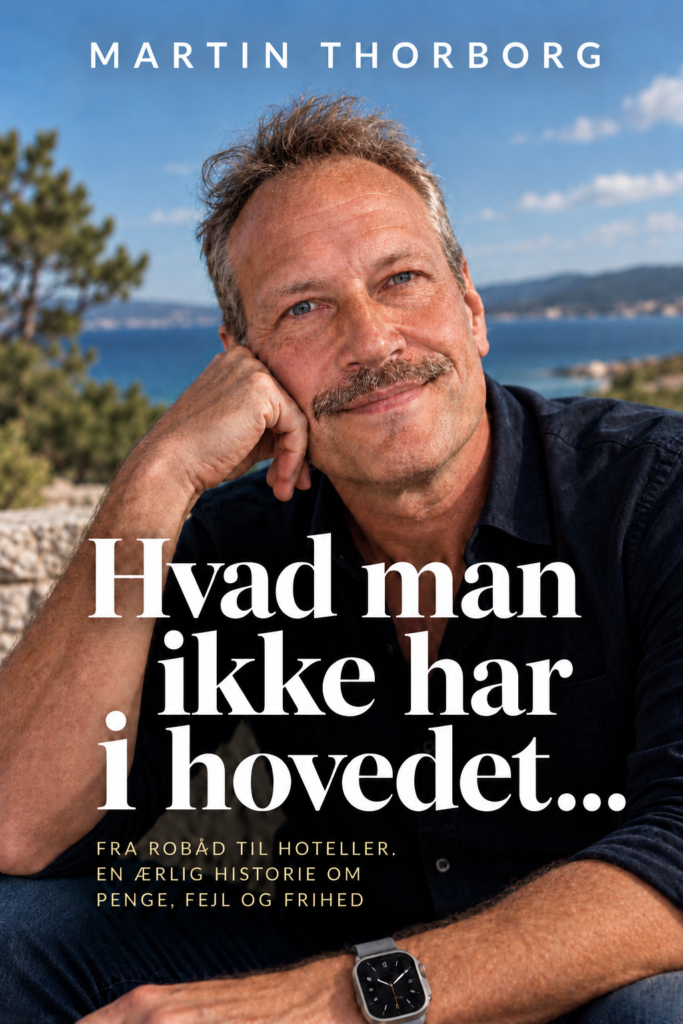
25 hours of recorded notes, around 300 hours of work and two AI editors who kept finding mistakes. My new book is nearly finished. Here I explain how I made my book with AI in around 30 days, and why the last per cent can be so fucking frustrating.
Thorborgs Dagbog · Episode 143 · 22 October 2026
Listen to the episode
Listen in your podcast app:
All episodes on Apple Podcasts · All episodes on Spotify · All episodes on Amazon Music · RSS Feed
It started with my mother
You haven’t heard much from me over the past few weeks. I’ve simply been concentrating on making a book. And it has been one of the wildest processes I’ve ever been through.
My mother turns 90 next year. She is the person who has known me the longest, and if I want to include some of her stories, now is the time. That was probably what really got me started.
The book is also for my children. If nobody else wants to buy it, at least they’ll have a book about their father and their grandparents. Then they’ll know a bit more about where the hell they come from.
From 25 hours of notes to a book made with AI
I’ve put around eight to ten hours a day into the project for the past 30 days. By the time I’m completely finished, I’ll probably have spent around 300 hours.
I started by talking into my iPhone about what the book should cover. ChatGPT suggested some chapters, and then I filled them out, added chapters and removed others. MacWhisper transcribed my recordings, and I used those texts to work out the structure with ChatGPT.
At first, I told the story in fairly broad terms. How did we build Dinero? What happened in the different companies? First I needed to get most of it down. Then I went back to each chapter and found four or five stories worth telling in proper detail.
The negotiations with Visma, for example, were one of the stories I spent a long time telling. Then it was transcribed and added. I jumped back and forth between the chapters like that until I’d recorded around 25 hours of notes.
I also used ChatGPT to find old articles, quotes and information that could help me check the chronology. There were things I’d remembered incorrectly, and quotes I’d forgotten. That led to quite a few corrections.
Two editors who kept giving me a beating
When I thought the structure was in place, I asked Claude to act as my publishing editor. Its job was to help me make a really good book and be tough on it.
Bloody hell, it came back with a lot. People were mentioned before they’d been introduced. There was repetition, and some chapters moved so slowly that readers would lose interest. Stories needed cutting down or removing altogether.
It’s hard when you think all your own stories are good. But when someone explains why something is banal or assumes too much knowledge, you can see it. What I paid for my holiday home might be interesting to me. But what does it actually have to do with the story?
At one point, Claude asked me to cut around 30 per cent. So I deleted, edited and deleted some more. The book has ended up at around 96,000 words so far. Without that round of editing, it would have been considerably longer.
When Claude was finally satisfied, I gave the book to ChatGPT with the same task. I thought I had it sorted now. Then I got another earful. It found a lot that Claude hadn’t found, and I was back to editing again.
I’ve gone back and forth between the two. Gradually, they started to be satisfied, but there have been many hours when I was close to losing heart.
Some chapters are harder than others
The chapter about my divorce has been one of the hardest to write. I want to be honest, but I don’t want to upset my children or create new conflicts.
It had to be included, and at the same time it had to be written properly and diplomatically. Going through it all again has been emotionally hard. It is a very personal book.
My own voice — and the words that drive me mad
I used around three hours of audio from my podcast to clone my voice in ElevenLabs. It then made an audio version of the book, which I’m listening through now.
It’s incredible how good it sounds. My mother and my wife couldn’t tell that it wasn’t me who had recorded it. They just thought I’d become good at reading aloud.
But AI isn’t perfect. I can spend hours getting a name pronounced correctly, only for it to be said incorrectly somewhere else. The context affects the pronunciation. That works brilliantly when you want the voice to sound natural, but it’s bloody irritating with names and abbreviations.
So I’ve changed the text in some places. America instead of USA. Navigation system instead of GPS. But I can’t just replace a company name with a synonym. In those places, I have to keep working on the pronunciation.
It feels a bit like getting 99 per cent of the way with AI. That last per cent is just so fucking hard.
Listening through it is also another editing round. When I hear something that sounds wrong, or spot a mistake in the text, I record a note on my phone and fix it afterwards. An audiobook of around eight and a half to nine hours takes time to check.
A book you can read, listen to and explore
I’ve had AI build my own player for phones and computers. You can read or listen, and it remembers where you left off. You can also follow the text while the audio plays.
There are different playback speeds and a sleep timer. And if you want, you can turn links on and find podcasts, videos or other texts where I’ve talked about the same subject. If that doesn’t interest you, you can just leave them switched off.
I spent over ten hours finding pictures for the book. I have around 35,000 pictures, including scanned family photos. When I found a relevant picture, I wrote a description and got help putting it in the right chapter.
That adds up to around 400 pictures across the book’s 20 chapters and the surrounding material. Family, children, offices, old websites, business partners and deals. Some people might think that’s a lot. But you decide whether you want to see them.
The print edition will have QR codes
I also want to publish a print edition. It won’t have pictures in the book itself. Instead, each chapter will end with a QR code that takes you to the pictures and links.
If I printed around 400 pictures in the book, it would become enormous and expensive. This way, there can be far more pictures, and you can still find them while you’re sitting with the print edition. If you just want to read from A to Z without distractions, you can do that.
At the time of recording, I expect to send the book to print in a week to ten days. The cover, proofs and the final distribution arrangements also need to be sorted out. There are still some decisions left to make.
You can now preorder the digital book
AI has also helped me with the cover, print files and getting the webshop ready. I’ve also had my website translated into English and am working on the English edition of the book.
I’ve done a test with English audio, and it’s quite funny hearing my own voice in English. More languages could also be an interesting experiment, but first I need to finish this edition.
The combined ebook and audiobook package can be preordered for 297 kroner. Pictures and links are included. The digital release is planned for no later than 1 November, and payment will only be taken when access is delivered.
See the book and preorder here, or try a free sample. I’d really like to hear what you think of the book page and the reading and listening experience.
Now I need to finish listening and make the last corrections. Then comes the marketing. We’ll have to cover that in a future podcast.