

Live a long, healthy life without much effort
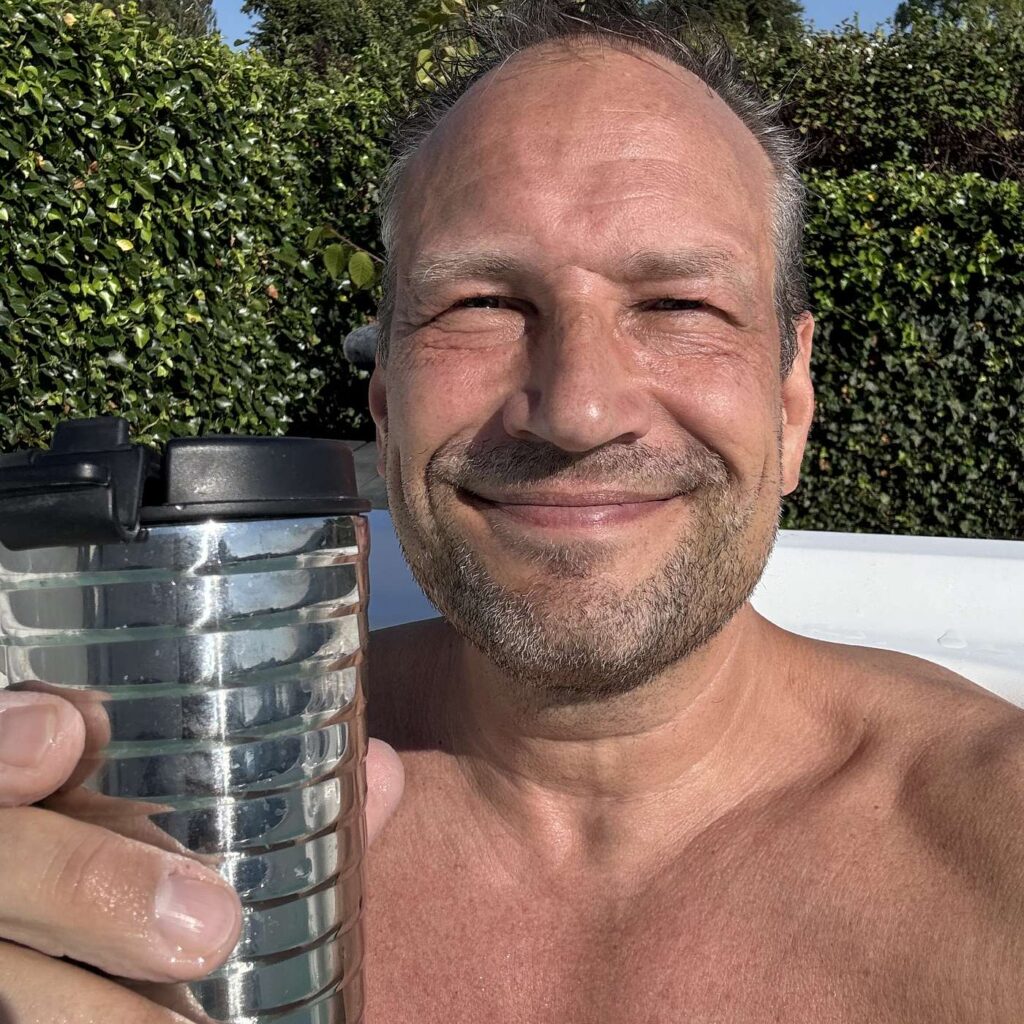
About longevity and wanting more good years. I share my own experiences of exercise, sleep and health data, professional help and ideas we’re working on in September 2024.
Thorborgs Dagbog · Episode 71 · Recorded 6 September 2024
It’s 6 September, and officially we’re out of summer and into autumn. And what a summer. I was sitting with Jannie, my lovely wife, the other day, and we agreed it might have been a little too much.
It’s been a fantastic summer. But we also have a little, lovely boat we used a lot last year and have hardly used this year. There are friends we haven’t seen, and we haven’t really enjoyed the garden. There’s simply been too much going on.
Even a fantastic summer can go too fast
We’ve been to Roskilde Festival, Tinderbox, Smukfest and Karrusel. Karrusel is an electronic music festival in Copenhagen, and for fuck’s sake, it was good.
We’ve also been to three weddings. One was in Tunisia, where we spent five days. And my good friend Mikael got married. There was both a stag party on Bornholm and the wedding itself in Jutland, with overnight stays and celebrations over several days.
Every single thing we’ve done has been fantastic. I shouldn’t sit complaining about having experienced so much. But it’s gone a little fast.
When I was sitting in the garden the other day, my dear neighbour Finn said: goodness, Martin, are you alive? Our gardens adjoin and we can see into each other’s, but he’d hardly seen us all summer. That was very telling.
So I thought perhaps we should relax a little in autumn. And then, of course, I’m going to Ibiza with some good friends for four days to hear great electronic bands.
We’ve also rented a gigantic boat where we’ll lounge and play with the equipment, SeaBobs and jet skis. Jesper has a good friend with a boat company in Ibiza, so we can get it at a reasonably affordable price. It’ll be bloody good fun.
Greenland, leadership and a cruise
A couple of weeks after Ibiza, I’m going to Greenland with Jesper Buch and our boys. We’ll give talks to a group of managers about our experiences of building a good organisation and creating motivation and enjoyment at work.
In other words, almost the opposite of Moderaterne, as I see the current story about their parliamentary group and employees.
If you want to give leadership talks, you can study that case and do the opposite. Every time they turn right, turn left. Then, in my view, you’ve practically got a free book on leadership. Perhaps Gyldendal will take that one too, just as they took mine.
Later in the year, we’re also going on a Mediterranean cruise. Jesper has made a great exit and kindly invited the whole family. We’ll be a big group, around twelve or perhaps more.
I’ve been on cruises quite a few times, and every time I’ve gained three or four kilos. That isn’t happening this time. And that actually leads into what I want to talk about today: my health and the small things I try to do to look after my body.
Twenty minutes on the stair climber is manageable
Over the summer, I got my stair climber and actually used it too. Jannie and I disagree a little about how much. I say two or three times a week; she says once at most. The truth is probably somewhere in between. Let’s say one and a half.
Over the last fortnight, I’ve stepped it up. I’ve started a programme called Sprint 8. It lasts around twenty minutes.
First, three minutes warming up at a slower pace. Then short, hard intervals: thirty seconds going flat out and a minute and a half at a gentler pace. That repeats, and finally I cool down.
It was presented to me as a system delivering a lot of exercise in a short time. The time aspect is what I particularly like. Twenty minutes with a good podcast in my ears is manageable.
It’s bloody hard. When I finish, sweat pours off me. But time-wise, I think it’s fine. I’ve done it three times this week. That’s my own training, not a programme I can judge suitable for everyone else.
My watch shows an improvement
My fitness level on the watch used to be around 35–36. Now it’s closer to 40, depending a little on the day. That motivates me.
With my Apple Watch, I can record a walk and afterwards see an estimate of my fitness. I think that’s pretty cool.
Around a year or eighteen months ago, I had a comprehensive medical check, including a fitness test. They attached electrodes to my body, I sat on an exercise bike and had to work hard.
When I’d finished and she was about to tell me the result, I said: it’s 36.5. She asked how I knew. My Apple Watch had told me.
In that particular test, the two numbers matched. I was impressed. Of course that doesn’t mean I can say a watch always measures as accurately as an examination.
Despite a draught beer, two, eight or fifty going down over the summer, my numbers show better fitness. In the recording, I estimate the improvement at around fifteen per cent. Those are my own measurements and estimate.
I use the numbers as a guide
I also use Withings. That’s the company behind my scales and blood pressure monitor, and their app works with Apple Health.
In some ways, I actually prefer the Withings app. It shows trends and brings different things together. Then, of course, I go off on a tangent and almost forget why I started talking about it. I think I inherited that from my mother.
Among other things, my scales estimate muscle mass, body fat percentage and bone mass. The app also compares my fitness with others my age. By its assessment, I’m doing better than around sixty per cent of the men it compares me with.
I imagine people using apps like that may be more interested in fitness than average. That’s my assumption. Either way, I’m quite satisfied without being in any amazing shape.
We’re not talking ultrarunners or marathon runners here. We’re talking about a 54-year-old office guy sitting in a chair much of the day.
According to the scales, I’ve gained almost three kilos of muscle over the summer. My body fat is typically between 22 and 24 per cent, but I know scales like that aren’t a scientific instrument that can tell you everything precisely to the decimal.
For me, it’s a kind of index. I’ve tracked my weight with that type of scale since 2010. When I measure in roughly the same way and at the same time, I can see a direction. If I slack off, I can often both feel it and see it in the numbers.
I’d like to lose some fat. Muscle mass has increased according to the scales, but body fat percentage is still my next project.
My hormone treatment is part of my own story
Besides exercising a little more, I think my testosterone treatment may have affected my energy and ability to build muscle more easily. I’m not a doctor, so I can’t precisely separate the effects.
If you haven’t been following, I’ve talked about it in earlier episodes. I get testosterone applied to the skin. In my tests, the number has gone from around 12 to 35, and at this point I’m having the level adjusted down again.
Those are numbers from my specific treatment. I can’t use them as a recipe for others, and I shouldn’t pretend to be a specialist in reference ranges or dosage.
My experience is that I’m happier and have more energy. I also think it may be part of the explanation for changes in my muscle mass, but that’s an assessment, not something I’ve proved.
A cruise and lower body fat don’t go well together
Getting body fat down fits bloody badly with a week on a cruise. A big part of the pleasure is all that delicious food.
There are restaurants morning, noon and night, food at night and room service. Once you’ve paid for the trip, there’s an enormous amount you can simply help yourself to.
On the other hand, there’s a fantastic gym on the ship. My plan is to exercise every day, show some restraint and skip dessert. I’m also considering skipping breakfast, as I do some days at home.
Then I hope to limit the weight gain. I tell myself a small extra kilo is manageable once I get home and pull myself together. That’s my plan and optimism, not a guaranteed calculation.
My back made me a reluctant exerciser
My health interests me more as I get older. I used to have an extremely bad back and spent years seeing chiropractors and trying all sorts of other things.
Back in 2012, a former professional cyclist heard a radio programme where I complained about my back. He contacted me and recommended an exercise programme on a CD costing around two hundred kroner.
I followed the programme, and my experience was that the back problems disappeared after a couple of weeks. Twelve years later, I still feel the exercises have made an enormous difference to my back.
That’s my own story. I can’t promise others the same result. But I’ve told lots of friends and others who’ve asked about the programme.
They say thank you very much, and then many do nothing about it. Because exercise can be both hard and boring. I’ll be the first to admit that.
I split it up so I actually do it
The programme includes strength exercises, stretches and movements resembling yoga and circuit training. I don’t want to do a whole hour. It’s too hard and boring, and I can’t find the energy.
So I’ve split it up. On Mondays and Fridays, I do different kinds of press-ups, abdominal and back exercises, high knees and a little stretching.
The press-ups are in small sets with different hand positions. Normal, wider, closer and some with my hands in a diamond. Around sixty altogether, but not sixty in one go.
The other day, I did fifty in a row that I thought were deep and well executed. I was actually quite proud.
Tuesday is more functional training, stretching and mobility. Wednesday is the day I hate most: leg training. Lunges and all that. It takes around twenty minutes, and it isn’t my favourite.
On Thursdays, I do a short programme of different plank exercises. Not eight minutes in one position, but intervals on the sides, in different positions and with breaks between.
I try to do something every day. On days when I need to leave very early for Bornholm, I skip it. When I have to get up around quarter to six, I’m not getting up even earlier to exercise.
But I get lots of steps walking around Bornholm, visiting staff and inspecting buildings, and walking through the airport. So something happens on those days too.
Now I’m trying to add the stair climber on Mondays, Wednesdays and Fridays. I haven’t quite figured out how it will work. After many years with a familiar routine, twenty extra hard minutes make the morning a little tougher.
But seeing my fitness level rise is motivating. So I’m trying to make a little extra effort.
I’m interested in longevity and understanding data
Longevity, meaning a longer and better life, is a fantastically exciting subject for me. I’ve read about the idea of ageing backwards and am interested in Bente Klarlund and David Sinclair, among others. Those are some of the avenues I’ve explored myself.
I’m also working with an interesting biohacker and some other good people on an app idea.
The idea is to bring together data from Oura, Whoop, Apple Watch, Garmin and other devices and combine it with health data. Sleep, HRV and the other numbers need context so you can better understand what they tell you.
The idea is to involve doctors and ensure recommendations are evidence-based. We want to help people understand how sleep, fitness and other factors interact. It’s a project we’re working on here in September 2024.
If you use a watch or ring, you may know the problem: you have lots of numbers, but what do they actually mean? How should you interpret them?
I’m trying to make sleep work
My watch often shows I don’t get as much deep sleep as I’d like. I’ve also had an extended DNA test from 23andMe.
I read its result as an indication I might be genetically inclined towards less deep sleep. That’s interesting to me, but I don’t know whether it means I need less. That would be an assumption.
In any case, I rarely get a really good rating for deep sleep. It’s almost no longer the number I strive for.
I still try different things. I’ve raised my pillow a little because I think I snore less. I’ve removed the light sources I can and rarely drink coffee after noon.
Where I really sin is the screen. I love reading Twitter before bed. I’ve enabled night mode, but light isn’t the only problem. I also get worked up and angry at people, and that isn’t the best start to a good night’s sleep.
I should let more things wash over me
I think some of the most important things for me are exercising, sleeping and not stressing about everything. A bit more kung fu-like, just deflecting and letting things pass.
Getting angry in everyday life is an issue for me. Especially in traffic. My wife has a temper too, so we can wind each other up.
Everyone drives either too slowly or too fast, changes lanes annoyingly or doesn’t do what we think they should. The most annoying thing is when we feel someone is inconsiderate.
We have a fairly strong sense of justice. It’s simply outrageous when a cyclist doesn’t signal and thereby steals five seconds of our lives. Of course I say that with a laugh, because we should just let it wash over us.
I let professionals help with the numbers
I also spend quite a lot on my personal programme of supplements and treatment. My estimate here is around 3,500–4,000 kroner a month before adding all the examinations and blood tests.
That includes pregnenolone and testosterone, among other things. I have a practitioner in Hørsholm helping me with the numbers.
I feel my immune system has improved, and changes in the tests have been explained to me. But I can’t remember all the markers’ names and can’t interpret them professionally myself.
I’m a generalist, not a specialist. Things get explained, I understand them roughly, say yes or no, then forget many details afterwards.
It’s a bit like Dinero. I can’t do everything myself: the accounts, programming, graphic design. My job is to conduct the orchestra.
You can know your field and understand the domain well. That just doesn’t mean you need to master every profession yourself.
My experiments have a downside too
I also take a product in the NAD area that interested me through longevity. I can’t explain precisely how it works. In the podcast, I talk about buying it from the Netherlands and my expectation that such things might affect ageing.
I don’t know what happens when you use something like that for thirty or forty years. That’s one uncertainty. My interest in a product isn’t evidence that it makes people younger or is harmless.
It frustrates me that developing and approving new treatments can take a long time. I tend to think I sometimes need to take a chance if I want to try something new. That’s my own willingness to take risks, not a rule others should follow.
I also tried DHEA, which some friends are enthusiastic about. They talk about energy and happiness. Sexual function isn’t a problem for me; I think my wife can confirm that.
But after three days, I’d slept poorly and became concerned reading about possible side effects such as a racing heart and irregular rhythm. So I bloody well didn’t want any more of it.
My friend Ole likes it and feels a big difference. For me, the experiment didn’t work. That also shows why I can’t simply take someone else’s experience as my own.
Supplements and herpes are part of my story
I feel that looking into my B12 has affected my enjoyment of life. I also take other vitamins, magnesium, fish oil and products chosen with the immune system in mind as part of my programme.
I get very enthusiastic talking about it. But my enthusiasm doesn’t tell us what others lack or which supplements they should take.
I have herpes, both types actually, would you believe it. I’m interested in inflammation and what it means for my body.
As part of my programme, I take vitamin C and other preparations whose names I can’t properly remember. In the last two outbreaks, I’ve found the symptoms much milder than before.
I felt some tingling, then it disappeared again without the same severe course I usually have. I’m fucking happy about that.
I don’t know whether the effect will last or whether the preparations explain it. I’ve also been told an inflammation marker has fallen a little, though not significantly. So it’s still something being monitored in my own programme.
Better fitness didn’t solve my blood pressure
I’d previously taken blood pressure medication and stopped for around six months because I thought I’d got fitter.
My doctor was interested in the lower of the two blood pressure numbers, among other things. Mine was around 82, and he wanted it lower in my particular case.
When I took the medication, it came down to around 77–78. After the break and extra exercise, it was back around 82.
So even though my fitness and muscle mass had improved by my measurements, that didn’t solve this part. At the time of recording, I’ve started taking blood pressure medication again.
I once experienced a little swelling in my feet, but otherwise it’s been a small, inexpensive part of my programme. I can’t judge what side effects others might get or which target is right for them.
My doctor put into words the possibility of more good years. The image of five extra good years sticks with me because it makes the value concrete. It isn’t a guarantee that a pill gives me exactly five years.
It’s an expensive interest, and I’m curious about the future
Some people go much further than me, taking many preparations every day. I mention Ray Kurzweil as an example in the podcast. But it isn’t an ideal that more pills mean better.
With blood tests, examinations and everything, I think my own programme is up around 60,000–70,000 kroner a year. That’s a rough estimate here in 2024, and it’s a lot of money.
I don’t know whether it’ll get cheaper. New things keep appearing that I find exciting. I’ve read about Danish researchers and ageing processes, but I don’t understand the details well enough to explain them without using the wrong words. And what I’m talking about isn’t a treatment people can simply take.
I’ve also seen articles linking Wegovy and ageing. That makes me curious, but it isn’t something I can draw conclusions about.
More years should also be good years
When people talk about getting old, many think of how older people looked when we were young. Someone of 68 could seem very old.
Today, I know people that age who are physically active and sharp. You can get help with hips and knees and keep playing sport.
A lawyer I’ve known for more than twenty years plays both tennis and football and has taken part in a senior match in Scotland. He’s still physically and mentally sharp. For me, he’s a good example of age not telling the whole story.
It isn’t just whether you can reach eighty. It’s about what kind of years you get. I want to keep the ability to move and feel good.
I’m no saint. I can still get drunk at weekends, and I know that isn’t good for my body. I try to moderate it. On weekdays, I don’t drink alcohol, not even at business lunches. Then I choose an alcohol-free beer.
I think knowledge about sleep, exercise and health can give many of us better years. And I’m fascinated by the idea that future advances might let us live much longer, perhaps past a hundred or one day to a hundred and ten or twenty.
Reverse ageing, actually turning ageing around, is another idea I’m interested in. Whether I’ll live to experience it myself, I don’t know. I’m not that optimistic either. These are thoughts about the future, not a promise.
Do I want to live a long time? Yes, if life is good. I’d rather have a say in my own ending than spend ten years with a serious illness or feeling physically terrible. I also mention the possibility of assistance in Switzerland in the recording. Those are thoughts about self-determination, not something I’m planning.
Small things can make everyday life a little more active
The point is that everything doesn’t need to be extreme. My training isn’t a model example. But spread over the week, I estimate I spend around half an hour a day.
There are days I don’t exercise. But I take the stairs instead of the lift. I bend down to put on shoes instead of sitting, and I put on socks standing on one leg.
I try to make life a little inconvenient for myself while I still can. I take some meetings while walking, walk between floors at work and sometimes stand during meetings.
All the little things can add up to more steps and movement. Every little helps.
I still eat sweets. I’ve cut down on meat, but when I go to a restaurant, I fucking want steak tartare. Day to day, it’s more chicken, vegetables and that sort of thing.
Each adjustment is small. Together, I think I get more out of life: I feel less tired, can spend time with my wife and children and join in when employees do something physical, even though they’re twenty or twenty-five years younger.
People also talk about physical activity affecting the brain. I can’t claim my memory has become fantastic. It could probably also have been worse, but I can’t measure the alternative.
Thanks to the small group following along
That’s really what I had today. Thank you so much for listening.
We’re a small group here. At this point, the podcast has around ten to twenty thousand downloads a month and, by my estimate, three or four thousand people following along.
Yet I meet a bloody lot of you. Almost every time I go out, someone gives me a high five or a hug because they listen. I think that’s bloody good fun.
It’s a small, exclusive group. Thank you so much. Have an absolutely brilliant day.
Listen to the episode
Watch the video episode
Listen in your podcast app:
All episodes on Apple Podcasts · All episodes on Spotify · All episodes on Amazon Music · RSS Feed