

How do you raise children in North Zealand?
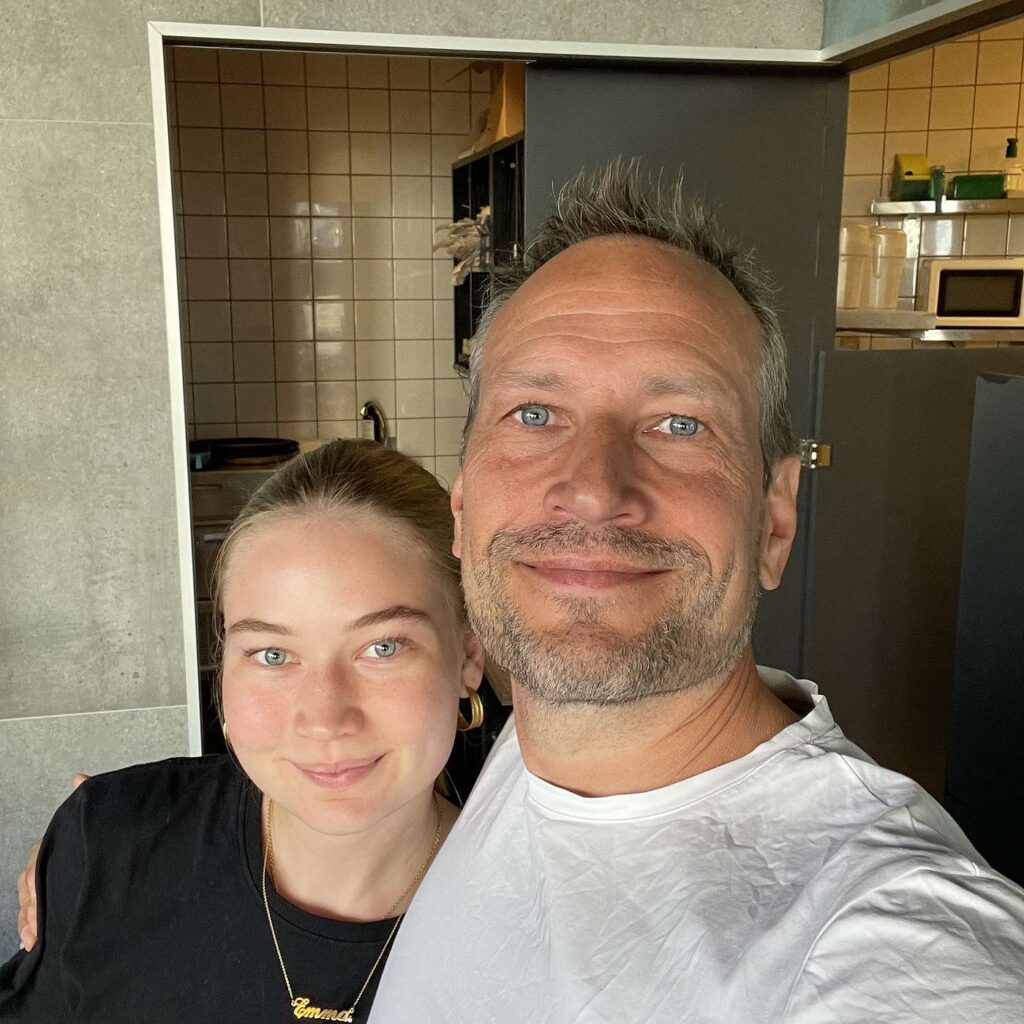
On children and part-time jobs: How do you raise children in an area where a Tesla can be an eighteenth-birthday present? Where many get so much pocket money they don’t need a part-time job? I have three children who’ve all been out working, and I think it’s one of the most important things we can give them.
My view is that you can spoil your children a lot as long as you don’t remove their drive. You need to show them unconditional love, support them and set boundaries. But you also need to let them make an effort, make mistakes and discover they can do things themselves.
It’s 8 February 2024. I’m sitting here around quarter past six in the morning, looking out over Øresund. It’s pitch-black, and for once I’m not in the jacuzzi. I woke early and thought I might as well record a podcast.
We want to create more value from the accounts
A lot is happening right now. Yesterday, I gave a talk for a Swedish company in Visma. They work with accounting software and new strategies and wanted to hear more about what we’re doing at Dinero.
We’re working on something we call a virtual CFO. The idea is to use anonymised data to create new products and help customers with more than getting the bookkeeping to add up.
Credit ratings are one example. When businesses send invoices and record whether they’re paid on time, payment information together with other data can help build a picture of good and bad payers.
We already have credit ratings in Dinero. I actually think we’ve been too bad at talking about that. For a small business, avoiding a customer who can’t pay can matter enormously.
Another example could be a master carpenter entering an insurance invoice. The program could flag if that expense is higher than at comparable businesses. Not by disclosing other customers’ accounts, but through anonymised comparisons.
You could also get a better picture of whether your revenue or profit is higher or lower than others in the same industry and area. And we want to work on understanding which customers are best and which other businesses might resemble them.
Our customers already enter lots of information. They send invoices, record payments and enter purchase documents. We have three AI developers and two analysts working on those possibilities. Over the coming years, we hope that will become products creating even more value.
Somewhat provocatively, you could say accounting software meets Facebook. That may sound negative, but my point is that data can give customers something useful back. It needs to be anonymised when we compare across customers.
The whole exercise is about value. If a new service helps the customer enough, it can also become something you pay separately for. That’s how I think about business development.
Dinero is already a good business. In 2024, we expect revenue above 200 million kroner, and a large share could reach the bottom line. But I still think we can do better. That’s an expectation for the year, not a final annual result.
When I talk about around 300 kroner a month for accounting software, customers also get cloud storage, an app for accounting documents and access to bookkeeping help. At the time of recording, we have bookkeeping support from eight in the morning until eleven at night, every day of the year.
If I ask people what access to help like that should cost, they rarely say 300 kroner. And then there’s the program itself on top. I think that’s a lot of value for money.
Now it sounds like advertising. But I’m not sitting here to make a few podcast listeners buy something so I can get paid more. I’m talking about it because it interests me and because it was part of what the talk covered.
A long conversation with Mark Tange
Afterwards, Mark Tange visited for his podcast. Normally, he records conversations lasting an hour or an hour and a half. We ended up sitting there for nearly three hours. I don’t know how much he’ll cut, but it was quite a marathon.
Among other things, we discussed women, men and the society we’ve built. My experience is that some boys and men are being left behind. I think we need to take their situation more seriously.
I find school and further education in several ways fit girls better. At the same time, the physical strength that previously gave men an advantage in many jobs matters less when machines and technology can do the work.
Some men are left feeling their gender and identity are under attack while they can’t see where they fit in. Their masculinity isn’t in itself a labour-market qualification.
I know that can sound like whining. But I think we need to take problems with poor well-being and suicide among men seriously and ask how we can pick up the boys and men who lack a place.
My slightly provocative question is whether the pendulum has swung so far that we now need to put more energy into that. Those are my thoughts about society. I’m not going to repeat yesterday’s entire podcast here.
Emma found her own job
What I actually promised to discuss today is children and parenting. The occasion is that my eldest daughter Emma, who’s 20, has lost her job.
She finished upper secondary school around a year and a half ago. She’d worked at 7-Eleven for four years alongside school. After graduating and taking a little time to enjoy it, she wanted to try something else.
It wasn’t that there was anything wrong with working at 7-Eleven. But after four years, it’s natural to become curious about something new.
She didn’t have a finished plan for what she wanted. Then she saw a floor manager position at Letz Sushi in Rungsted and applied.
The job involved looking after four or five employees: hiring, dismissals, motivation, rotas and purchasing for the restaurant side. The kitchen had its own manager. Among other things, Emma needed to manage drinks, chopsticks and the other things out in the restaurant.
It was bold to apply when she hadn’t had that kind of restaurant job before. But the manager she spoke with knew her manager from 7-Eleven.
He could say she’d run the shop alone, handled busy periods and taken responsibility. She didn’t have lots of formal management experience, but she’d already shown she could get stuck in.
So she got the job. She’d found it herself. I hadn’t intervened and asked anyone to hire her.
Suddenly, Dad became useful in a new way
It’s gone really well. She thrived and was offered management courses and training. And during the roughly nine months she had the job, our relationship gained a new dimension.
We’ve always been close. But now she called several times a week with specific management questions. Someone was ill, someone arrived late, a rota needed to work. What do you do?
I could help differently there from the usual dad things. We developed an adult relationship where I could offer advice, support and encouragement based on my own experience.
Four or five employees may not sound like much. But moving from upper secondary school to being responsible for others and the restaurant’s daily operation is a big task. Dilemmas keep appearing.
There were also changes from head office she had to deal with. For example, she said they’d been on a cocktail course and prepared to make cocktails. Then they were told it wasn’t happening after all.
Another time, they’d received new crockery and prepared everything. Shortly afterwards, she read in a newsletter that her restaurant would now operate as a takeaway, with customers able to sit there eating from takeaway packaging.
Then she called and asked: Why have we just received all those things?
I tried to be diplomatic. I could have sat there saying it sounded like a shambles. But I didn’t want to discourage her. I explained that running a head office and managing many restaurants can be difficult too.
That was part of our conversations: How do you handle something you haven’t decided yourself? How do you bring employees along? And how do you keep your own energy up?
A shock just before taking over her flat
Then came the closure announcement. At a Teams meeting, she and the other employees were told they’d had their last working day. It came as a shock.
Emma had also just bought a flat in Lyngby that she was due to take over soon. So she lost a job she loved incredibly much just as she’d taken a big step in her own life.
It wasn’t because her own restaurant had done badly under her. On the contrary, she’d been recognised for the improvements. She’d received flowers, featured in internal newsletters and received quarterly bonuses.
Customers had written that they preferred coming there to before. Revenue had risen, and she’d also gained better control of staffing costs. My impression was that she’d helped turn around a business that previously made a loss.
Of course, that doesn’t make receiving news like that any easier. When you’re 20 and have truly found something you’re good at and enjoy for the first time, it’s hard when it ends for reasons beyond your control.
Is using my network overprotective parenting?
I shared a post on Facebook, LinkedIn and Twitter saying she was looking for work. I described her experience and gave people a way to contact her.
Some thought that was a bit like overprotective parenting. And I understand asking the question. For a moment, I was unsure myself where the line was.
But I think there’s a difference between opening a door and walking through it for your child. I haven’t asked anyone for a favour. I haven’t asked anyone to hire her because she’s my daughter.
I’ve shared that she needs a job and what she can do. She needs to answer enquiries herself, attend interviews, negotiate pay and conditions, choose a job and do it.
She’s also the one who needs to work well with the boss, customers and colleagues. I can’t do that for her.
To me, showing her that what she wants interests me is an act of love. I want to help her move forward when she’s in a difficult situation. But she can’t simply lean back and let Dad handle the rest.
I chose to be a dad who showed up
I’m not claiming to be the world’s best dad. But I made a very deliberate choice when Emma was born as my first child.
I cut back sharply on business travel and decided I wanted to be there for the things she, and later her brother, did. School plays, arts and crafts days, Christmas activities, baby swimming and sports.
I’ve sat on parent councils, been a class parent, driven to school camps and accompanied them to activities. Mountain biking, horse riding, cheerleading and whatever else there was.
Their mum was a police officer with changing working hours. She often couldn’t get time off. I was self-employed and could arrange my days, so I took on much of it.
It was partly about my own experiences too. My mum was good at coming to things. As far as I remember, my dad didn’t see a single football match, although I played football for three years.
It is not a sob story, but it has stayed with me. As a boy, you measure yourself against your father a lot. So I decided I wanted to be there when my children needed me to turn up. I also talk about my relationship with my father in If You’re Gonna Be Dumb, You Gotta Be Tough.
If they were going bowling, I wanted to volunteer. If there was a class party, we could host it. It was a choice about how I wanted to spend my time.
Privilege shouldn’t become your entire view of the world
I live on Strandvejen in an area with a lot of money. It’s not unusual to hear about children getting a Tesla Model 3 when they turn 18, being driven to school and having trips and expensive clothes paid for.
Some get so much pocket money they have no financial reason to get a part-time job. That’s the reality my children can compare themselves with.
I also have a lovely stepson, Holger, so he’s included when I say three children. We deliberately chose ordinary state schools for them.
That’s not a rule that everyone should do the same. If we’d found a good private school with a good mix of children and parents, that could have been an option too.
What matters to me is the mix. I’d prefer my children not to move only in a very uniform group of very wealthy people. That can give you a distorted picture of the world.
I wanted them to meet children from different homes: detached houses, housing estates and families with both more and less money. So wealth wasn’t the only normality they knew.
And I shouldn’t pretend my children aren’t privileged. We go skiing and on safari, and they’ve visited more than 40 countries. They’ve had lots of experiences and opportunities. I know that.
The question is how you also teach them that things have value and they need to do something themselves to get them.
Twice zero is still zero
One part of our model has been paying half when they want to save for something bigger that we can support. They need to find the rest themselves.
That doesn’t mean we automatically support every purchase. We talk about it. What is it? Why do they want it? And does it make sense?
At one point, Emma came with a bag costing 8,000 kroner. I thought: That’s a bloody expensive bag. She could see many people around her had those kinds of fancy things, and she wanted something similar.
I understand wanting to fit in. But a bag at that price or a scarf costing a couple of thousand kroner isn’t something I’d simply buy without thinking. So we discussed whether it was worth the money.
When she wanted the bag, she didn’t have a job. She’d left a previous job where she’d done cleaning, among other things, because she felt badly treated. You shouldn’t put up with that either.
But if I double what she earns herself, and she earns zero, it’s still zero. That was part of the conversation too.
She applied for and got the job at 7-Eleven. We then agreed I wouldn’t advance the money for the bag until she’d received her first pay. After that, she’d repay her 4,000 kroner according to a plan over two months.
She did. She got the bag she wanted, but she’d worked for it herself too. And the job didn’t just become a short-term means to a purchase. She stayed for four years.
All three have experienced having a job
When her brother was old enough, he got a job at 7-Eleven too. He’s now worked there for a couple of years.
Holger was younger and couldn’t get the same job. He started delivering newspapers at 13 and does his round on Thursday afternoons after school. He’s done that for nearly two years.
Last year, he became newspaper deliverer of the year. He’s done his work reliably and had no sick days. That’s something he can be proud of.
So all three have been out working. We’ve helped with extra money, but the help has been tied to them making an effort themselves.
This is where my point about spoiling children comes in. You can give a lot if it doesn’t remove the desire to get stuck in. In Skab din egen succes I give my advice to young people finding their own path in life.
I’d also adapt it to the surroundings. If I lived in a small town where people had ordinary incomes, I wouldn’t be the dad introducing 8,000-kroner bags into the children’s class.
I’d look at the level around us. Here, where we live, the level is different. That doesn’t make every expensive purchase sensible, but it’s part of what you need to consider as a parent.
I also have an extra car that’s part of our practical everyday life. The children’s mum and I divorced after many years together, and we’ve had a seven-days-each arrangement. There are different routines and homes to make work. My point isn’t that there’s one perfect model, but that you need to find a level that fits.
Love also means setting boundaries
The most important thing is for children to feel loved and know we have their backs. That doesn’t mean there shouldn’t be boundaries. On the contrary, I think boundaries are a big part of love.
We’ve always been able to go to restaurants with our children. But if they sat screaming and shouting, we went home. We paid what we owed, and the restaurant visit was over.
In the moment, it’s easier to give in and avoid the conflict. But I believe you need to set a reasonable boundary and deal with the fuss when it happens.
I also think parents need to be careful that children don’t take over their entire shared life. For me, one important thing has been children learning to sleep in their own room when appropriate for their age and situation.
If they’re anxious, of course you need to talk to them and help. But you don’t automatically need to change a decision simply because there’s a protest. There needs to be room for the parents’ relationship too.
On the other hand, you shouldn’t be made of stone. If I’ve misunderstood something or the children have a really good argument, I can change my mind. It’s not about winning every discussion.
As a starting point, they need to feel a boundary is a boundary. Not something that moves if they scream, nag or keep going long enough.
I think children feel secure when they can sense the framework we’ve set. That we care enough to protect them and have the conversation if they step outside it.
Children and part-time jobs: An important part of upbringing
For me, a job isn’t just a way to earn money. It’s a process of maturing.
You meet an employer and colleagues. You need to fit into something, arrive on time, cooperate and do tasks that aren’t always exciting. It’s different from being at home with your parents.
I said it when 7-Eleven invited me to speak to their shop owners and managers: You’re actually an important institution for Denmark.
We send out immature teenagers and get more grown-up young people back. They take responsibility for customers, sales, cleaning and follow-up. If they don’t do what the boss has asked, there’s a response.
They also learn colleagues aren’t simply friends. There’s work to do and cooperation that needs to function. They can look to older employees and learn from people who aren’t their parents.
If you simply give children all the money they need, you can take that experience away from them. I think that’s a great loss.
I want them to get out and be useful when appropriate for their age and within the rules for young people’s work. To come home tired and feel they’ve made a difference and earned their own money.
My experience is also that you think a little more about what you spend money on when you’ve worked for it yourself.
Choose the job where you can develop
Emma has already received more than 50 enquiries. So this isn’t a podcast trying to find her more. Right now, she needs some peace to choose instead.
She’s been to her first interview and has more coming. I’ve told her to attend a few and feel what she wants.
My lovely neighbour Finn also gave her good advice: First sit down and think about what the ideal workplace and job would be. Then look at the enquiries and choose the places where you can develop most.
I think that’s really wise. If you only look at the offers, you can end up choosing based on what others happen to suggest. You also need to know what you’re looking for yourself.
She earned around 27,500 kroner plus a bonus in her old job. Whether the next pays 24,000, 25,000 or 30,000 isn’t, in my view, the most important thing right now, provided the finances work with the flat.
What matters is the challenges and opportunities. She’s begun a leadership journey and found something she enjoys. So I think she should explore whether she can continue that rather than simply take a job without that responsibility.
Good leadership can be learnt in several ways
Emma doesn’t want a longer education right now. Instead, she’s enjoyed the management courses and training she received at work.
That can be a path too. I think there’s great value in managers who are empathetic, trustworthy, punctual and decent to employees while also motivating them to do their best.
If she becomes good at that, it opens many opportunities. Perhaps one day she’ll become self-employed and open a shop. Perhaps she’ll progress in a larger company. Perhaps she’ll find something else entirely.
I’m not pushing her towards a particular title or career. She needs to discover what she wants herself. Later, she can also choose education or a completely different direction, such as working with people as a schoolteacher.
I struggle to see how a long education in itself makes someone a good manager. Courses in understanding accounts, strategy and other subjects can be useful. But much can also be learnt through practice and discussion.
I haven’t taken an MBA myself. I’m a trained office clerk and have learnt an enormous amount along the way. The business David, I and our colleagues have built at Dinero didn’t emerge because someone came in and gave us a complete model.
This year, we expect around 220 million kroner in revenue and around 100 million on the bottom line if things go to plan. That’s something the team has worked its way towards.
Many of our managers don’t have enormous educations behind them either. More than half my senior management team started in support eight to ten years ago, some as students, and worked their way onwards.
That’s one reason I see opportunities in Emma’s path. But opportunities aren’t a promise she’ll automatically become a CEO. She needs to choose and do the work herself.
Understand people, even as technology moves forward
Artificial intelligence is roaring into our lives. Of course, I also try to help my children think about where they can create value instead of simply choosing something technology may soon solve more cheaply.
I don’t think good leadership is disappearing any time soon. Understanding other people, their needs and dreams, and helping them work together is something I believe we’ll continue to need. I’ve collected my experiences of leading people in Min vej som leder.
You need to be able to treat people differently to treat them properly. One needs something different from another. It’s not just a calculation.
That’s my assessment of the future, and it’s a direction I’m happy to support Emma in exploring because she already finds it interesting.
Help them, but don’t take away their own effort
My point today is actually simple: Give children unconditional love, set some boundaries and make sure you nurture their drive.
That doesn’t mean everyone needs to be in business. If they want something else, support that too. But be careful about taking away their desire to do something themselves.
Let them make mistakes. Comfort them when they fall off the skateboard or lose a job. Help them move forward. But not so much they lose the sense of being able to act themselves.
Why shouldn’t my children benefit from their parents having done well? I’d find it strange to deny them any help to prove a principle.
If I were a child myself with a dad who could help me move forward, I’d want him to take an interest too. Help can be a way of showing love.
For me, the boundary is whether I take over her task. Sharing her experience and a contact address is help. Joining the interview, negotiating for her or getting someone to hire her as a favour would be different.
She’s felt that I drop what I’m doing when she needs me. I’m happy about that. But now she needs to reply, choose, attend the interviews and do the next job herself.
Jan and I want to give people courage to try something else
On 18 and 19 February, Jan Elhøj and I are doing a show at Bremen. He’s just returned from Korea, and we’re sitting planning.
We’ll sit in a couple of chairs on stage and discuss our slightly winding paths through education, work and life. Why have we ended up where we are? And what techniques have we used, consciously and unconsciously, to get out of boring jobs and into something we wanted?
We’ve travelled, done projects and tried new things. I’m not saying everyone can or should live like us. But I think we can help dismantle some of the ideas that hold people back.
We only have this one life. It’s a shame to go through every day thinking it’s merely a prelude to real life. While we plan when it should begin, life is already happening.
The other day, Jan said something like you don’t see lots of former entrepreneurs lying homeless with their laptops over their heads. That was his way of challenging fear. Trying something can go wrong, but we can also imagine catastrophes that leave us completely paralysed.
Our goal is for people to go home from Bremen with a smile, more courage and optimism, and perhaps a desire to change something in their lives.
We promise to do our best. And I hope you have a really fantastic day.
Listen to the episode
Watch the episode on video
Listen in your podcast app:
All episodes on Apple Podcasts · All episodes on Spotify · All episodes on Amazon Music · RSS Feed