

Remove the black dots from your life
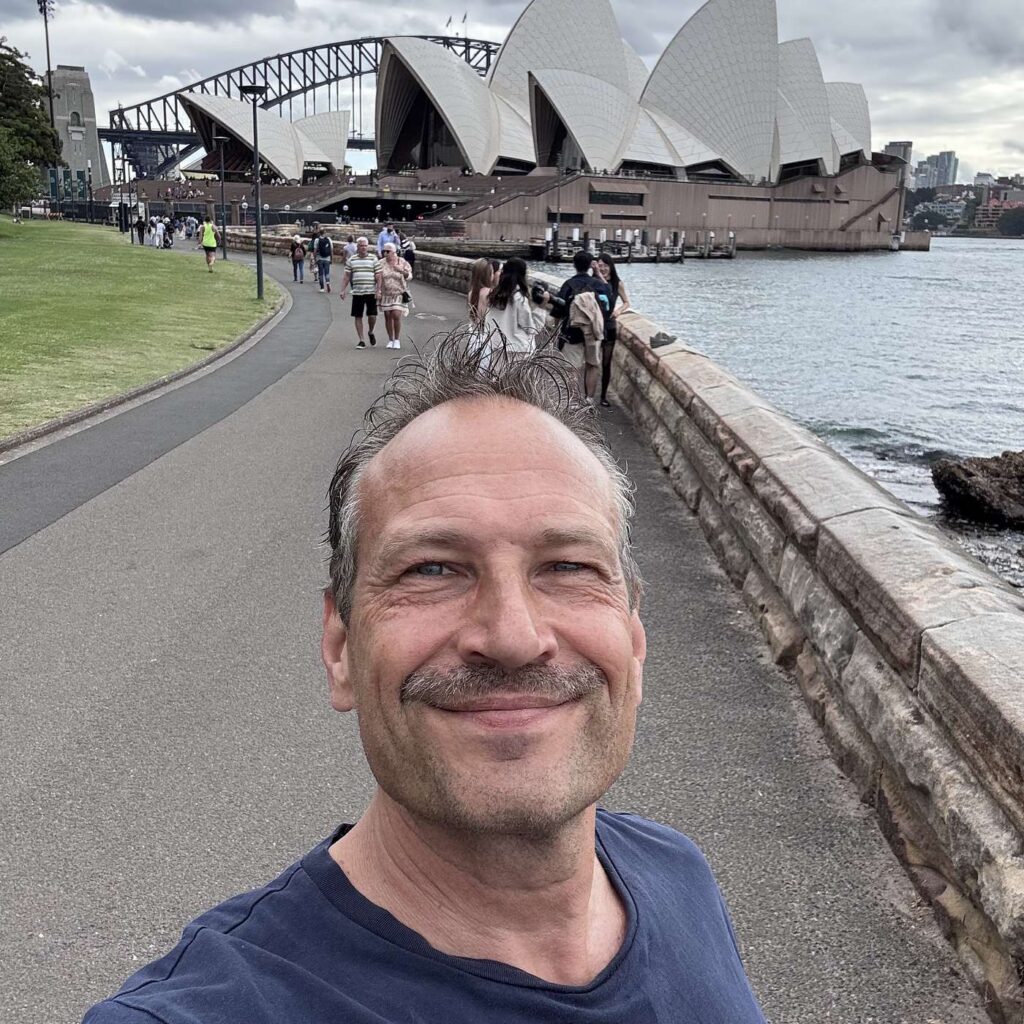
On freedom in the calendar, networks, Australia and being able to leave. I explain why I’ve removed talks and other fixed commitments from my calendar – and how you can find your own black dots.
Episode 129 · 19. May 2026
Listen to the episode
Watch the episode on video
Listen in your podcast app:
Apple Podcasts – this episode · Spotify – this episode · All episodes on Amazon Music · RSS Feed
My network gives me more than I realise
Hello and welcome to Thorborg’s Diary. It’s 19 May, and I’m on my way to the dentist. I love my dentist. She’s kind and skilled, and it usually doesn’t hurt. My GP is fantastic too, and overall I’ve been lucky to have good professionals around me.
I found them partly through my network. I’d had a bad experience with a doctor and asked around for another. Someone recommended a place I’m really happy with. You don’t always think of that as networking, but it is.
Sometimes I think: Why don’t I use my network more? Then I realise many good things in my life came because I set connections and energy in motion. For me, it starts with giving.
Right now, for example, I’m giving something to you. I expect nothing back. I don’t make the podcast to sell you a talk or get a favour. I like emptying my head and enjoy passing on knowledge. If something I learned the hard way can help another person, that’s fine by me.
I don’t want to owe anyone for a free suit
That also means I get offered free things. Suits, gutters, car washes, garden help and all sorts. I almost always say no. Not because it can’t be a fine business, but because I don’t want to feel I owe someone.
If someone washes my car free and it isn’t very good, should I recommend them on Instagram anyway? Or feel guilty for not doing so? I’m not interested in that to save a couple of thousand kroner. If I recommend something, I want to stand behind it.
A fortnight in Australia
We’ve just returned from fourteen fantastic days in Australia. A proper holiday. Or perhaps that’s a slight lie, because I normally work an hour or two daily while away. There are questions from Visma, employees and various things needing sorting. I have no problem with that.
Besides, my mind keeps working. A big part of my job is thinking about where the world and Dinero are heading. I try to think five to ten years ahead. Of course I can’t know exactly what happens that far out, but the perspective gives us different conversations and decisions.
That’s one reason we’ve worked with machine learning and later AI for years. In the recording, I trace it back to machine learning about twelve years ago, more intensive AI work six or seven years ago and a big step forward about three and a half years ago. I don’t take the credit alone. David on bookkeeping, Lars on the technical setup and many capable colleagues each think about different parts of the future. My role includes trying to understand the bigger shifts and connect things.
I have a management team beneath me, and one of the most important things is getting them to work well together and be happy. When it works, it’s like a well-tended garden: you still need to weed, but you don’t need to dig everything up daily. Many things get solved without my involvement.
A jigsaw puzzle whose picture changes
On the trip, we drove several thousand kilometres in a motorhome, and of course I thought along the way too. Geopolitics, AI, the economy and what developments mean for businesses. I add new pieces to a big jigsaw every day.
The problem is that the picture changes too. Some pieces fitting yesterday no longer fit today. What looked like blue sky may now have clouds, so you need different pieces. It isn’t static work.
In some ways, the times remind me of the eighties. Many young people imagine my generation grew up in paradise. In my opinion, that’s a very simplistic story. We had plenty of uncertainty and things to fear too. But that’s for another day.
My dad taught me to use tools
We went to Australia to visit my daughter and her lovely friend. First a few days in Sydney, then Brisbane, where we rented a motorhome. We drove up the coast and met the girls at Airlie Beach, spending fantastic days together. Then we drove back and flew home.
Along the way, the camper got a flat tyre, and I found myself standing on a country road changing a tyre on something that feels like half a lorry. Jack and the whole lot. That is the kind of thing my father taught me, and I was glad I knew how to do it. I tell more about my relationship with my father and what I have taken with me as a father myself in If You’re Gonna Be Dumb, You Gotta Be Tough.
I haven’t been as good at teaching my children the same. I’ve had Mads in the workshop, but his interest wasn’t always enormous. Emma wasn’t really interested, and Holger entered my life at a time when lots of other things were going on.
Perhaps it’s the times too. When I was a child, we made and repaired more things ourselves. My dad could open electronics, find the fault and get out the soldering iron. Today, buying something new is often cheaper and easier. I think many things have become incredibly accessible compared with then. A phone can be expensive, but it also replaces a whole range of devices we once bought separately.
What is luxury for me?
The best thing about the trip was really feeling I’d arranged my life so I could do that. A couple of years ago, I asked myself a question: What is luxury for me?
I live somewhere lovely and have a car I like. Of course that’s luxury. But something still nagged at me. Eventually, I realised it was the combination of a particular place and time. Knowing I must be somewhere specific on a particular day far in the future binds me in a way I no longer like.
Freedom in the calendar: Remove the black dots
For years, I’ve given between fifteen and thirty talks annually. That may not sound much. But look a year ahead in the calendar and imagine twenty-five dots where you must be at a particular place.
It isn’t just the hour or hour and a half on stage. I need to prepare, leave in good time and get home. If the talk is in Jutland, it can take a whole day. It’s often booked six, eight or ten months ahead, sometimes longer.
Once I’ve said yes, I can’t say three months beforehand that I’d rather do something else. Tickets may have sold, a venue been hired and invitations sent. If I’ve said yes, I’m obliged to turn up well prepared and do my best. I owe that to people who’ve chosen to spend their time on me.
I’ve stood on stage with a fever and in the middle of a divorce. Giving a talk on success while feeling like the world’s biggest loser is really unpleasant. Doing what I say matters greatly to me. So standing before people, arms raised, talking about the good life while your own life hurts feels strange. But it’s part of the agreement you’ve made.
I’ve removed commitments from my life
So I’ve cut back sharply on talks. I’ve also made virtual meetings a condition of much of my board work. And at Dinero, we have capable operational people handling most of the day-to-day running.
I can still work and be available without always being in a particular place. Before, I might look at a weekend in France and discover it was impossible because I was giving a talk in Herning. Nothing is wrong with Herning. It’s just far from home and takes much of the day.
I’ve reviewed my life and tried to disentangle myself from some agreements with fixed places and times. You shouldn’t remove every commitment. If good friends are marrying or there’s an important family event, of course you shouldn’t simply refuse because you want freedom. Belonging with others involves that too, and often it’s something you look forward to.
But I reckon I’ve removed around two-thirds of the black dots. That makes an enormous difference to me.
Then we could simply leave
When Jannie and I wanted to visit Emma in Australia, we could look in the calendar and see the existing appointments could either move or be handled remotely. So we could buy two tickets to Sydney, rent a motorhome and leave.
We’ve also made trips to France where I’ve attended meetings, talked to staff and kept working from there. That freedom is quality of life for me. It doesn’t mean I’ve stopped working. It means work fits better into the life I want.
What gives you energy, and what takes it?
That’s really today’s message: spend time sensing what a good life means to you. What makes you happy? What gives you energy? And what drains it?
Try keeping a little diary for a few weeks. Rate each day from one to ten and write why it got that score. If it was eight, nine or ten, what was present? Or what wasn’t?
For me, not having a talk can be part of what makes a day good. I also like being with other people. It gives me energy. Others find it draining and need more quiet. Both are fine, but knowing how you function helps.
After a few weeks, perhaps a pattern will emerge. Then you can look at what can realistically change. Privately or in the business. You don’t need to turn your whole life upside down, but perhaps remove one or two things or make more room for something you actually love.
A long walk alone somewhere beautiful can help too. Walk without constantly filling your head with other things, and try to identify what’s bothering you. Afterwards, investigate whether you can actually do something about it. If you’d like more advice on creating a life on your own terms, I’ve collected my rules for living in Skab din egen succes.
I can still be tempted to the Faroe Islands
I call it a break from talks, but perhaps it’ll continue. It’s not that I no longer enjoy being on stage. I may still accept something that makes sense. I’ve also promised TV-Avisen a contribution about AI at Folkemødet.
For example, I’ve agreed to a talk in the Faroe Islands. I couldn’t really resist. Jannie and I can spend a few days eating well, walking, meeting people and enjoying the fantastic scenery. Then I go in and give it my all for an hour and a half. That’s completely different from a day in the car going somewhere I must immediately leave again.
So I haven’t become free of charge, nor completely impossible to book. I’ve simply become more conscious of how I want to spend my time. Now I’m going to the dentist. I hope the black spots haven’t spread to my teeth – they’re usually fine. Have a wonderful day. Bye.