

A chat about optimisation and a few other things
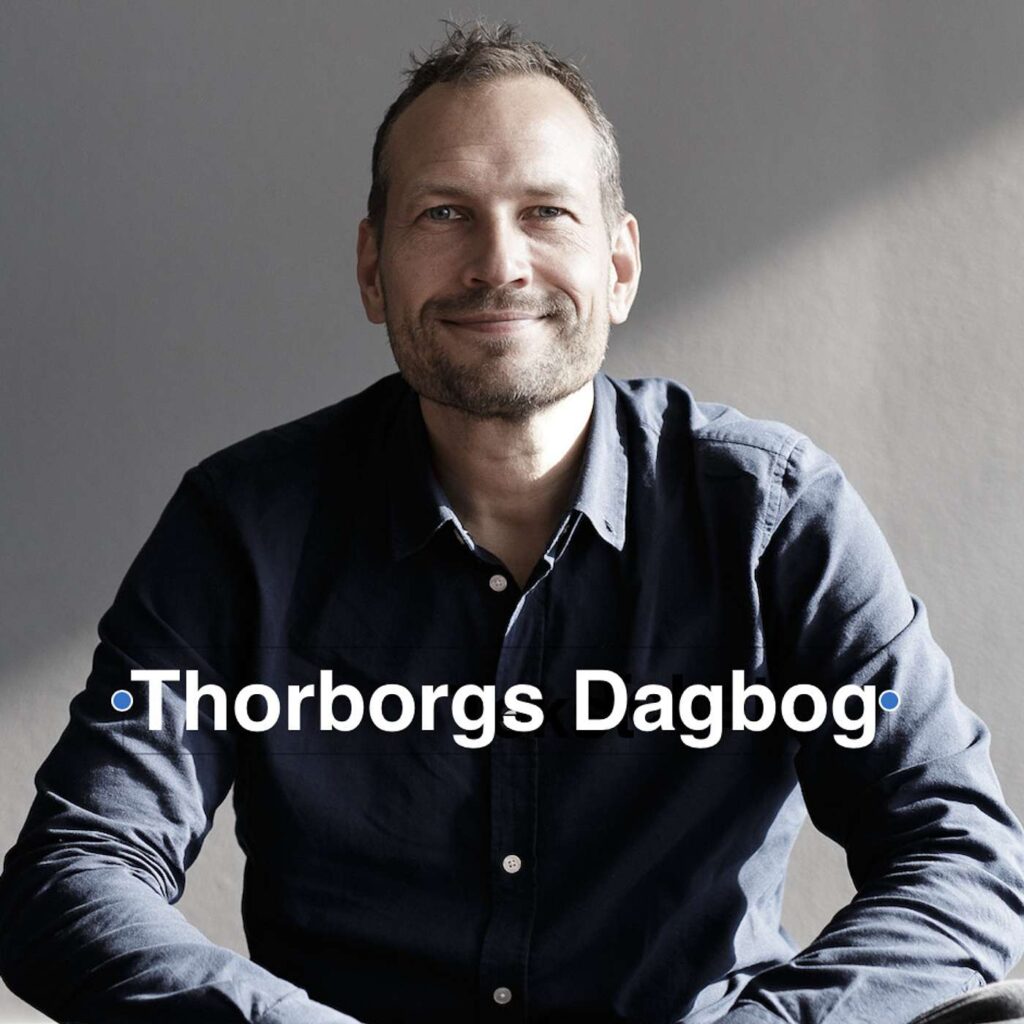
Today I want to talk about optimising the business. My wife Jannie’s hotels on Bornholm are a really good example of how shared operations and small improvements can make everyday life easier. First, a bit about my new solar panels.
It’s 16 May, and as usual I’m sitting outside in my bathtub. It’s a little chilly and overcast, but still damn beautiful. My neighbour has a reddish tree that looks really lovely against the horizon.
My solar panels are up
Last week I had solar panels installed by Amalo, which I’ve invested in. They’d set aside two days to fit around 50 square metres of solar panels. I thought they’d have to work pretty fast to manage it. But they were actually finished after about six hours. That was quite something to see.
It’s nearly seven in the morning, and completely overcast. Right now the system is producing around 150 watts. That’s not much, but I’ve also had a battery installed that charged yesterday. So when I turn on the coffee machine, the battery can take over. I think that’s pretty damn fun.
I’ve deliberately sized the system quite generously. Yesterday it produced 44 kWh, and the day before around 50 kWh over the day.
I have a heat pump, outdoor spa and electric car. Even so, I don’t use enough electricity in summer to consume it all. The heat pump doesn’t run much, and the spa uses less when it’s warm outside. I don’t drive much either, because I take the train most of the time.
So why have I had 26 panels installed and am ordering 16 more?
Because I’m not only thinking about bright summer days. I find it more interesting to see how much the system can help me in August, September, perhaps October and again in March and April.
In winter we can use around 100–110 kWh a day. A solar system on an ordinary house roof can’t deliver that in December and January. I fully understand that. But if I can be more or less self-sufficient for a larger part of the year, that’s interesting.
The panels themselves aren’t the biggest expense in my calculation either. I believe they’re around 1,800 kroner each, while the inverter alone costs around 18,000. Then there are tradespeople, an electrician and connecting it to the house.
Once you have those expenses anyway, ten extra panels make up relatively less of the total bill. That’s why I think it’s worth doing the numbers on a larger solution. Now it’ll be interesting to see how my own system handles the autumn.
Could the car also become the house battery?
For now I have a small 5 kWh battery. It can smooth out some consumption when a cloud covers the sun or I switch on something that uses a lot of electricity. But I primarily got it to try the technology.
I’m also considering a Fisker with a battery of around 100 kWh. Probably not this year, and I want to see whether the car and the solution actually work before doing anything.
What interests me is the idea of using the car’s battery for the house. If you can make that combination work, you have a completely different capacity from my little battery.
I understand work is under way on a smart energy management system called EMMA. It’s in beta at the time I’m recording this, and I haven’t tried it yet.
The idea is for the system to predict how much electricity the house will need tomorrow, how much the solar panels will produce and when electricity is cheapest. If the sun isn’t expected to provide enough, it can plan to charge the battery from the grid at a cheap time.
Then it isn’t just a question of filling a battery. It’s a question of using electricity intelligently.
In summer I imagine, for example, that my little battery can help between 5 and 9 pm, when the sun is going down and the hob and oven are switched on. A bigger battery could cover more of the evening and night.
Of course, if you need to use the car just then, it isn’t very clever to have it supply the house at the same time. But perhaps the controls can also learn when you normally drive. Those are the sorts of possibilities I geek out over.
Batteries are just expensive. My little 5 kWh battery costs around 20,000–25,000 kroner. When I also look at a car with a much larger battery for around 400,000 kroner, it makes me want to work out whether in practice you could get the car thrown in instead of spending the money on a big stationary battery.
Those are my thoughts and price estimates right now. I still need to see what’s possible.
We need to be able to store cheap electricity
I think storage will be an important part of the future until we get nuclear power or solve our electricity supply in other ways. When the sun shines and the wind blows, there can be more electricity than we need. But we also need energy at other times.
That’s also part of the idea behind Power-to-X: Using surplus electricity to make hydrogen, for example, which can go into fuels or be used to generate electricity again.
I won’t pretend to know whether all the different versions will make good business sense. I’m neither an engineer nor an energy economist. But the idea is exciting.
There’s also a loss when you charge and discharge a battery. I don’t know the exact loss in my system. So it isn’t enough for electricity at night to be just a little cheaper. The price difference also needs to cover the loss.
If electricity is very cheap at night and significantly more expensive during the day, smart controls start to become interesting. That’s the calculation I want to explore.
While I’ve been sitting here talking, incidentally, the system’s production has risen from around 150 to 300 watts. It’s pretty damn fun to follow.
The books are selling too
I’ve also been busy with book sales. My management book has now passed 10,000 copies when we include e-books and the other formats.
The new one, Skab din egen succes, is around 5,000 if we count listens and digital formats too. Printed copies are around 2,000, as far as I remember.
Not an enormous number of books sell in Denmark, so I actually think that’s pretty good.
I buy into opportunities to optimise
But what I actually wanted to talk about today is optimising businesses.
Labour is expensive in Denmark. Personally, I think our high taxes are part of the explanation, but this shouldn’t become a discussion about the tax system. My point is that employees’ time is valuable, so we need to use it properly.
I don’t go into a business unless I can see opportunities to optimise lots of processes.
Take Amalo. Customers can generate their own quote, receive follow-up emails, send the videos and information we need, book a tradesperson on their preferred day and pay by card.
We don’t need to drive around giving quotes, send manual payment requests and follow up on every little thing. Much of the journey from quote to operation is automated.
It’s the same way we think at Dinero. I’d rather invest a week’s programming work in removing ten minutes of daily work than keep paying for those ten minutes every single day.
And it’s also about removing boring tasks. The things we can automate are often exactly the things employees would most like to avoid.
Right now we’re also working with AI to remove boring tasks in programming, support and marketing. But you don’t have to start with advanced technology. Jannie’s hotels show how much can be done in very practical ways.
Two hotels with shared operations
Jannie has bought two hotels close to one another in Gudhjem. That creates some very concrete economies of scale.
She has one agreement with the laundry and brings breakfast together in one restaurant. Guests from Therns have to walk around 250 metres, but in return they go up to Klippen and eat overlooking the Baltic Sea. You could call that a pretty great upgrade.
Between the hotels she has a little shop that also serves as reception for both places.
If a guest has spilled something on their towel or needs something else, they can go down to the shop. The employees there also help guests and answer the phone.
That allows the shop to stay open for more of the year. Where many other shops close after the season, hers is planned to open from around 1 March to 24 December because it also serves the hotels.
Try doing the numbers for a normal reception that needs to be open from seven in the morning to nine at night. That’s 14 hours every day. Several shifts need covering, and employees also need holidays and may be ill.
In my rough calculation, running that function takes the equivalent of three or four full-time positions. So bringing the task together and combining it with a shop that’s already staffed makes an enormous difference.
The best phone call is often the one the customer doesn’t need to make
At the same time, Jannie tries to remove as many unnecessary phone calls as possible.
The phone is expensive because an employee can only talk to one customer at a time. On chat you can help several. But best of all is if the customer has already received the information they need.
That requires good website copy, a proper FAQ and messages arriving at the right time.
Guests need to know how their stay will work. Where do they find the key? Where’s breakfast? What do they do if something’s wrong?
If that’s clear, they don’t need to call for an explanation. It saves us time and gives them a more reassuring, pleasant stay.
A system needs to be easy for both guests and staff
We spent around a month testing different hotel systems. Many could do more than the one we eventually chose. In return, they were more complicated too.
Some were difficult to book through, and some didn’t look particularly nice to customers. That matters. The booking system is a big part of the business’s shop window to the market.
If you’re met by something ugly and cumbersome, you get a worse impression of the hotel, and fewer visitors become guests.
So we placed great emphasis on the cloud-based system being simple for customers and easy for employees to learn.
The cleaning staff carry an iPad. They can see what needs doing in the different rooms and register when a room is ready.
There’s also a maintenance plan. Besides regular cleaning, drains need checking, showers descaling and other tasks doing at appropriate intervals. It becomes part of the workflow so nobody has to remember everything in their head.
The order matters too. It’s no use vacuuming first and then dusting, so the dust lands on the floor again.
I believe we take around 19 minutes to prepare a hotel room for a new guest and around 11 minutes for lighter cleaning during a stay. Of course the times depend on the room and task.
To work efficiently without overloading staff, you need a good procedure. And when a new employee starts, training becomes easier because the best workflow is already described.
A message when the room is ready
When housekeeping marks the room as finished, the next guest can automatically receive a text message.
If check-in is normally at 3 pm but the room is ready at 11 am, why make the guest wait until 3?
Perhaps guests are driving around the island waiting to drop off their luggage. Then they get a message saying they can come now. It’s a lovely service that doesn’t require anyone to sit calling around.
The message also tells them where the room is, how to get their key and when and where breakfast is. They get a phone number for help if something’s wrong.
Someone is paid to keep an eye on the on-call phone around the clock. Fortunately it’s rarely used, but of course help must be available if a guest can’t find their room or something doesn’t work.
Some marketing is also automated with Google and Facebook. I won’t go into more detail about that today.
The name needs to match what the guest gets
Jannie has also worked on bringing together and clarifying the different room types.
The front building at Therns has been upgraded and is called Klippen By during this period. The rooms have become really lovely, with romantic wallpaper and high wall panelling. She’s really done a great job.
Hotel Klippen sits directly among the rocks facing the Baltic Sea. Klippen By is centrally located in town. Both have advantages, but they’re different experiences, and that needs to be clear.
The remaining part is called Therns Hostel. There may be shared bathrooms in the corridor and other conditions associated with that kind of accommodation.
We described it before too, but when it was called Therns Hotel, some guests still had different expectations. Then they were disappointed. We had to take that on board.
The name hostel helps align expectations. It’s not just about what you think you’ve explained. It’s about what the customer actually expects.
The plan is to upgrade more rooms as she earns the money for it. In the longer term, perhaps the hostel part can disappear altogether.
She’s also applied to the municipality to double the size of the restaurant at Klippen. If there are more hotel rooms, there needs to be space for breakfast guests. But we’d still like one restaurant rather than two.
Breakfast follows guest numbers
Jannie has found a lovely couple living on Bornholm who’ve leased the restaurant.
They make breakfast for hotel guests from seven to ten. Then they switch to brunch for other visitors and continue until 4 pm.
That means Jannie doesn’t need her own team coming in to prepare breakfast every day.
We live in Skodsborg while the hotels are in Gudhjem. If the only breakfast employee is ill, we can’t just be there five minutes later. The restaurant operators have each other and their staff, so there’s a better chance of covering it.
She receives rental income from the restaurant and then pays per meal for hotel guests.
That makes the costs more flexible. If she has one guest, she pays for one guest’s breakfast. If she has 30, she pays more, but she also has more revenue.
If she ran everything herself, someone would still have to stand ready between seven and ten even if only one guest came. That’s expensive in quiet months.
Now the expense follows revenue more closely. I think that’s a really good arrangement, including for cash flow.
She’s also close to an agreement for the restaurant at Therns. I can’t say more yet, but we hope it’ll be signed in the coming days. Then hopefully we can tell you about a really great new concept.
I’m happy to spend money on people
I’m sharing this to show how I think about business. Today it’s largely about costs, but there are plenty of things I’m happy to spend money on.
I want to treat employees to good breakfasts, decent salaries, good working conditions and flexibility. They should have good computers and a proper place to work.
What I hate spending money on is the little routine tasks: Manual invoicing, recording payments and repeated questions we could have answered once and for all.
That’s also the thinking behind features such as automatic bookkeeping rules in Dinero and automatic bank reconciliation. The less time you spend on repetition, the more time you have for your business.
Support is important. But every time a customer has to contact us about something that should have been easy to find or understand, we’ve also taken some of the customer’s time.
Customers would often rather handle it themselves. It’s better to send a clear reminder than let them become uneasy and call to sort out an unclear situation.
Just write what the dish of the day is
I experienced a rather grotesque example on a ferry a few months ago.
In the cafeteria, a sign said you had to ask what the dish of the day was. Just imagine that. Much of the queue consisted of people who simply wanted to know what they could buy.
Why the hell don’t you write the dish of the day on a sign?
It might take five minutes to do it. In return, you can save lots of repeated explanations, shorten the queue and perhaps sell to people who otherwise give up when they see twenty metres of people in front of the counter.
I don’t know exactly how many hours they could save, but it’s a real-life example. And it exists in very many businesses, including cafés, restaurants and online businesses.
Give customers clear information before, during and after the purchase.
If people often run into the same problems a few days after receiving a product, send an automatic email with instructions and answers to typical questions. Perhaps they’ve thrown away the printed manual. Help them before they have to contact you.
The FAQ needs to fit the task the customer is doing
We did something similar with our FAQ at Dinero.
We didn’t just make one big general question-and-answer page. On around 15 of the most important pages, we placed the five questions most relevant to that particular task.
If the customer was making an invoice, the help was about invoices. If they were doing another task, they got answers that fitted it.
That helped reduce the need for support by almost 40 per cent, as I remember the effect. That’s a hell of a lot.
We also had strong growth, so it doesn’t mean we simply removed a corresponding share of employees. But it means we could help more customers without letting the need for support grow in the same way.
And for customers, being able to get help at three in the morning when they need to make an invoice is a huge advantage over waiting until support opens the next day.
Optimising the business: Set aside time to review it
My advice is to set aside a day or two to go through all the small processes.
I know you’re busy. But try to make room. Perhaps get someone to look after the business, and don’t spend the whole day answering new messages.
Instead, go through your emails, messages and phone enquiries. What do people ask again and again? What do you and your employees spend time on?
If you have employees, ask them to write down the ten questions they get most often and the ten tasks that take the most energy.
Then you’ll start seeing the opportunities. Perhaps the solution is a sign. Perhaps it’s better website copy, an automatic message or a system that needs help from an IT person.
Some things may be quick. Others take a few months’ work. But it’s an investment that can pay back in both better revenue and a better bottom line.
It can be hard to sell your way to growth in a squeezed market. But improving processes, removing unnecessary costs and making things easier for customers is a fucking no-brainer.
Have a fantastic day.
Listen to the episode
Watch the episode on video
Listen in your podcast app:
All episodes on Apple Podcasts · All episodes on Spotify · All episodes on Amazon Music · RSS Feed